
AllGamesGo editorial
Same Family, Different Names: Regional Names for Classic Consoles
Nintendo and Sega used different names for the same hardware families in different regions. From Famicom to NES, Super Famicom to SNES, and Mega Drive to Genesis, these differences stem from regional releases and have left players with distinct naming habits.
Last updated:August 11, 2026
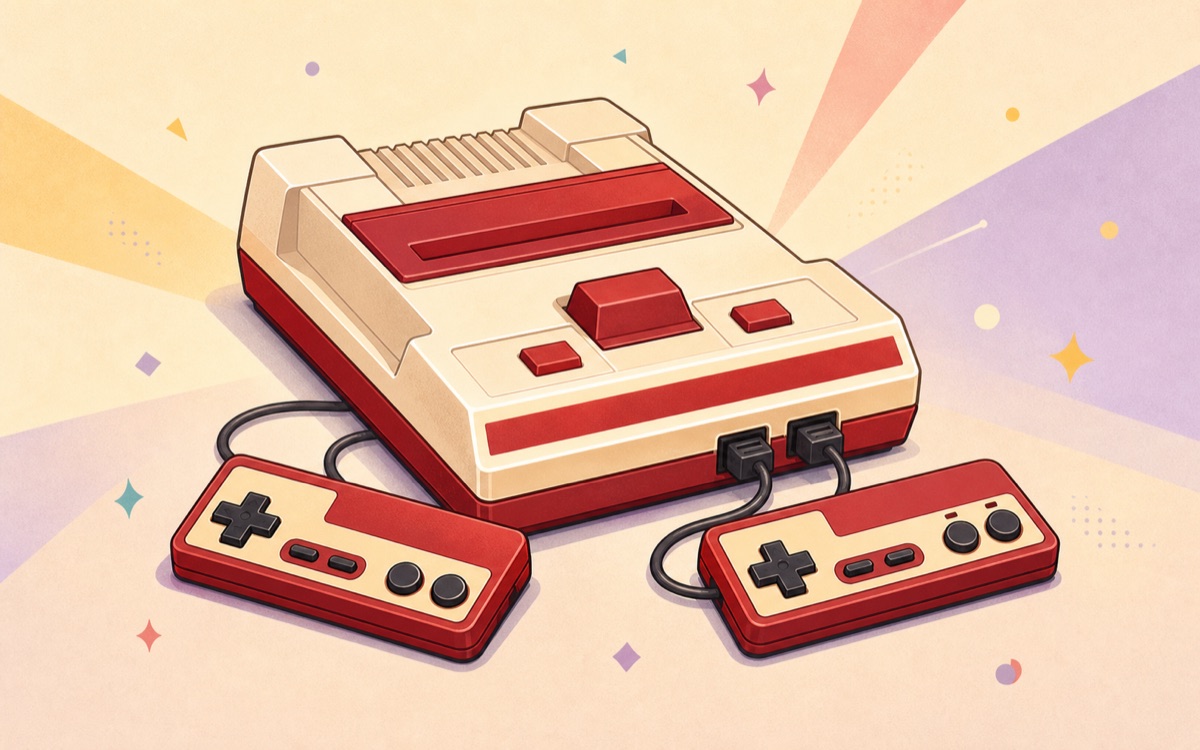
The names of classic consoles are rarely determined by hardware alone. When manufacturers enter different markets, they change product names, and players add abbreviations and nicknames, so a single generation of hardware often has several sets of names. By distinguishing between hardware families, regional models, and player habits, you can accurately match the 'Famicom' in Chinese sources with the 'NES' in English sources without mistaking them for identical models.
Famicom, FC, and NES
In 1983, Nintendo released the Family Computer in Japan, commonly abbreviated as FC and often called Famicom (ファミコン) in Japanese. The name 'Red-White Machine' (红白机) is a nickname given by Chinese players based on the console's red and white color scheme. It is not an official global product name, but it is widely used in Chinese communities.
In North America and Europe, Nintendo used a different name: Nintendo Entertainment System, or NES. The NES and Famicom belong to the same hardware family and share many games, but they differ in appearance, cartridge shape, connectors, and distribution systems. In short, you can't treat the NES and FC as completely identical.
For example, when Chinese players search for 'Contra Red-White Machine version,' they usually mean the Nintendo 8-bit home console version, but not necessarily the Japanese FC or North American NES. So in game database pages, regional version information should still be clearly stated so players can confirm which version they are playing.
Super Famicom, SFC, and SNES
In 1990, Nintendo released the Super Famicom in Japan, often called Super Nintendo or Super Famicom in Chinese communities, abbreviated as SFC. In North America and Europe, it was called the Super Nintendo Entertainment System, abbreviated as Super NES or SNES.
Similar to the FC/NES situation, the Super Famicom and SNES are the same console family, but they differ in regional appearance, cartridge shape, and TV standard. These differences affect physical cartridge use, collecting, and identification of regional releases, so you can't ignore the version just because the game name is the same.
In Chinese discussions, some people say SFC, others say SNES, but they refer to the same generation of hardware, just with different regional names. Understanding these correspondences makes it easier to follow foreign guides or videos.
Sega MD and Genesis
Sega released the Mega Drive in Japan in 1988, commonly abbreviated as MD by Chinese players, and called メガドライブ in Japanese. When it entered North America in 1989, Sega renamed it Genesis, while Europe continued using Mega Drive.
So if you see 'Sega Genesis,' don't mistake it for a new generation of hardware; it still refers to the Sega 16-bit console family that includes the Mega Drive. However, when identifying physical hardware, cartridges, and regional versions, the specific markings of Genesis and Mega Drive are still worth noting.
In Chinese contexts, Sega MD is the more common term, but when dealing with English sources, knowing Genesis is also crucial, or you might not find what you're looking for.
Regional Name Comparison Table for Classic Consoles
To accommodate players from different regions, when displaying console names to Simplified Chinese users, we prioritize locally familiar terms while retaining abbreviations that correspond to international sources. The table below organizes common names for four classic console families.
| Console Family | Simplified Chinese Suggestion | Common Japanese | Common English |
|---|---|---|---|
| Nintendo 8-bit | Red-White Machine (FC / NES) | ファミリーコンピュータ | Nintendo Entertainment System (NES) |
| Nintendo 16-bit | Super Nintendo (SFC / SNES) | スーパーファミコン | Super Nintendo (SNES) |
| Sega 16-bit | Sega Mega Drive (MD) | メガドライブ | Sega Genesis / Mega Drive |
| Original PlayStation | Original PlayStation (PS1) | 初代PlayStation | Original PlayStation / PS1 |
Balancing Local Names and Precise Versions
On game database sites, players may search using various names: some search 'Red-White Machine,' some 'FC,' and others directly 'NES.' To help everyone find what they need, the database can continue using a unified platform identifier, but the interface should display names familiar to local players, while adding regional names, Chinese nicknames, and abbreviations to search aliases.
Additionally, platform family names cannot replace precise version information. For example, the same game may appear on FC, NES, arcade, or later ports, but their graphics, controls, and content may not be identical. So the game page must clearly state which specific version it is, not just 'Red-White Machine version.'
For names like Game Boy and PlayStation that are already widely used directly, there's no need to force a Chinese translation; but for names like Red-White Machine and Sega MD that have stable Chinese traditions, they shouldn't be deliberately avoided. The goal is to make it convenient and easy for players to use and search.