
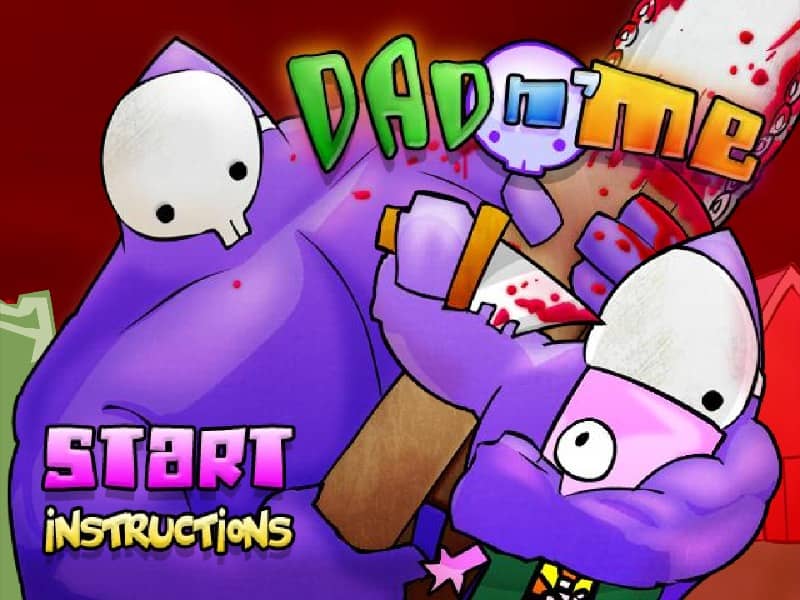
Gameplay and design
The core gameplay of 狂扁小朋友 is classic beat 'em up action: you control a big purple character who plows through a side-scrolling park setting. There's no complex story—the game opens with the character walking into the park, encountering a group of kids, and then it's time to throw down. The controls are straightforward: arrow keys to move, A for light attacks, S for heavy attacks, but once you get into it, you'll find that simple button combinations can pull off a surprising variety of moves.
The combo system is what makes the game so addictive. Light and heavy attacks can be chained together to form combos, like light punch, heavy punch, then a throw, leaving enemies helpless. The game encourages experimentation with different button sequences rather than memorizing a move list. Each combo is displayed on screen with a counter, and the sheer satisfaction of racking up a long chain is a big reason many veteran players still remember it fondly.
Beyond punching and kicking, grabbing and throwing are key parts of combat. You can grab an enemy and hurl them in any direction, and the thrown body will knock down other kids, causing a chain reaction. The environment is also full of usable objects—trash cans, skateboards, balls—which you can pick up and smash into enemies or toss for extra damage. This interactivity adds strategy and fun, making fights more than just standing and trading blows.
Survival and power-up mechanics are thoughtfully designed. Medkits are scattered around the park, and picking them up restores health, ensuring a few mistakes won't leave you stuck. More importantly, there's a rage meter that fills as you attack and take damage. When it's full, your character's speed and attack power get a noticeable boost, making combat even more exhilarating. This design encourages aggressive play rather than turtling, fitting the fast-paced spirit of the genre.
The game has just one level—a trek across the entire park—but enemy types and pacing shift as you go. It starts with lone kids, then groups, then kids with weapons, and even adults show up. Though the playtime is short, each fight is tightly paced, so it never feels repetitive. This compact design was common in the Flash era and suits the pick-up-and-play nature of web games.
Background and release
狂扁小朋友 was uploaded to Newgrounds on July 27, 2005, during the golden age of Flash games, when Newgrounds was a major hub for indie creators and players. The game drew attention immediately, and two days later, on July 29, it was awarded Daily Feature, a standard recommendation for standout work on the site, signaling official recognition of its quality.
Soon after, on August 3, it won the Weekly Users' Choice award. This award is voted on entirely by players, making it more prestigious, and it showed that 狂扁小朋友 wasn't just liked by editors but genuinely won over the audience. On Newgrounds, few works earn both awards, which laid the groundwork for the game's wider spread.
In 2006, the game was listed as a finalist for Best Web Browser Game at the Independent Games Festival. The IGF is a well-respected industry award, and making the cut in the web game category indicated that 狂扁小朋友 had value in the eyes of professional developers. Though it didn't win, the nomination itself was a testament to the game's quality.
From release to awards, less than a year passed, but 狂扁小朋友 maintained a high ranking on Newgrounds, becoming one of the site's classic Flash games. Many players encountered the beat 'em up genre for the first time through this game, and also discovered that Flash games could feature such fluid action. The game's popularity endured for a long time, and even today, people remember the purple bruiser causing chaos in the park.
Notably, the game's description on its Newgrounds page was simple: the player controls a large purple character who bullies and beats up kids in a suburban setting. This description is blunt, even crude, but it wasn't treated as an official story—just a straightforward explanation of the content. Players saw it as a silly, satisfying game rather than a deep narrative.
Development
The development team for 狂扁小朋友 was just three people, but their roles were clear. Tom Fulp handled programming; he's the founder of Newgrounds and an experienced Flash developer. Dan Paladin did the art, with a highly recognizable hand-drawn style. Dustball composed the music, providing a rhythmic soundtrack. Each played their part, developing the game in Flash MX.
Flash MX was the mainstream Flash authoring tool at the time, and for a small team, it was flexible enough to quickly implement animation and interactivity. Tom Fulp put considerable effort into the programming, especially the combo system and physics feedback, giving the combat a solid feel. Though the visuals are 2D hand-drawn, the character animations are smooth, thanks to Dan Paladin's attention to detail.
Dan Paladin's art style is a major highlight. His characters feature bold lines, vivid colors, and an exaggerated cartoonish look, consistent with works like Alien Hominid and Castle Crashers. In fact, this visual style was already quite mature in 狂扁小朋友, and it was further developed in Castle Crashers. This game was an important step in the evolution of Paladin's style.
On the music side, Dustball's tracks are simple but fit the game's rhythm well. Battle music is tight and energetic, drawing players in, and there are subtle changes during scene transitions to prevent auditory fatigue. In an era when Flash games often neglected music, this soundtrack was a thoughtful touch.
During development, the team didn't deliberately chase innovation; they focused on nailing the core beat 'em up experience. Judging by the final product, they succeeded: simple controls with enough depth, a distinctive visual style, and high overall polish. This approach—small teams honing core gameplay—has since been seen as a model in the indie game community.
Reception and legacy
狂扁小朋友 was well received among players, especially on Newgrounds, where it maintained a high ranking for a long time, becoming a classic Flash game in many people's minds. For players born in the 80s and 90s, this game might represent memories of sneaking in web games during computer class. Its simplicity and satisfying action made it stand out among countless Flash games.
In professional circles, the game also earned recognition. The 2006 IGF nomination for Best Web Browser Game brought attention to the potential of Flash games. While a nomination isn't a win, making the shortlist showed that the game achieved a high standard in design and execution. It also set a benchmark for indie games on Newgrounds.
The visual style had an even more lasting impact. Dan Paladin's hand-drawn aesthetic was already distinctive in 狂扁小朋友, and it carried over and flourished in Castle Crashers. Many players immediately think of 狂扁小朋友 when playing Castle Crashers, and this stylistic continuity creates a visual link between the two games.
As a beat 'em up, 狂扁小朋友 didn't invent any new mechanics, but it executed existing ones very well. Combos, grabs, throws, and environmental interactions weren't rare in Flash games at the time, but few did them so fluidly and enjoyably. It proved that even without a big budget, you could make an addictive game.
Now that Flash has left the stage, 狂扁小朋友 is still remembered by many players. It's been included in various Flash game compilations and is often brought up by veteran gamers. Though its graphics and gameplay may seem dated today, the pure fun it offers still resonates. For indie developers, it's a reminder that a good game isn't about scale, but about heart.





