Gameplay and design
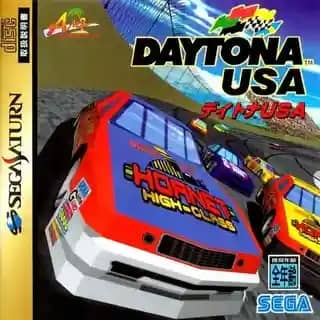
The core gameplay of Daytona USA is straightforward: players drive a race car named the Hornet and compete against rivals on three distinct tracks. The game uses a checkpoint system, where passing each checkpoint adds time, and running out of time ends the game. This design encourages players to balance speed with route planning to reach checkpoints in time. The three tracks are beginner, intermediate, and advanced, with increasing difficulty, length, and corner complexity.
A standout feature is the adaptive difficulty system. During the first lap, the game adjusts the AI strength of opponents based on player performance. If you drive fast, opponents speed up; if you make mistakes, they slow down. This ensures both novices and veterans find a suitable challenge, avoiding the rigid difficulty curves common in other racing games. Players must continually improve their best lap times to stay ahead.
The Saturn version adds several new modes beyond the arcade original. Saturn Mode removes the time limit, allowing free practice and track familiarization; Endurance Mode requires consistency over longer races, including pit stops; Championship Mode is a series of races testing overall skill. These modes enrich the experience, offering deeper gameplay beyond the quick arcade races.
The arcade version supports up to eight-player link play, a major draw in arcades at the time. However, due to hardware limitations, the Saturn version drops multiplayer, supporting only single-player. This is a notable omission, but the new single-player content partially compensates. Players can repeatedly challenge their best scores in Saturn Mode or aim for higher rankings in Championship Mode.
The handling is solid, with a noticeable sense of weight at high speeds and realistic physics for drifting and cornering. Although the Saturn version's frame rate is less stable than the arcade's, the controls remain smooth. The game offers multiple camera views, including chase and cockpit perspectives, providing different driving experiences. These elements make Daytona USA stand out in the racing genre and a classic for many players.
Background and release
Daytona USA draws inspiration from NASCAR racing, but Sega did not secure a license, so the game features no real sponsors, drivers, or cars. The development team visited Daytona International Speedway and used satellite imagery to recreate the track's realism. Although the in-game tracks are fictional, their layouts and atmosphere strongly evoke NASCAR, placing players on high-speed American-style circuits.
The game was first shown as a prototype at the Tokyo Amusement Machine Show in August 1993 and tested in Japanese arcades. The arcade version launched in Japan in March 1994, followed by a global release in April. It ran on the Model 2 board, developed with GE Aerospace, which supported texture filtering and mapping, delivering impressive visuals for its time.
The Saturn version released in 1995, one of the launch titles for the Sega Saturn in Western markets. Development was handled by AM2's Saturn division, but progress was slow, prompting Sega to pull in staff from the Virtua Fighter 2 team. The Saturn version was completed in April 1995 and released in Japan and the US. It adds new content but removes multiplayer and remixes the music.
The arcade version was a commercial success. In 1994, it ranked ninth in Japanese arcade game revenue; in 1995, it became the highest-grossing dedicated arcade game. In North America, it earned praise from Play Meter and RePlay, being named best game at shows, though Play Meter also criticized its high cabinet price. In the UK, it topped the dedicated arcade charts for six consecutive months, from May to October 1994.
The Saturn version also sold well. In Japan, it sold over 500,000 units; in the US, bundled sales exceeded 500,000, totaling over one million worldwide. This success demonstrated the game's popularity and helped the Saturn gain early loyal users. Despite some graphical criticism, the Saturn version's sales and reception were strong.
Development
Daytona USA's creation was tied to Sega's hardware strategy. Sega partnered with GE Aerospace to develop the Model 2 board, cutting hardware development time by 14 months. The board supported texture filtering and mapping, revolutionary at the time, enabling more detailed and realistic graphics. As the first game to use the board, Daytona USA showcased its capabilities.
The game was directed and produced by Toshihiro Nagoshi, his directorial debut. Nagoshi later became a key figure at Sega, leading the Yakuza series. During development, he and his team researched motorsports extensively, including visiting Daytona International Speedway and using satellite imagery to design tracks. This attention to detail gave the tracks high fidelity.
Sega had high expectations, demanding the game surpass Namco's Ridge Racer and achieve higher sales. This pressure fueled creativity, leading to innovations like the adaptive difficulty system and full use of the Model 2's power. The game ultimately succeeded in the arcade market.
The music was composed and performed by Takenobu Mitsuyoshi. After hearing Ridge Racer's electronic soundtrack, he decided to use vocal tracks, rare for racing games at the time. He sang the theme himself, using sampled audio due to technical constraints. The Saturn version's music was remixed, differing from the arcade but retaining the vocal style.
The Saturn version's development was rocky. AM2's Saturn division worked in three groups but lagged, forcing Sega to reassign staff from the Virtua Fighter 2 team. The Saturn version was completed in April 1995. Due to hardware differences between the Saturn and Model 2, graphical compromises were made, but the team added new modes to give the Saturn version its own identity.
Reception and legacy
The arcade version of Daytona USA received widespread acclaim and is considered one of the most successful arcade games ever. It topped arcade charts for a long time, including six months at number one in the UK. In North America, it was named best game at shows, and despite high cabinet prices, it attracted many players. Its success also popularized the Model 2 board, laying groundwork for future arcade titles.
The Saturn version received mostly positive reviews, though some criticized graphical issues like low-resolution textures, clipping, and frame rate problems. However, gameplay was praised, with many noting its sense of speed and handling surpassed contemporary racers. Comparisons to the PlayStation's Ridge Racer were mixed, with some preferring Daytona's gameplay and others not. This rivalry reflected the competitive racing game landscape of the era.
Daytona USA has been named one of the best games ever by multiple outlets, including Next Generation in 1996 and GamesMaster in 1996. These honors underscore its significance in gaming history. Its influence extends beyond sales and awards, with design elements like adaptive difficulty and checkpoint systems inspiring later racing games.
In 2011, the game was re-released digitally on PlayStation 3 and Xbox 360, featuring 8-player online multiplayer. This remake allowed a new generation to experience the classic, proving its enduring appeal. In 2010, an arcade remake, Sega Racing Classic, was released, but without the Daytona USA branding due to Sega no longer owning the rights to the Daytona name.
Daytona USA also spawned sequels and remakes, including the 1996 Saturn version Daytona USA: Championship Circuit Edition and the 1998 arcade Daytona USA 2. These titles continued the original's gameplay with new tracks and cars. The hidden track 'Pounding Pavement' was inspired by the Eagles' 'Hotel California,' a detail reflecting the team's musical influences. Overall, Daytona USA is not just a great racing game but a significant symbol in Sega's gaming culture.