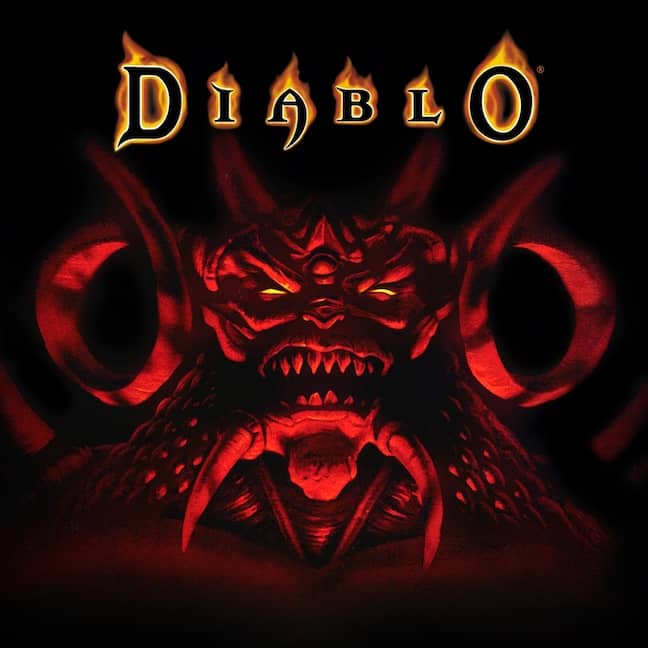
Gameplay and design
The core gameplay of Diablo 1 revolves around real-time combat and randomized exploration. Players choose from three classes—Warrior, Rogue, and Sorcerer—each with unique attributes and skills: the Warrior excels in melee, the Rogue is skilled with ranged weapons, and the Sorcerer relies on magic. The class choice not only affects combat style but also determines the character's growth path, offering distinct experiences on repeated playthroughs.
The dungeons are procedurally generated, presenting different layouts, monsters, and loot each time you enter. This randomness keeps every adventure fresh and greatly enhances replayability. The dungeon spans sixteen levels, from catacombs to caves to hell itself, each with its own theme; the deeper you go, the stronger the enemies and the greater the challenge. Players must constantly explore, seeking the entrance to the next level while dealing with traps and elite monsters.
The item system is a major highlight. Equipment comes in three tiers: normal, magic, and unique. Magic items have random properties, while unique items boast fixed, powerful effects. The durability mechanic requires players to monitor gear wear and repair it promptly, or it becomes ineffective. This design adds depth to resource management, making players consider maintenance costs while pursuing powerful gear.
Multiplayer is another standout feature. The game supports up to four players, connecting via direct link, modem, IPX network, or Battle.net. Battle.net, Blizzard's free online service, allows easy matchmaking or cooperative play. However, early versions lacked anti-cheat measures, leading to rampant modding, which somewhat affected the fairness of online play.
In addition to the main quest, the dungeon randomly generates side quests, such as rescuing trapped villagers or defeating specific elite monsters. These quests enrich the game and offer extra rewards, giving players more choices beyond the main storyline. The combination of random quests and random dungeons makes each playthrough feel like a new adventure, a key reason for Diablo 1's enduring appeal.
Background and release
Diablo 1 is set in the fictional kingdom of Khanduras, once peaceful, but shattered by the awakening of the demon Diablo. The game begins as the player arrives in the town of Tristram, shrouded in fear because the demon is sealed beneath the monastery's catacombs. Players must descend through the depths, level by level, ultimately defeating Diablo to save the world.
The story takes place after the three Prime Evils were sealed away by the Horadrim using Soulstones. Diablo's Soulstone was buried, and a monastery was built atop it to contain the evil. However, Diablo gradually corrupted Archbishop Lazarus and possessed King Leoric, driving him mad. The king's disappearance and the kidnapping of Prince Albrecht plunge Tristram into chaos, and the hero the player controls arrives to investigate and resolve the crisis.
The game's ending is controversial: after defeating Diablo's mortal form, the hero, instead of destroying the Soulstone, drives it into his own forehead, attempting to contain the demon's essence within himself. This act seems heroic but sets the stage for future troubles. In Diablo II, this hero is revealed to be the Dark Wanderer, possessed by Diablo, while the Rogue and Sorcerer become Blood Raven and the Summoner, their fates tragic.
Diablo III further redefines the protagonist's identity, establishing the unnamed warrior as Prince Aidan, Leoric's eldest son. This retcon fills in gaps from the original story and deepens players' understanding of the ending. Aidan's sacrifice and fall become a crucial thread throughout the series, reflecting Diablo's consistent dark narrative style.
The release date is a point of contention: while officially listed as December 31, 1996, the game actually shipped in December 1996, with a formal retail release delayed to January 1997. This detail reflects the tight development schedule and strategic timing for the holiday season. Regardless, the game quickly became a hit upon release, marking a milestone in PC gaming history.
Development
Diablo 1 was originally developed by Condor Games, a studio founded by David Brevik and others. Brevik, influenced by Dungeons & Dragons and roguelike games, wanted to create a game blending random generation and role-playing. Early versions were turn-based, but when Blizzard Entertainment got involved, they demanded real-time combat and multiplayer, a decision that completely transformed the game.
Brevik initially opposed real-time, but after a team vote, they adopted it. Real-time made combat more intense and aligned with Blizzard's vision for pacing. This shift was challenging, requiring a redesign of the combat system, enemy AI, and network synchronization, but the result proved correct. Real-time became a hallmark of ARPGs, influencing countless later titles.
The game originally planned a claymation art style but was changed to a 3D isometric perspective. This change made visuals clearer and better suited for complex scenes and effects. The isometric view became the classic visual style of the Diablo series, retaining strategic overhead views while enhancing immersion. The team invested heavily in graphics technology, making the game stand out on PC platforms of the time.
Blizzard South played a crucial role in development. They built the foundation for Battle.net and helped Blizzard North integrate multiplayer code in the final six months. Battle.net not only provided an online platform for Diablo 1 but also laid the groundwork for future Blizzard titles like StarCraft. This north-south collaboration exemplified Blizzard's internal teamwork.
The game's music was composed by Matt Uelmen, with a soundtrack of six tracks released in 2011. Uelmen's score, known for its dark, gothic style, perfectly matched the game's horror atmosphere. The excellent music and sound effects enhanced immersion during dungeon exploration. Additionally, a shareware version called Diablo Spawn allowed players to play the first two dungeon levels without the CD, effectively expanding the game's audience.
Reception and legacy
Diablo 1 achieved massive commercial success, selling over 2.5 million copies, including 1.3 million in the United States. This was remarkable for the mid-1990s PC market, proving its popularity. The game's success also helped popularize the ARPG genre, though not the first, it made it mainstream.
The game received widespread acclaim, with an average score of 94/100 on Metacritic. Critics praised its randomly generated levels, online multiplayer, and polished graphics. In 1996, Computer Gaming World and GameSpot, among others, named it Game of the Year. These honors cemented Diablo 1's classic status and bolstered Blizzard's reputation.
Diablo 1 is considered a foundational work of the ARPG genre, influencing later titles like Diablo II and Torchlight. Elements such as random dungeons, real-time combat, and loot-driven gameplay became core ARPG features. Its success spawned numerous sequels, including Diablo II, Diablo III, Diablo Immortal, and Diablo IV, forming a vast franchise.
The expansion, Diablo: Hellfire, was developed by Synergistic Software and published by Sierra Entertainment in 1997. Though not made by Blizzard North, it added new classes, monsters, and items, extending the game's lifespan. Additionally, a PlayStation version, developed by Climax Studios in 1998, supported local two-player co-op but lacked online features, differing from the PC version.
In 2016, to celebrate the game's 20th anniversary, Diablo III released the 'Darkening of Tristram' patch, recreating the original game's dungeons and gameplay. This tribute allowed old players to relive the classic and new players to experience its charm. Diablo 1's influence spans over two decades, still revered by players and developers alike, its status unshakable.