
Gameplay and design
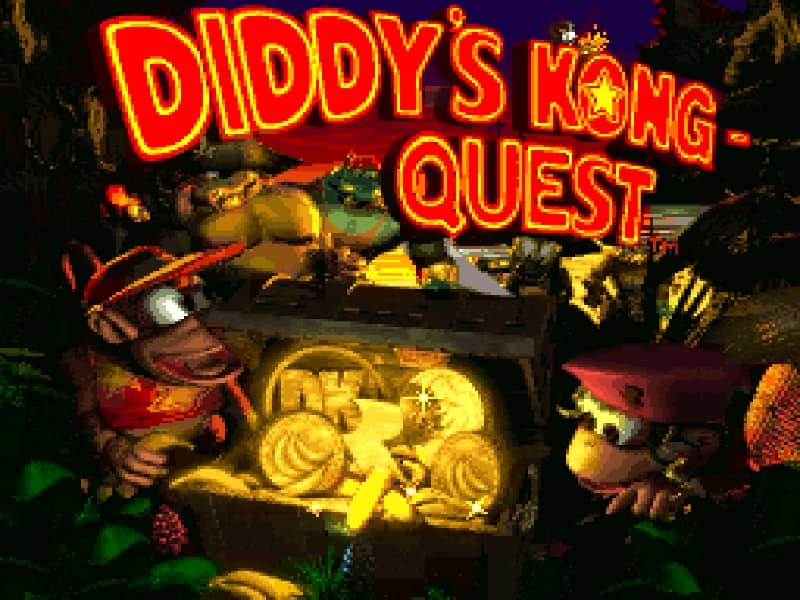
The core gameplay of Donkey Kong Country 2 builds on the 2D side-scrolling of its predecessor, but the focus shifts to Diddy Kong and his girlfriend Dixie Kong. Diddy is fast and agile, suited for levels that demand quick reflexes, while Dixie can jump higher and use her ponytail to glide through the air for a short distance. Players can switch between the two at any time, leveraging their unique abilities to tackle different terrains. This dual-character design makes level solutions more flexible and encourages repeated attempts.
The animal buddies are more varied than in the previous game. Squitter the spider can spin webs to create platforms, Rambi the rhino can smash through obstacles, Rattly the snake leaps extremely high, Enguarde the swordfish excels in underwater combat, and Squawks the parrot illuminates dark areas. Each animal has a distinct feel, and they are not just simple mounts but key to solving puzzles and fighting enemies. For instance, some high ledges are only reachable with Rattly's bounce, and underwater sections are tough without Enguarde.
Collecting is a major focus in this installment. Each level hides the letters K-O-N-G, and collecting them all rewards an extra life. Hidden Kremcoins are tucked away in bonus levels, requiring careful searching. These collectibles not only satisfy completionists but also tie into level unlocking—to access certain hidden areas, players must gather a set number of Kremcoins. This design gives exploration a purpose, rather than just padding the game.
The environmental design is also distinctive, with eight worlds ranging from swamps to ghost ships, each with its own theme. Some levels alter gravity, while others are entirely dark, forcing players to rely on sound or light sources to navigate. For example, in 'Krem Quay,' players must step on crocodile heads to progress, and a slight misstep sends them into the water. These mechanics are not just artificial difficulty but are tightly integrated with the atmosphere, letting players appreciate the designers' ingenuity as they face challenges.
In terms of difficulty, this game is noticeably more hardcore than its predecessor. Enemy placement is denser, traps are more devious, and boss battles are more intense. However, the game doesn't simply punish players; checkpoints are reasonably placed, and collectibles provide extra lives. This difficulty curve caters to veteran players while still offering newcomers fun through abundant hidden content. The hidden ending and 102% completion rate give hardcore players a goal to strive for.
Background and release
Donkey Kong Country 2 was first released in Japan on November 21, 1995, followed by North America on December 4 and Europe on December 14, all for the Super Famicom/SNES. As the sequel to the 1994 hit Donkey Kong Country, it was highly anticipated before launch. The original had become a phenomenon on the SNES thanks to its pre-rendered 3D graphics and smooth animation, and this sequel aimed to push gameplay and content even further.
The story picks up right after the first game: Donkey Kong has been kidnapped by King K. Rool, and Diddy Kong and Dixie Kong must travel to Crocodile Isle to rescue him. This simple plot provides motivation for the adventure and gives players a sense of urgency from the very first level. The island's design is steeped in pirate themes, from the harbor to shipwrecks and the final pirate ship, making the entire island feel like a massive pirate-themed amusement park.
This is the second game in the Donkey Kong Country series, but the protagonist is no longer Donkey Kong himself. This decision was bold at the time, as the original character was beloved. However, Diddy had already appeared in the first game, while Dixie was a brand-new character. This change not only injected fresh energy into the series but also laid the groundwork for future installments.
The game features eight worlds and 52 levels, a larger scale than its predecessor. Each world has a unique visual style and enemy types, spanning forests, volcanoes, underwater areas, and skies. Level design emphasizes vertical exploration and hidden paths, and players often need to backtrack to find missed collectibles. This non-linear sense of exploration was absent in the original.
Released late in the SNES's life cycle, the game still achieved great success. It proved that 2D platformers still had strong vitality before the 3D era arrived. Its commercial and critical success allowed Rare to continue developing sequels and solidified the Donkey Kong series' standing within Nintendo's lineup.
Development
The game was developed by British studio Rare, directed by Tim Stamper, with designers including Brendan Gunn and Gregg Mayles. Development began after the release of the first game, but at that time the original had not yet achieved commercial success, so the team was driven purely by passion. They wanted to present new concepts rather than simply replicate the success of the previous game. This creative mindset led to more breakthroughs in gameplay.
The working title had several candidates, including DK Rescue! and Diddy's Day Out, before settling on Diddy's Kong Quest, a play on words meaning 'conquest.' This title both highlights Diddy as the protagonist and hints at the epic adventure. The Japanese version, however, used the names of Dixie and Diddy directly, more straightforwardly showcasing the dual-protagonist setup.
The creation of Dixie Kong was a highlight of development. Her model was based on Diddy's, but with the addition of her signature ponytail. The team considered nearly 50 names for her before settling on Dixie, which is simple and catchy. Shigeru Miyamoto also contributed to the character design, suggesting patterns for Dixie's beret, including bananas, hearts, and logos, which made the character more lively.
The pirate theme largely stemmed from designer Gregg Mayles' fascination with the golden age of piracy. He had loved pirate stories since childhood and infused that passion into the level design, from sails and treasure to skull elements, which are everywhere. This thematic consistency gives the game's world a cohesive feel and lets players experience a strong stylistic atmosphere throughout the adventure.
The music was composed by David Wise, who drew inspiration from Russian classical composers to create a diverse soundtrack. Since the game's theme is darker, the music's tone was adjusted accordingly, featuring both tense battle tracks and lyrical melodies. Among them, 'Stickerbush Symphony' later became a classic and is widely praised. Wise's score not only enhances the atmosphere but also becomes an integral part of the gaming experience.
Reception and legacy
Donkey Kong Country 2 received widespread acclaim upon release, with the SNES version earning a 92% aggregate score on GameRankings. Critics praised its level design, visuals, and music quality, considering it superior to its predecessor. Players also appreciated the higher difficulty and abundant collectibles, and the game is regarded as a benchmark for 2D platformers.
The game was also a commercial success, with the SNES version selling 4.37 million copies in the US and Japan combined. Retailers struggled to meet demand at launch, reflecting its popularity. This sales figure was impressive for the late SNES era and demonstrated the Donkey Kong series' market appeal. The success laid the foundation for Rare's subsequent development of Donkey Kong Country 3.
The music's long-term impact is particularly notable. 'Stickerbush Symphony' has been praised by outlets like Rolling Stone and has become a classic in video game music history. Many players can still hum the melody years later, and it has been remixed and referenced numerous times. David Wise's score not only elevated the game's quality but also influenced later video game music composition.
The game frequently appears on lists of the best games, such as Complex ranking it 17th on their 2018 list of the best SNES games. These recognitions reflect the game's enduring status among players and critics. Even today, many players consider it the best in the series, and its design principles have left a lasting impact on later platformers.
The game has seen multiple re-releases, including a GBA remake in 2004, a Wii Virtual Console release in 2007, a Wii U version in 2015, and a Switch version in 2020. These ports allow both new and old players to experience this classic. The sequel, Donkey Kong Country 3, was released in 1996, featuring Dixie Kong and Kiddy Kong as protagonists, continuing the series' high quality. The game's influence and longevity are thus evident.





