
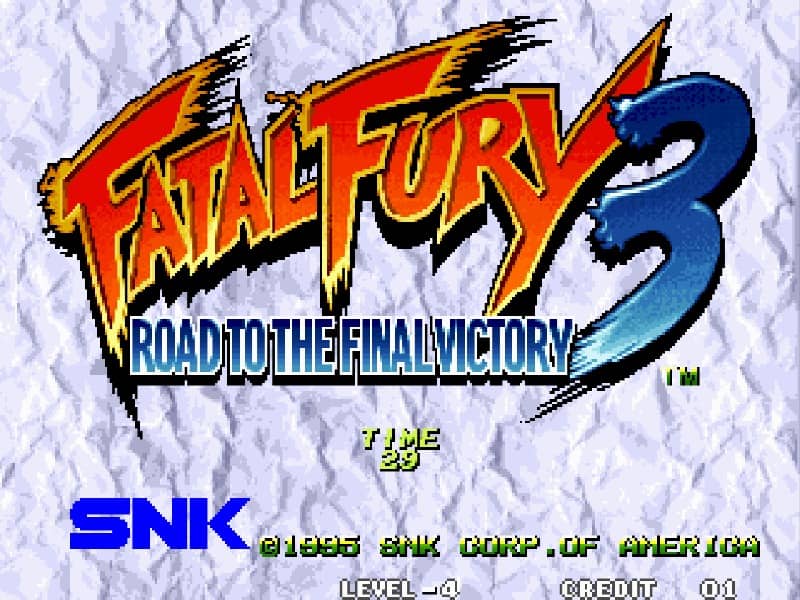
Gameplay and design
The most significant change in Fata Fury 3 is the introduction of a three-line battle system, officially called the Oversway System. Players are no longer confined to a single line but can freely move between the background, foreground, and main plane. This design opens up more movement and strategic options in combat, such as flanking opponents or using line differences to dodge attacks. For players accustomed to traditional flat fighting games, this requires some adjustment, but once familiar, it enriches the rhythm of offense and defense.
The game also adds variable jump heights, allowing players to perform jumps of different heights to suit various situations. Air Guard permits characters to block in mid-air, adding depth to aerial exchanges. Combination Arts is another new mechanic that lets normal attacks chain into special moves, creating continuous combos. These changes are not just for stacking systems but to give players more choices in transitioning between offense and defense, reflecting the tactical emphasis that the Fatal Fury series is known for.
Each character possesses a Hidden Ability, an enhanced version of their super special move, but the trigger conditions are extremely strict, with a probability of only 1/1024. When a Hidden Ability activates, the character enters a super mode with significantly improved move properties and visual effects. This low-probability design adds suspense to every battle; once triggered, it can instantly turn the tide. For players, it is both a surprise and a testament to skill, as the trigger conditions are tied to player actions and timing.
The battle ranking system is another feature, rating players from E to S based on their performance in battle. The rating not only recognizes player skill but also directly affects the final opponent. If players perform well, they may encounter stronger hidden opponents, leading to different story branches. This design encourages players to aim for higher ratings and gives replayability a new goal beyond simply clearing the game.
In terms of the character roster, this installment reduces the number of selectable characters, but each character's moves are more refined. New characters such as Sokaku Mochizuki, Bob Wilson, Hon Fu, Blue Mary, and Franco Bash have unique fighting styles and backstories. Hidden characters Ryuji Yamazaki and the Jin brothers appear as story opponents; they cannot be directly selected but appear under specific conditions, adding mystery and challenge to the game.
Background and release
Fata Fury 3 is the third mainline entry in the Fatal Fury series, with the story set two years after Terry defeated Krauser. South Town seems to have returned to peace, but a rumor shatters the calm: Geese Howard, the villain once defeated by Terry, appears to be alive. This rumor draws the attention of Terry, Andy, Joe, and others, who decide to investigate the truth, sparking a new battle.
The game's storyline continues the series' theme of destined duels but adds more suspense elements. Geese Howard, as a classic series antagonist, has his 'resurrection' rumor serve as the key driver of the plot. Players encounter various characters in the game, some connected to Geese and others with their own agendas, weaving together a complex South Town story.
The new characters each have their own backgrounds: Sokaku Mochizuki is a ninja seeking great power; Bob Wilson is an American martial artist skilled in kickboxing; Hon Fu is a drunken fist master driven by revenge; Blue Mary is an agent with a subtle relationship with Terry; and Franco Bash is a boxer fighting for his brother. These new faces make South Town's world more diverse and add new conflicts to the story.
Hidden characters Ryuji Yamazaki and the Jin brothers play important roles in the story. Ryuji Yamazaki is a cold-hearted gang member whose appearance is linked to the rumors about Geese; the Jin brothers are mysterious figures pursuing power with unclear motives. These characters appear as story opponents under specific conditions, and players must face their challenges to uncover the full story.
The game was first released on the Neo Geo arcade platform on March 27, 1995, and later ported to Neo Geo CD, Sega Saturn, Windows, and Wii Virtual Console. As a transitional entry in the series, Fata Fury 3 connects the previous and subsequent works in terms of story, laying the foundation for the Fatal Fury universe.
Development
Fata Fury 3 was developed and published by SNK, debuting on the Neo Geo arcade platform on March 27, 1995. At the time, SNK was in the golden age of fighting games, with the Fatal Fury series and The King of Fighters series developing in parallel. The development team aimed to break the mold of traditional fighting games, leading to the introduction of the three-line battle system, which became the game's biggest technical highlight.
Implementing the three-line battle system was no easy feat; it required handling character movement across different planes, attack detection, and camera angles. The team invested considerable effort to ensure the game remained smooth while allowing players to clearly perceive line changes. This system was later borrowed by other games, but at the time, it was undoubtedly a bold experiment by SNK.
The design of Hidden Abilities was inspired by a desire to create surprise for players. The team wanted to add unpredictable elements to battles, so they set an extremely low trigger probability. This design sparked internal debate during testing, with some arguing it was too random, but the team ultimately decided to keep it because it brought unique drama. In fact, Hidden Ability triggers are not entirely random but are related to player actions and timing, though the exact conditions were never officially disclosed.
The character roster was trimmed, with the team explaining that this was to focus on polishing the quality of each character's moves. New characters like Blue Mary and Hon Fu were designed with reference to real martial arts styles and given personal backstories. Hidden characters Ryuji Yamazaki and the Jin brothers were designed for story purposes, appearing as opponents to increase the game's challenge.
After development, the game underwent multiple balance adjustments to ensure the three-line system did not make certain characters too dominant. When ported to various platforms, SNK optimized the game for different hardware. In 2007, the game was included in the PS2 compilation Fatal Fury Battle Archives 1, allowing new players to experience this classic.
Reception and legacy
Fata Fury 3 received a positive market response upon release. In April 1995, Japan's Game Machine magazine listed the game as the second most popular arcade game of the month, showing its popularity among players. The AES version (Neo Geo home console) also sold over 34,810 copies in its first week, a respectable figure for an arcade port.
In terms of media reviews, Famicom Tsūshin gave the Neo Geo version a score of 32/40, praising the improvements in system and graphics. Electronic Gaming Monthly's four reviewers gave an average score of 7.675/10, with mixed opinions but generally acknowledging the innovation of the three-line system. GamePro praised the new third battle plane and ranking system, noting that the game achieved more with fewer characters.
In retrospective reviews, Maximum magazine highly praised the game's combos and special move adaptations, giving it 4/5 stars. They considered it to reach the series' peak in fighting depth. Next Generation, however, gave it 2/5 stars, stating that aside from plane movement, the game was unremarkable. This disparity in reviews reflects the game's avant-garde nature at the time; not all players could immediately accept the three-line system.
Fata Fury 3 influenced subsequent fighting games. While the three-line system did not become mainstream, it inspired other games to explore spatial dimensions. The random trigger mechanism of Hidden Abilities also provided new ideas for 'surprise elements' in fighting games. Additionally, characters like Blue Mary later appeared in The King of Fighters series, continuing their stories.
As an important entry in the Fatal Fury series, Fata Fury 3 holds a special place in players' hearts. It retains classic series elements while daring to innovate, offering new possibilities for fighting game development. Despite controversies, its attempts and achievements make it a notable work from the golden age of 90s fighting games.





