
Gameplay and design
The core gameplay of Mega Men 2 follows the basic framework of the first game: players control Mega Man, battle through eight distinct stages, defeat Robot Masters, acquire their special weapons, and then use those weapons to exploit the weaknesses of other enemies. The eight Robot Masters in this installment are Metal Man, Air Man, Bubble Man, Quick Man, Crash Man, Flash Man, Heat Man, and Wood Man. Each stage has a unique theme and gimmicks, such as Metal Man's factory, Air Man's sky, and Bubble Man's underwater area, keeping the experience fresh as players progress.
The special weapon system is a highlight of this game. After defeating a Robot Master, Mega Man gains their weapon, such as Metal Man's Metal Blade, Air Man's Air Shooter, and Bubble Man's Bubble Lead. Each weapon has different attack patterns and energy consumption, and each Robot Master has a specific weakness, like Quick Man being weak to the Metal Blade and Wood Man weak to Bubble Lead. This rock-paper-scissors dynamic encourages players to experiment with different weapon combinations, adding strategic depth and prompting repeated playthroughs to discover the most effective tactics.
This installment introduced Energy Tanks, which players can pick up in stages and use at any time to restore health. This addition significantly reduced the game's unforgiving nature, allowing players to survive critical moments and alleviating the pressure of completing the game without dying, as in the first title. Additionally, a password system was implemented: after clearing a stage, players receive a password that can be entered to resume from that point, eliminating the need to finish the game in one sitting. This was a thoughtful feature for an Famicom game without save functionality.
Compared to its predecessor, Mega Men 2 removed the score counter and made it impossible to return to Robot Master stages after completion, requiring players to plan their route more carefully. However, the game introduced teleporters between stages, allowing players to move quickly after defeating a certain number of Robot Masters, saving time on backtracking. This design made the pacing tighter and highlighted the freedom of stage selection.
After defeating all eight Robot Masters, players enter Wily Castle, a final area consisting of five linear stages. The difficulty ramps up significantly, featuring various traps, tough enemies, and bosses, culminating in a battle against Dr. Wily's mechanical fortress. The castle stages test players' mastery of all previous weapons and techniques, and the final confrontation with Dr. Wily, who disguises himself as an alien via hologram, left a lasting impression on players.
Background and release
Mega Men 2 was released in Japan on December 24, 1988, for the Famicom/NES, with the Japanese title 'Rockman 2: The Mystery of Dr. Wily'. Developed and published by Capcom, it is the second game in the Mega Man series. The story takes place one year after the original: Dr. Wily reappears, creates eight new Robot Masters, and builds a fortress in an attempt to conquer the world. Mega Man is dispatched by Dr. Light to once again thwart Wily's plans.
Although the original Mega Man received positive reviews, its sales were disappointing, making Capcom cautious about developing a sequel. However, producer Akira Kitamura was confident in the series. He obtained permission from higher-ups to develop a sequel, but under the condition that he also work on other projects. In this situation, Kitamura and his team developed the game in their spare time, ultimately completing Mega Men 2 in just three to four months.
Despite the tight development schedule, Mega Men 2 was a huge success upon release, selling over 1.51 million copies worldwide, making it the second best-selling game in the series until Mega Man 11 surpassed it in 2019. This achievement validated the series' potential and laid a solid market foundation for future installments. The game was particularly successful in Japan, and its subsequent releases in North America and PAL regions were also warmly received.
The success of Mega Men 2 was not accidental. It made several improvements over the original, such as lowering the difficulty and adding Energy Tanks and a password system, addressing complaints from players and the marketing department about the first game's difficulty. At the same time, it retained the core gameplay of the original and further refined level design and weapon balance, making the game challenging yet accessible. This attention to player feedback was a key reason for its widespread acclaim.
Although the story of Mega Men 2 is simple, the opening animation and level design create a strong sense of adventure. Dr. Wily's scheme, the introduction of the Robot Masters, and the final twist all immerse players. The game does not rely on complex narrative but conveys its story through action and scenes, a concise and effective storytelling approach that became a hallmark of the series.
Development
The development of Mega Men 2 was fraught with challenges and ingenuity. Due to the poor sales of the first game, the sequel had limited budget and manpower, forcing producer Akira Kitamura to work on it in his spare time. He and his team members, after completing other projects, put in overtime to work on Mega Men 2, with the entire development cycle lasting only three to four months. Despite the time pressure, the team integrated unused content from the original and innovated upon it.
To enrich the game's content, Capcom held a public contest for Robot Master designs, receiving as many as 8,370 submissions. The eight Robot Masters that were ultimately selected—Metal Man, Air Man, Bubble Man, Quick Man, Crash Man, Flash Man, Heat Man, and Wood Man—were all adjusted and refined by the team to fit the game's overall style and balance. This interactive approach with fans not only increased their engagement but also brought more creativity to the game.
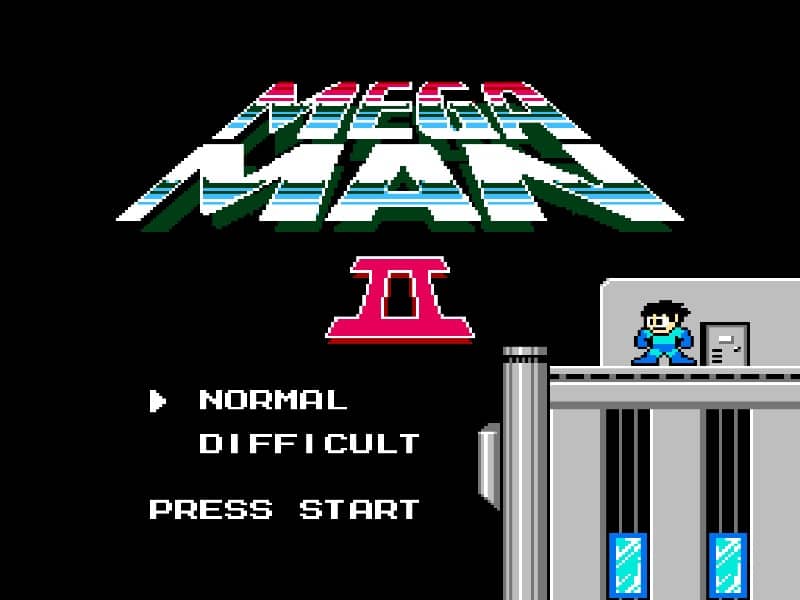
In terms of difficulty design, the development team listened to feedback from players and the marketing department and added three assistive items to lower the difficulty: Energy Tanks, teleporters, and a password system. These features made the game more accessible and attracted more casual players. The North American and European versions also included a 'Normal' difficulty, where Mega Man's buster and weapons were stronger, while the original difficulty was labeled 'Difficult', catering to different player preferences.
The game's music was composed by Takashi Tateishi, with Manami Matsumae contributing to some melodies. Tateishi's musical style was influenced by bands like Mezzoforte and Yellow Magic Orchestra. He had no classical training, but this freedom allowed the Mega Men 2 soundtrack to be full of energy and melody. Notably, the tracks for the first two stages of Wily Castle had to reuse the first eight measures due to data limitations, but this turned out to be a classic.
The North American cover art was drawn by Marc Ericksen, but it depicted Mega Man holding a pistol instead of his iconic Mega Buster, due to instructions from Capcom USA. This cover sparked controversy among players but also became an interesting footnote in gaming history. Despite these differences, the core experience remained consistent across regional versions, earning the game the love of players worldwide.
Reception and legacy
Mega Men 2 received widespread acclaim upon release. Four reviewers from Electronic Gaming Monthly each gave it an 8/10, considering it superior to the original, though some felt the difficulty had been reduced, the overall quality was recognized. Nintendo Power ranked it at the top of its Top 30 list in late 1989 and later named it the third-best NES game in 2008. GameSpot listed it among the 'Greatest Games of All Time', and IGN placed it at number 67 on its 2007 list of the Top 100 Games.
This installment had a profound impact on the series, establishing conventions such as the eight Robot Masters, Energy Tanks, and the password system, which continued and evolved in subsequent games. It also introduced elements like the opening animation and teleporters, setting the basic framework for the series. In many ways, Mega Men 2 marked the series' true maturation and is considered by many players to be the pinnacle of the franchise.
The game's music had a particularly significant cultural impact. Tateishi's compositions have been widely remixed and covered, influencing the nerd rock scene; for example, bands like The Minibosses have performed music from Mega Men 2. These melodies are not only familiar to gamers but have become classics in video game music history, frequently included in official soundtracks and concerts.
Mega Men 2 has been ported and remade multiple times, including the 1994 Sega Genesis game Mega Man: The Wily Wars and the 1999 PlayStation release Rockman Complete Works. Additionally, it has been included in compilations such as Mega Man Anniversary Collection and Mega Man Legacy Collection, allowing new and old players alike to experience this classic. In 1990, Tiger Electronics released a handheld electronic version, and the same year Scholastic published a novelization in the Worlds of Power series.
The game was also adapted into the third story arc of the Archie Comics series Mega Man, titled 'The Return of Dr. Wily', further expanding its story world. These adaptations and ports demonstrate the enduring appeal of Mega Men 2; it is not just a great game but a cultural icon that has influenced countless later games and creators.





