
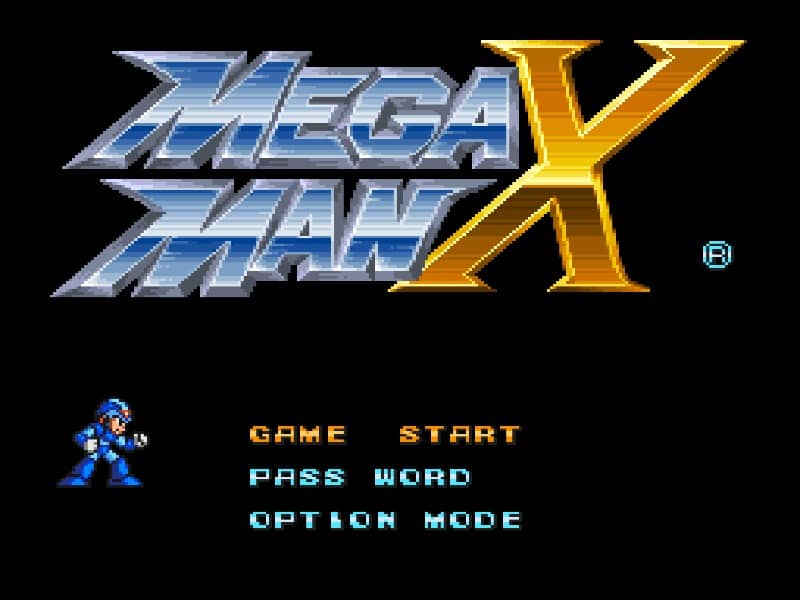
Gameplay and design
MegaMan X carries on the series' classic stage-select structure: players can tackle the eight initial stages in any order, and defeating a boss grants a special weapon that proves effective against another boss, creating a chain of strategic choices. This nonlinear design encourages experimentation and replay, as players seek the optimal route and discover new experiences with each playthrough.
Compared to the original Mega Man, X's mobility is a quantum leap. He gains the ability to dash, cling to walls, and leap off them, giving players more options and control during platforming. These moves not only make stage exploration smoother but also open up new tactical possibilities in combat, such as dashing to dodge attacks or closing in on enemies, making the game feel faster and more exhilarating.
The armor upgrade system is a standout feature. Hidden armor capsules scattered throughout the stages grant X different pieces of armor, such as parts that increase his max health or add sub-tanks. These upgrades aren't required to finish the game, but they significantly boost X's survivability and combat efficiency, rewarding thorough exploration and adding to the game's replay value.
The weapon-cycle mechanic remains a core element. Each boss has a unique special weapon, and certain weapons are particularly effective against specific enemies—for instance, using a fire-based weapon on ice-type foes. This design tests players' observation and memory, adding a layer of strategy to battles. Managing weapon energy and choosing the right tool at the right moment is key to success.
The stage design is more layered, with diverse environments ranging from forests to factories to underwater areas, each featuring unique traps and enemy patterns. X's wall-climbing and dashing abilities make full use of vertical space, requiring players to adapt to various terrain challenges. The difficulty curve is relatively gentle at first, but later stages remain demanding, upholding the series' reputation for tough gameplay.
Background and release
MegaMan X was first released for the Super Nintendo in Japan on December 17, 1993, followed by a North American release on January 19, 1994, and a PAL region launch on May 1 of the same year. As a spin-off of the Mega Man series, it marked the franchise's transition from the 8-bit era to the 16-bit era, with significant upgrades in graphics, sound, and storytelling.
The game is set a century after the original Mega Man series, in a world where humans and robots coexist. The protagonist, X, is Dr. Light's final creation and the first robot with free will. Fearing the potential danger of X's abilities, Dr. Light sealed him in a diagnostic capsule for 30 years of testing, until he was discovered by the archaeologist Dr. Cain.
Inspired by X's technology, Dr. Cain created more robots with free will, known as Reploids. However, some Reploids rebelled for unknown reasons and were labeled Mavericks. Sigma, once the leader of the Maverick Hunters, fell completely due to an 'unforeseen error' and became the Maverick leader, declaring war on humanity and sparking the Maverick Wars.
Facing this crisis, X joins the Hunters and fights against the Mavericks under the guidance of his superior, Zero. Zero is an elite Hunter with a hard-boiled personality, contrasting with X's gentle nature. The story unfolds against this backdrop, as X not only battles Sigma and his forces but also grapples with his own identity as a robot with free will.
The narrative is more mature and serious than the classic Mega Man series, exploring themes of free will and the relationship between humans and robots. Sigma's fall is not simple villainy but stems from a system error, adding depth to the antagonist. Through brief cutscenes and dialogue, the game gradually reveals the world's details, laying a solid narrative foundation for subsequent series entries.
Development
MegaMan X was developed by a team that had worked on the NES Mega Man games, with Keiji Inafune serving as the main designer. The team conducted extensive brainstorming at the project's start, aiming to break new ground while preserving the core gameplay. They wanted to leverage the SNES's hardware capabilities to achieve leaps in graphics, sound, and story, not just a simple HD upgrade.
The design of the protagonist X was a collaborative effort between Inafune and his apprentice, Hayato Kaji. Both drew different armor part concepts, which were eventually merged into X's iconic look. X's design retains the blue color scheme of Mega Man but features sleeker armor and more mature proportions, reflecting his status as a new protagonist.
The armor upgrade system was inspired by the popularity of role-playing games at the time. The team wanted to incorporate RPG-style equipment collection into an action game, giving players a sense of growth through exploration. This design not only enriched the gameplay but also catered to players' desire for character customization, becoming a hallmark of the series.
The team aimed for a more mature world setting than the original series, exemplified by Zero's 'hard-boiled' personality and Sigma's complete evil. Sigma was designed as a character who falls entirely due to an 'unforeseen error,' contrasting with Dr. Wily's 'hard-to-hate' nature. This approach to villainy added tension to the story and aligned with the trend toward cinematic storytelling in the SNES era.
During production, the team also focused on refining the controls. X's dash and wall-climb moves were adjusted multiple times to ensure smooth, responsive handling. Stage designs were playtested repeatedly to balance difficulty and fun. These meticulous efforts contributed to MegaMan X receiving widespread acclaim from players and critics upon release, cementing its status as a classic on the SNES.
Reception and legacy
MegaMan X was a commercial success, selling 1.165 million copies on the SNES by 2001, making it one of the best-selling titles in the series. Critics generally praised the game for successfully transitioning the Mega Man series from the NES to the SNES and introducing a more mature storyline, injecting new vitality into the franchise.
IGN ranked it 12th on its list of the Top 100 SNES Games in 2011, affirming its place in the action-platformer genre. Many reviewers lauded its fluid action system, well-designed stages, and thought-provoking themes, considering it not just a great sequel but an innovation on the classic formula.
The game inspired several manga adaptations, including a serialization by Yoshihiro Iwamoto and a short work by Shigeto Ikehara, further expanding its influence. X and Zero also appeared in crossover titles like Marvel vs. Capcom, becoming iconic Capcom characters beloved by fans.
As a spin-off of the Mega Man series, MegaMan X was primarily produced with Keiji Inafune's involvement, and it spawned multiple sequels that continued X's story. In 2006, a PSP remake titled MegaMan X: Maverick Hunter X was released, featuring a new OVA called 'The Day of Sigma,' giving veteran players a chance to revisit the classic.
In 2018, the MegaMan X Legacy Collection was released, including the first game and its sequels, allowing new players to easily experience the entire series. The game's impact extends beyond its own title; its armor upgrade system and mature narrative techniques influenced later action games, making it a benchmark for 16-bit action-platformers.





