
Gameplay and design
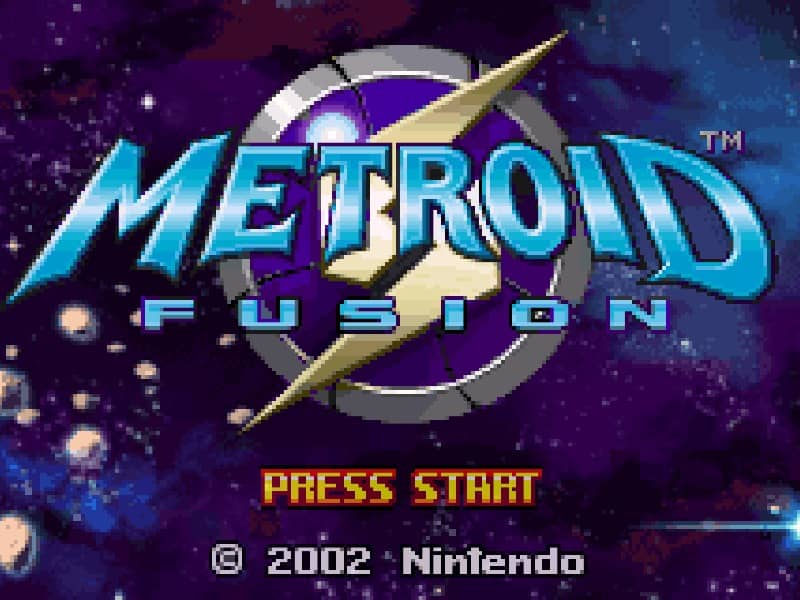
Metroid: Fusion continues the series' classic side-scrolling action-adventure gameplay, with players controlling Samus as she runs, jumps, shoots, and solves puzzles across the space station. Unlike its predecessors, this entry introduces a mission-based guidance system for the first time: the computer Adam, located in the navigation room, issues clear objectives, directing Samus to specific areas. This design makes the game more linear, as players no longer need to explore a vast map on their own as in earlier titles, but instead follow mission prompts to advance the story. For players accustomed to the series' traditional exploration, this change offers a fresh experience and sparks discussion about the series' future direction.
One of the core mechanics is absorbing X Parasites. These are the game's primary enemies, which infect organisms and mimic their forms. After defeating enemies, Samus can absorb X Parasites to restore health, missiles, and bombs. When defeating bosses, she can also absorb Core-X to gain new abilities, such as the Ice Beam and Super Missiles. This method of gaining abilities resembles the series' traditional 'get ability, unlock new area' pattern, but the X Parasite absorption ties ability growth closely to the story and world, letting players feel the fusion of narrative and gameplay during exploration.
This entry also adds the ability to grab ledges and climb ladders, making Samus's movements more agile. These actions not only enrich the platforming gameplay but also open up new possibilities for level design. For example, players must use ledge grabbing to cross pits or climb ladders to reach high areas. These new moves make the controls feel smoother and provide new approaches to puzzles and exploration. However, the game's overall difficulty remains high, with enemy attack patterns and trap designs testing players' reflexes and strategy.
Metroid: Fusion features a unique connectivity feature with the contemporary Metroid Prime. Through the GameCube–Game Boy Advance link cable, players can connect the GBA to the GameCube to unlock Samus's Fusion Suit in Metroid Prime and access a playable version of the original Metroid on the GBA. This design encourages players to own both games and consoles, showcasing Nintendo's experimentation with cross-platform interaction. For players at the time, this connectivity added value to both games and created an interesting link between the two stylistically different Metroid titles.
The mission-based guidance increases linearity but does not completely strip away the joy of exploration. The space station's map remains vast and full of secrets; while completing missions, players can freely explore non-target areas to find hidden Missile Tanks and Energy Tanks. Adam in the navigation room offers advice but does not force players down a specific path. This design strikes a balance between guidance and freedom, ensuring newcomers do not get lost while preserving the series' core sense of exploration. However, some players feel this design weakens the series' proud 'explore-discover' loop, making the game feel more like an action-platformer than a traditional Metroid experience.
Background and release
Development of Metroid: Fusion began in March 2001, when Nintendo was creating a new Metroid game for the Game Boy Advance. At E3 2001, the game was first shown under the title Metroid IV, with early footage of its graphics and gameplay. The demo displayed a 2D side-scrolling style similar to Super Metroid, but with more detailed visuals and new action elements. This reveal generated excitement among series fans and marked the franchise's debut on the GBA.
By E3 2002, the game was officially renamed Metroid: Fusion, and updated graphics and gameplay were shown. At the show, the game earned multiple awards, including 'Best GBA Game.' Nintendo highlighted the mission-based guidance system and the X Parasite concept, which became focal points for players and media. The E3 showcase boosted the game's profile and set the stage for its November release.
The game launched in North America on November 18, 2002, the same day as Metroid Prime. This release strategy was clearly deliberate, with the two games targeting the GBA and GameCube respectively, forming a dual-pronged attack for the Metroid series in 2002. North American players could experience both 2D and 3D Metroid on the same day, a move that caused quite a stir. The game then released in Europe on November 22, in Australia on November 29, and later in Japan on February 14, 2003.
Metroid: Fusion's story is set at the end of the series timeline, directly following Super Metroid. The narrative follows Samus as she becomes infected by X Parasites during a mission; though she survives thanks to a vaccine made from Metroid cells, she loses most of her abilities and becomes vulnerable to cold. She is then sent to investigate an X Parasite outbreak on a space station, only to find it under Federation control, with the true nature of the computer Adam becoming a key plot point. This story setup provides a logical backdrop for the game and adds depth to Samus's character.
The connectivity with Metroid Prime extended beyond the release date, offering content sharing via the link cable. Players could unlock the Fusion Suit in Metroid Prime, which matches Samus's appearance in Fusion, while the GBA version of the original Metroid allowed players to revisit the series' beginnings. This cross-platform interaction was quite novel at the time and demonstrated Nintendo's efforts in hardware and software integration. For collectors and series fans, this connectivity certainly added to the game's appeal.
Development
Metroid: Fusion was developed by Nintendo R&D1, with Yoshio Sakamoto as writer and director and Takehiro Takeuchi as producer. Sakamoto, a co-creator of the Metroid series, decided to craft an original story rather than remake the first game as previously done. He stated in interviews that he wanted to try 'something truly unprecedented,' so he set the story after Super Metroid and introduced new elements like the X Parasites and Adam. This decision gave Fusion a unique narrative position in the series and laid groundwork for future titles.
The development team drew inspiration from Wario Land 4 rather than previous series entries. This choice is intriguing, as Wario Land 4 is a GBA game centered on level-based design, and its level structure and pacing influenced Fusion's mission-based guidance. Sakamoto mentioned that they wanted to borrow the tight level structure of Wario Land 4 to create a smoother, more focused experience. This cross-title reference reflects the team's openness to innovation and helps explain why Fusion's progression is more linear than its predecessors.
The game's music was composed by Minako Hamano and Akira Fujiwara. Hamano composed several tracks for Fusion, crafting music based on Adam's dialogue to align the score closely with the story. For instance, in scenes where Adam issues orders, the music's tempo shifts to enhance the atmosphere. She also rearranged classic melodies from Super Metroid, giving veteran players a sense of nostalgia mixed with freshness. The care in music composition made Fusion's audio a standout feature.
The game originally planned to include voice acting, but due to the Game Boy Advance's ROM size limitations, only warning voice clips were retained. This constraint forced the team to abandon full voice performances, relying instead on text and music to convey the story. Despite this, Samus's silence and Adam's electronic voice effects actually fostered a lonely, tense atmosphere that fits the game's themes. This technical limitation also pushed the team to focus more on environmental storytelling and character interaction.
Samus's suit design underwent a noticeable change in Fusion. Due to the story, where Samus is infected by X Parasites and cured with Metroid cells, her Power Suit's appearance changes, featuring a blue-and-white color scheme with organic design elements. This alteration reflects her physical transformation in the narrative and symbolizes her fusion with Metroid cells. Sakamoto stated in interviews that they wanted the suit design to convey Samus's inner changes and her complex relationship with the X Parasites and Metroids.
Reception and legacy
Metroid: Fusion received widespread critical and player acclaim upon release. On Metacritic, the game earned 'universal acclaim,' and Famitsu gave it a high score of 34/40. Critics praised the graphics, music, and level design, with particular commendation for the mission-based guidance system, seen as a successful innovation on the series' traditional exploration. The game won 'Handheld Game of the Year' at the Academy of Interactive Arts & Sciences and earned honors like IGN's 'Best GBA Adventure Game' and GameSpot's 'Best GBA Action Game,' underscoring its impact that year.
The game sold over 1.6 million copies worldwide, with North American first-week sales exceeding 100,000 units. This was a strong performance for a GBA title and proved the Metroid series' appeal in the 2D space. Although Metroid Prime achieved greater commercial success in 3D, Fusion's sales were solid, laying a foundation for the series on handheld platforms. For Nintendo, the dual success of both games validated the strategy of advancing 2D and 3D Metroid simultaneously.
Metroid: Fusion has been re-released multiple times over the years. In December 2011, it was released on the 3DS Virtual Console as part of the 3DS Ambassador Program, allowing new players to experience the classic. In April 2014, it came to the Wii U Virtual Console, broadening its audience. In March 2023, it joined the Nintendo Classics service, becoming available to subscribers. These re-releases let veterans revisit the game and introduced it to a new generation.
The game has had a lasting influence on the series' future. In 2021, the sequel Metroid Dread was released on Nintendo Switch, directly continuing the story from Fusion's ending, with Yoshio Sakamoto again serving as director. Dread returned to the series' traditional free exploration but retained some elements of mission guidance, reflecting both inheritance and reconsideration of Fusion's design philosophy. In the series timeline, Fusion plays a pivotal role, bridging past and future, with its story and settings providing a crucial foundation for later titles.
Metroid: Fusion holds a unique place among players. Some believe the mission-based guidance weakened the series' hallmark exploration, making it feel more like a linear action game; others appreciate the change, finding it made the pacing tighter and the story more prominent. This debate itself reflects the game's innovativeness within the series. Regardless, as a classic GBA title, Fusion's excellent craftsmanship and distinctive storytelling are still frequently discussed by players and are seen as an indispensable part of the 2D Metroid legacy.





