
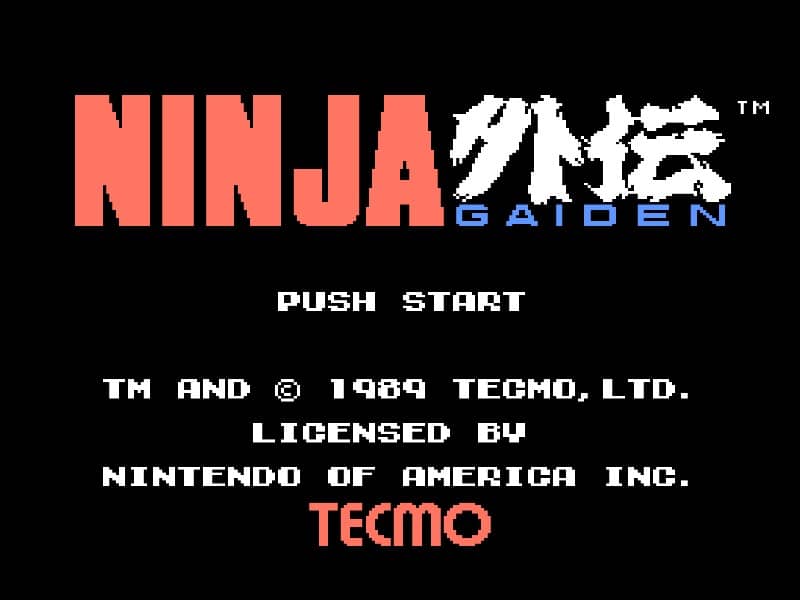
Gameplay and design
The core gameplay of NINJA GAIDEN is side-scrolling action platforming, where players control the ninja Ryu Hayabusa, using his family's Dragon Sword for melee attacks. In addition to normal attacks, Ryu can use sub-weapons such as shuriken, windmill shuriken, and the Fire Wheel technique, which consume spirit energy that can be replenished by picking up items or defeating enemies. This resource management adds a layer of strategy to combat, requiring players to choose the most suitable weapon based on enemy types and the situation.
The game is divided into six chapters, totaling twenty levels, with a boss battle at the end of each chapter. The bosses are four powerful enemies known as the "Four Fiends," including Barbarian, Bomberhead, Basaquer, and the leader, Bloody Malth. These boss battles not only test the player's skills but also require observation of attack patterns and finding openings, adding challenge and a sense of accomplishment.
In terms of the action system, Ryu can climb ladders, scale walls, and even use wall jumps to reach higher areas or cross obstacles. However, the game does not allow attacking while on walls or ladders, forcing players to be cautious during vertical movement and increasing the difficulty of platforming. This design encourages players to constantly be aware of their surroundings while exploring levels, rather than simply attacking.
High difficulty is a hallmark of NINJA GAIDEN. Enemies respawn continuously from the edges of the screen, and traps are placed in tricky spots, so a single misstep can cost health. The game features health, lives, and a time limit; losing all health or falling costs a life, and losing all lives results in a game over, but players can continue indefinitely. This hardcore design, while challenging, makes the sense of achievement upon completion even stronger.
The game's action animation is very fluid, thanks to clever use of limited animation techniques. For example, Ryu's walking animation uses only 4 frames, whereas the contemporary game Prince of Persia required 12 frames. This technical choice makes the character look natural even during fast movement and ensures a tight game pace. Players can feel the agility and swiftness typical of a ninja during high-speed running and jumping.
Background and release
NINJA GAIDEN was developed and published by Tecmo, first released in Japan on the Famicom on December 9, 1988, then in North America in March 1989, and in Europe on August 15, 1991. The European version was renamed "Shadow Warriors," but the game content is identical to the Japanese version. This game is an important late-era Famicom title, leaving a deep impression on players with its unique storytelling and gameplay.
Notably, this game was developed concurrently with the arcade version of the same name released in 1988, but they are not ports; rather, they were produced in parallel by different teams. The arcade version is a beat 'em up, while the Famicom version was designed as a platform action game. This parallel development was uncommon at the time, and the two versions differ greatly in gameplay and experience, often leading to confusion among players, but each has its own distinct features.
The game's story is set in a retro-futuristic 1988, where Ryu Hayabusa travels to America to avenge his father, only to discover a mysterious figure named "Jaquio" attempting to use two statues to release the demon "Evil God." The plot is told through animated cutscenes, totaling over 20 minutes, a first for NES games. This cinematic storytelling gave players the feeling of watching a blockbuster movie within an action game.
Before the North American release, Tecmo used "Ninja Dragon" as a tentative title, but ultimately decided on "Ninja Gaiden," meaning "Ninja Side Story." The European version was renamed "Shadow Warriors" because ninja themes were considered taboo at the time, similar to the renaming of Teenage Mutant Ninja Turtles in Europe. These name changes reflect the differing acceptance of ninja culture across regions.
Nintendo of America was very optimistic about the game, and internal testers loved it, so they assisted in marketing, featuring it prominently in Nintendo Power magazine. The game was also showcased at the 1989 International Winter Consumer Electronics Show, with a booth featuring a playable demo and a live actor dressed as a ninja, attracting significant attention. These promotional efforts laid the groundwork for the game's success in the United States.
Development
The director of NINJA GAIDEN was Hideo Yoshizawa, who participated under the pseudonym Sakurazaki. Yoshizawa was inspired by the Mario series and decided to design the game as a platformer, rather than the beat 'em up style of the arcade version. This decision established the core gameplay and gave the Famicom version a fundamental distinction from the arcade version. Designer Masato Kato (under the pseudonym Runmaru) was responsible for graphics and animation, and his work brought a unique visual style to the game.
The development team designed Ryu Hayabusa with a ninja vest to emphasize his muscles, and a headband that curves outward. Originally, they considered equipping Ryu with sensors and a helmet with an internal monitor, but ultimately abandoned this idea. This design choice made Ryu's appearance simpler and more dynamic, and easier for players to remember.
The game's high difficulty was not accidental but stemmed from Tecmo's development philosophy. Yoshizawa decided to give the game high difficulty because Tecmo adhered to the principle that "if a game isn't hard, users will throw it away." This design approach was not uncommon at the time, but NINJA GAIDEN combined difficulty with fluid action in a way that made the challenge enjoyable.
The cutscenes were a major highlight, using the "Tecmo Theater" system, which advanced the story through static images and text dialogue. These cutscenes exceeded 20 minutes, extremely rare for NES games. To achieve a cinematic effect under limited hardware constraints, the development team put considerable effort into visual composition and text layout, making the narrative both clear and emotionally engaging.
The translation process for the game's text was also quite convoluted. Japanese writers first wrote rough English, faxed it to the American branch for editing, and went back and forth multiple times. Since the text was stored in image files, it had to be kept concise due to hardware limitations. This cross-cultural collaboration, though inefficient, ensured the quality of the final text. Additionally, Nintendo of America reviewed all symbols and objects, prohibiting sensitive content such as religion, sex, and drugs, which also influenced some of the game's design.
Reception and legacy
NINJA GAIDEN received widespread acclaim upon release. It was a commercial success in the United States, with Tecmo's American branch stating that high demand led to each order increasing by 60,000 cartridges. In the July-August 1989 issue of Nintendo Power, the game ranked third, and it won Best Challenge and Best Ending at the 1989 Nintendo Power Awards. Electronic Gaming Monthly listed it as the top game from July to October 1989, and in its 1989 Best and Worst, it was named NES Game of the Year and Best Ending.
In Japan, Famitsu gave the game a score of 28/40, which, while not top-tier, was considered above average given the scoring standards of the time. The game had an excellent reputation among players, with its high difficulty and cinematic storytelling becoming talking points, attracting many players and turning them into loyal fans of the series.
The game launched the NINJA GAIDEN series, with sequels NINJA GAIDEN II and III continuing Ryu Hayabusa's adventures. These sequels further evolved the gameplay and narrative, but the foundation laid by the original remains the soul of the series. Additionally, the game was ported to multiple platforms, including PC Engine (1992, Japan), Super Nintendo (1995 compilation), and Wii Virtual Console (2007), allowing more players to experience this classic.
The PC Engine version is a port, but it has differences in translation and music, which need to be noted separately. This version, while retaining the core gameplay, adjusted the graphics and sound, offering a slightly different experience for players on different platforms. Such cross-platform ports also reflect the game's influence at the time.
NINJA GAIDEN has been ranked among the greatest games of all time by several magazines, such as Game Informer, which placed it at number 93. Its cinematic storytelling and high difficulty influenced later action games, with many works drawing inspiration from it. In 1990, Scholastic published a novelization in the Worlds of Power series, written by Seth Godin and Peter Lerangis, which toned down the violence and changed the ending, further demonstrating the game's cultural impact.





