Gameplay and design
Pokémon FireRed continues the series' classic third-person overhead perspective, as players traverse the Kanto region's overworld, encounter wild Pokémon in tall grass, and battle trainers. The core loop remains catching, training, and trading Pokémon, with turn-based combat requiring strategic use of type matchups. When catching Pokémon, the success rate is influenced by factors such as the target's current HP and the type of Poké Ball used, adding a layer of strategy to every capture.
As a remake, the game retains the original content while introducing the Sevii Islands, a new area inspired by the real-world Izu Islands. This region offers additional storylines and explorable content, giving veteran players something fresh. The Sevii Islands not only serve as a new adventure stage but also feature unique Pokémon and items, enriching the game's collection aspects.
The game introduces several quality-of-life improvements. For instance, a context-sensitive help menu allows players to view instructions at any time, lowering the barrier to entry. When loading a save, the game displays the last four actions, helping players recall their progress. These details reflect the development team's attention to player experience.
FireRed's most notable feature is its support for the Game Boy Advance Wireless Adapter, which was bundled with the game. Through it, up to 30 players can interact wirelessly in the Union Room, trading or battling without the need for link cables. This feature greatly enhanced multiplayer convenience at the time and underscored the series' emphasis on social gameplay.
The game is fully compatible with Pokémon Ruby and Sapphire as well as Pokémon Colosseum, allowing cross-version trading and battling. This interoperability was achieved through engine adjustments, enabling seamless connectivity of third-generation Pokémon data and providing players with a broader collection space.
Background and release
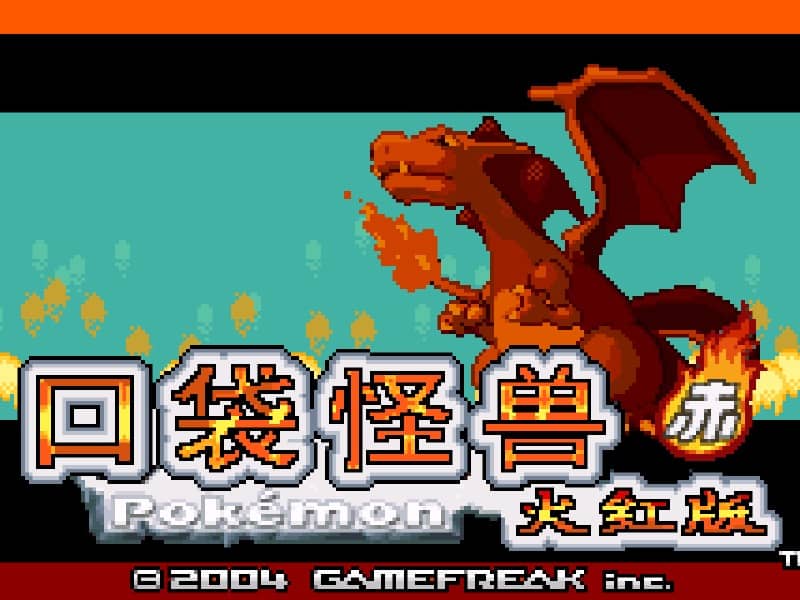
Pokémon FireRed is a remake of the 1996 Pokémon Red and Green, released in Japan on January 29, 2004, and in North America and Europe in September and October of the same year, respectively. As a third-generation title, it marked the series' first remake, setting a precedent for future remakes.
The game's story is set in the Kanto region, where the player takes on the role of a young trainer competing against a rival, aiming to defeat the eight Gym Leaders, the Elite Four, and the Champion. Along the way, the player must also thwart the evil Team Rocket's schemes. The plot retains the original framework but is expanded through the Sevii Islands, adding new challenges.
The North American and European versions used the Japanese naming of 'Red' and 'Green' rather than the original Western 'Red' and 'Blue'. This decision stemmed from Junichi Masuda's philosophy that 'leaf' represents peace, while 'water' might imply conflict, so he chose 'LeafGreen' as more fitting for the game's theme.
The game was a commercial success. In Japan, first-week sales reached 885,049 units, slightly lower than Ruby and Sapphire's debut, but impressive given its remake status. In the United States, pre-orders exceeded 150,000 units, more than double those of Ruby and Sapphire, and sales surpassed one million within a month of release.
On February 27, 2026, to celebrate the series' 30th anniversary, Pokémon FireRed was re-released digitally on Nintendo Switch and Switch 2, including special items like the Aurora Ticket and Mystic Ticket. However, the Switch version faced criticism for its high price and lack of online features, and Japan received a special physical edition with a download code and a glass Poké Ball.
Development
Pokémon FireRed was developed by Game Freak, with director Junichi Masuda adhering to a philosophy of 'simplicity.' He noted that the development team aimed to make the game easy to pick up while preserving the essence of the original. To achieve this, the game engine was modified from Ruby and Sapphire, ensuring full compatibility with third-generation games.
The game's music was arranged by Go Ichinose, who reworked the original Red and Green tracks and added extra sound effects. Some pieces were also transposed, giving the overall soundtrack a nostalgic yet fresh auditory experience. These musical details enhanced the game's atmosphere.
The inclusion of the Wireless Adapter was a major highlight in development. Executives at Nintendo and The Pokémon Company even felt that this feature made FireRed and LeafGreen feel like new games rather than mere remakes. The adapter was bundled with the game, allowing 30 players to interact wirelessly, an innovative move at the time.
The game's initial production run in Japan was limited to 500,000 units, which IGN speculated might be related to production constraints of the Wireless Adapter. This limited strategy may have affected early market performance but did not hinder long-term sales.
The development team paid attention to detail during the remake process, such as adding the context-sensitive help menu and save operation logs, which were improvements based on player feedback. These design choices reflected the team's commitment to player experience, making the remake more in line with modern player habits while preserving the classic feel.
Reception and legacy
Pokémon FireRed received generally positive reviews from media and players upon release. On Metacritic, the game holds an overall score of 81%, with critics praising its successful preservation of series traditions while introducing new features like the Wireless Adapter. IGN's Craig Harris gave it a 9/10, stating the game was well-suited for the handheld market, though he noted the graphics were 'limited' and 'basic.'
GameSpot's Greg Kasavin gave it an 8.4/10, believing the game had more content than Ruby and Sapphire and praising the visual presentation. Game Informer gave it an 8/10, calling the game 'fun' but noting the graphics were 'nothing special.' GameSpy's Phil Theobald awarded four stars out of five, particularly commending the game mechanics and the Wireless Adapter feature.
The game was a commercial success, with global sales reaching 11.82 million units by March 31, 2008, and surpassing 12 million by October 2013. This achievement made it one of the best-selling remakes in the Pokémon series, proving that classic titles still hold strong appeal in a new era.
On October 2, 2006, the game joined the North American Player's Choice series, with the price reduced to $19.99, though it no longer included the Wireless Adapter. This move further expanded the game's audience, allowing more players to experience the classic at a lower price.
As the series' first remake, Pokémon FireRed set a benchmark for subsequent remakes. It not only allowed veteran players to relive the original's charm but also attracted new players through added content and features. The 2026 Switch release sparked discussions about pricing and functionality, but regardless, the game's place in Pokémon history remains unshakable.