Gameplay and design
What makes Pokémon Unbound so appealing is that it doesn't just swap maps or tweak stats; it builds a full-fledged adventure. The setting is the original Borrius region, with towns, routes, puzzles, and a main story all designed from scratch. Players won't feel like they're revisiting an old version but exploring a new world with its own character. The story revolves around Borrius's past wars and dark forces, and it also touches on the player character's family secrets. Without spoiling key twists, it's clear that putting the narrative front and center sets this hack apart from many others that only change Pokémon distribution.
The quest system is a major highlight of Unbound's gameplay. In many hacks, side quests rely on players remembering them or they're easily forgotten. Here, side quests become trackable objectives with clear rewards, progress, and completion conditions. Players don't need to flip through guidebooks; the game itself tells you what to do next. This design makes exploring Borrius more purposeful and gives completionists peace of mind.
Difficulty selection is another feature that lets different players find their own pace. The game offers four levels: Vanilla, Difficult, Expert, and Insane. From players who just want to enjoy the story and breeze through, to competitive players who love team building and pushing limits, there's something for everyone. On Vanilla, enemy levels and AI are more forgiving, suitable for newcomers. Insane, on the other hand, demands a deep understanding of stats, abilities, moves, and serious team construction, much like in battle facilities. This flexibility means Unbound isn't just for one type of player.
In terms of battle mechanics, Unbound builds on the Complete FireRed Upgrade, bringing a battle engine close to the eighth generation to the GBA. Newer moves, abilities, items, and battle rules are included, letting veterans enjoy modern battle logic with familiar graphics. The game also adds many quality-of-life improvements, such as reusable TMs, more bag space, auto-run, and various Exp. Share options. These tweaks might seem minor, but they make the whole experience smoother and show the creator's care for player comfort.
Beyond the main story, the game includes several minigames to break up the pace, like Cloud Burst, Safari Sniper, and mining underground. They're not just filler but offer a change of pace between training and battles. After the main story, there's the Battle Frontier, trainer rematches, legendary Pokémon hunts, and many quests. The Battle Frontier features various facilities with different rules, emphasizing consecutive battles, team building, and resource exchange—it's a major part of the post-game. Additionally, New Game+, randomizer, and Scalemons modes give returning players a completely different experience on a second playthrough.
In summary, Unbound isn't just a FireRed map swap; it creates a complete adventure framework with an original region, quest system, difficulty choices, and extensive post-game content. It caters to story-driven players, collectors, and hardcore battlers alike. This multi-layered design makes it feel more like an indie Pokémon game than a simple hack.
It's worth noting that while the Pokémon, names, and base systems still belong to the original rights holders, Unbound's innovations have made it an iconic presence in the ROM hack scene.
Background and release
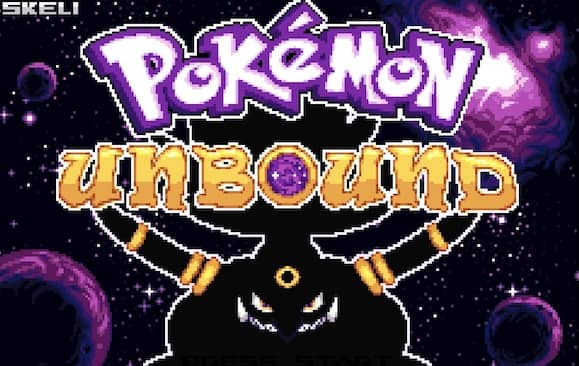
Pokémon Unbound is rooted in Pokémon FireRed for the Game Boy Advance. It's not an official title but a ROM hack created by a player named Skeli, distributed as a patch. Players need to obtain a compatible FireRed base ROM and apply the patch to play. This distribution method is common in the ROM hack community, avoiding legal issues with distributing official cartridges and preserving the DIY spirit.
The project went through a long development and maintenance period. Version 2.1.1.1, released on November 8, 2022, was long considered by the community as a stable and complete 2.x update. Before that, the project had accumulated a lot of content and improvements, and 2.1.1.1 consolidated these into a relatively polished version. For players, this version meant they could confidently invest dozens of hours into the full Borrius adventure without worrying about too many unfinished issues.
Unbound also has a separate Battle Frontier Demo, which is distinct from the full main story version. This demo lets players experience the battle engine and facilities more directly, essentially a trial version of the battle system. It shouldn't be confused with the full version, but it shows the creator's focus on the battle aspect. This approach of splitting core content for separate testing is rare in ROM hacks and reflects the project's meticulous development.
Long-term maintenance is a key reason Unbound has built a good reputation. From early versions to 2.1.1.1, Skeli and the community have been fixing bugs, balancing, and adding content. This ongoing effort keeps the game alive years after release. Meanwhile, the community has built a vast resource ecosystem, with players compiling documents on Pokémon locations, quest walkthroughs, trainer teams, Battle Frontier rules, and evolution methods, helping newcomers get started and veterans dive deeper.
Unbound's community standing largely comes from its scale and completeness. It's not a half-finished hack with only partial changes; it's a work with a full main story, rich side quests, and extensive post-game content. While we can't verify exact download numbers, the buzz in community discussions, the abundance of guides, and the fan-made tools indicate it has significant influence in the ROM hack scene. This influence isn't from marketing but from the game's quality and sustained maintenance.
Development
The core creator of Pokémon Unbound is Skeli, who in the project's description calls it his only ROM hack. That simple statement belies the immense time and effort involved. Skeli didn't work alone; he and other contributors advanced the Complete FireRed Upgrade (CFRU), the engine that provides the technical foundation for Unbound. CFRU allows GBA base ROMs to support more modern battle mechanics and quality-of-life improvements, making many of Unbound's new features possible.
During development, Skeli didn't rely solely on existing assets; he designed original maps, story, and art for the Borrius region. This means the towns, routes, and characters in the game are all tailored to this new region, not lifted from other versions. This originality makes Unbound's world feel cohesive and believable, and it gives players a sense of freshness as they explore.
For music, the project enlisted creators like Pascal van den Bos and Rowyn Berlan to produce original and arranged tracks. These tunes fit the game's atmosphere and give Borrius a unique auditory identity. On the GBA, audio capabilities are limited, but Unbound's careful selection and arrangement let players experience a wider range of emotions during gameplay.
Adding new mechanics within GBA ROM limits was one of the biggest development challenges. The GBA's hardware is limited, but Unbound, via the CFRU engine, packs near-eighth-generation battle mechanics into this old platform. This required extensive code optimization and resource management, showing the creator's dedication to technical detail. The game also includes character customization, allowing players to adjust skin tone, hair color, and clothing colors—a rarity in the GBA era, giving the protagonist more personal choice.
Beyond the game itself, Skeli also runs Unbound Cloud, a web tool that lets compatible ROM hack saves store Pokémon boxes online. Players can organize boxes, move Pokémon between compatible saves, and even trade. This tool is rare in the ROM hack community, combining the game with web services for extra convenience. However, the cloud tool doesn't mean the game ROM auto-updates in the browser; players upload and download only their save data. This extension of supporting tools shows the project's forward-thinking development.
Reception and legacy
Pokémon Unbound's status in the ROM hack community largely stems from how it represents the evolution from simple modifications to full-fledged independent creations. Early hacks often just tweaked stats or swapped maps, but Unbound, with its custom engine, complete art, original music, and companion web tools, raised the bar to a new level. It proved that fan-made games can achieve near-commercial quality and inspired others to take on more complex projects.
Unbound's lasting appeal comes from its ability to cater to story-driven players, collectors, and hardcore battlers simultaneously. Story players can immerse themselves in Borrius's tale, collectors can slowly explore every corner, and battlers find challenges in the Battle Frontier and Insane difficulty. This broad appeal has built a reputation across different player groups, not just a niche following.
The community's resource compilation and long-term player engagement are another sign of Unbound's impact. From Pokémon locations to quest guides, trainer teams to evolution methods, players have voluntarily compiled extensive documentation, helping newcomers get up to speed and veterans delve deeper. This ecosystem indicates the game has enough depth and content to explore, and that players genuinely love it.
Of course, it's important to recognize that Unbound is always an unofficial work. It uses the Pokémon IP, but the Pokémon, names, and base systems still belong to the original rights holders. Skeli and the community have always emphasized this, avoiding any confusion that it's an official product. This respect for copyright is also the foundation for the ROM hack community's sustainability.
In the end, Unbound's significance isn't just that it's a fun game; it's that it showcases the potential and possibilities of fan-made works. It shows how complete a community-driven Pokémon game can be and sets a benchmark for future hacks. While it can't replace official titles, its place in players' hearts is unique.