
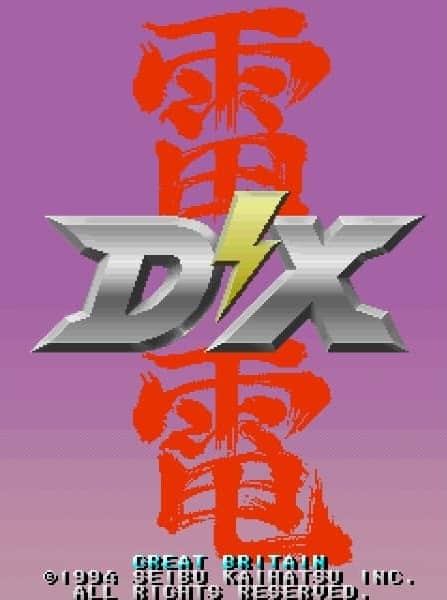
Gameplay and design
The core gameplay of Raiden DX continues the vertical-scrolling shooter style of Raiden II, where players pilot a fighter through dense bullet patterns, destroying enemy aircraft and dodging attacks. The game offers three modes: Alpha Mode (beginner), Bravo Mode (intermediate), and Expert Mode (advanced), each with distinct stage structures and difficulty levels. Alpha Mode consists of a single stage divided into three areas—rural, urban, and military base—ideal for newcomers to learn the ropes. Bravo Mode includes five stages, matching the first five of Raiden II, with moderate difficulty. Expert Mode features nine stages: the first five are modified versions of Bravo's, while the last four take place in space, with the ninth being a special stage accessible only if the player completes the previous stages without losing a life, posing an extreme challenge.
In terms of weaponry, Raiden DX retains the classic design of Raiden II, featuring the main weapons Vulcan Cannon (red) and Plasma Laser (blue), and introduces a new Proton Plasma Laser (purple) that offers improved power and fire rate, giving players more tactical options. The secondary weapons remain the same as the previous game, including the Storm Missile (M) and the Homing Missile (H); the former fires straight ahead, while the latter automatically tracks enemies, each suited to different situations. For bombs, in addition to the original small nuclear bomb (red B), a new shotgun-type bomb (yellow B) is added, which covers a wider area on explosion, proving useful for clearing the screen and dealing with dense enemy formations.
The boss designs in Raiden DX are distinctive, featuring red crystal lifeforms that control the machines. Players must destroy the machines, but the crystal lifeforms escape after the machine is defeated, adding depth to the boss battles. In the ninth stage of Expert Mode, players face a frozen micro-planet, and the final boss is a massive tank, with the battle scene and enemy designs exuding a sense of pressure. The overall pacing is tight, with bullet density and enemy strength increasing significantly with each mode, demanding quick reflexes and precise control from the player.
The scoring system is another highlight of Raiden DX. The game reorganizes the scoring rules, encouraging players to collect items, destroy enemies, and maintain combos throughout the stages. Scoring strategies vary by mode; in Expert Mode, the longer stages and stronger enemies allow for higher score ceilings. Additionally, the game introduces a mechanism similar to extra lives, granting additional lives when players reach certain score thresholds, which somewhat alleviates the pressure of high difficulty and gives score-chasing players clearer goals.
The three modes of Raiden DX are not merely difficulty levels but involve a complete rearrangement of stages and enemy configurations. Alpha Mode, despite having only one stage, offers varied scenery across its three areas, suitable for a quick experience. Bravo Mode presents the first five stages of Raiden II in full, familiar content for series veterans. Expert Mode is a challenge for core players, especially the special ninth stage, which requires a no-miss run to access, testing both skill and patience. This multi-mode design allows players of different skill levels to find a suitable playstyle and enhances the game's replay value.
Background and release
Raiden DX was developed by Seibu Kaihatsu and released in 1994, marking the third entry in the Raiden series. In the series' timeline, the original Raiden laid the foundation for vertical shooters, while Raiden II brought comprehensive upgrades in graphics and systems. Raiden DX builds upon Raiden II by further adjusting and reorganizing stages and scoring, making it not a fully independent new work but rather another version of Raiden II, serving as an important supplement to the series during the arcade era.
The arcade version of Raiden DX was released in 1994, during the golden age of shooters in the arcade market. With its solid systems and varied modes, the game quickly gained player attention. In the September 15, 1994 issue of Game Machine magazine, Raiden DX was listed as the fifth most successful tabletop arcade unit at the time, reflecting its commercial success. Similarly, RePlay magazine reported Raiden DX as the fifth most popular arcade game, indicating a strong performance in the arcade market.
After the arcade release, Raiden DX was ported to the PlayStation by Japan System on April 11, 1997, marking its debut on home consoles. The PlayStation version retained the core arcade content while adding numerous exclusive features, such as a PS-exclusive soundtrack, a Viper Phase 1 soundtrack, and the original arcade soundtrack, as well as extras like "The Master of Raiden" and an encyclopedia, providing a richer experience. This port allowed players who couldn't access arcades to enjoy the game, further expanding its reach.
On October 26, 2000, Hamster Corporation released a budget version of Raiden DX as part of the "Major Wave 1500 series." This re-release at a lower price lowered the barrier for players and allowed the game to continue on the PlayStation platform. Hamster's reissue in 2000 ensured that Raiden DX maintained a presence even after the arcade boom had faded, making it an important port in the series.
From a series perspective, Raiden DX holds a unique position. It is neither a simple remake of the original Raiden nor a complete replacement for Raiden II, but rather an enhanced version of Raiden II that improves gameplay, adds new stages, and offers multiple difficulty paths, providing a different experience from the original. This "DX" approach was not uncommon in the gaming industry at the time, but Raiden DX left its mark on the series through its solid content and unique mode design, also serving as a reference for later titles.
Development
Raiden DX was developed by Seibu Kaihatsu, the company behind the Raiden series. After the success of Raiden II, the development team did not rush to create a completely new sequel but chose to deepen and expand upon the existing system. According to available information, Raiden DX is based on Raiden II's system but reorganizes stages and scoring, reflecting the team's focus on gameplay. They aimed to bring freshness by adjusting stage structures and scoring rules rather than simply piling on new content.
During development, the team rearranged the stages from Raiden II and added multiple modes. Alpha Mode was likely designed to attract new players, with a single stage divided into three areas for a quick experience of different settings. Expert Mode, on the other hand, challenges core players with nine stages, far exceeding Raiden II's scale, especially the special ninth stage, which requires a no-miss run to access. This hidden stage design added exploration and challenge, showing the team's careful consideration of player needs.
The innovations in weapons and bombs were also a development focus. The new Proton Plasma Laser (purple) and shotgun-type bomb (yellow) were not added arbitrarily but were carefully balanced to match the difficulty of each mode. The Proton Plasma Laser offers superior power but may require players to make trade-offs in certain situations; the shotgun bomb provides wider coverage, suitable for dense enemy formations. These additions brought more variety to the gameplay and demonstrated the team's dedication to system design.
The PlayStation version was developed by Japan System and released in 1997. This port was not a simple arcade emulation but included a wealth of exclusive content, including a PS-exclusive soundtrack, a Viper Phase 1 soundtrack, and the original arcade soundtrack, allowing players to enjoy multiple versions of the game's music. Additionally, it included "The Master of Raiden" and an encyclopedia; the former likely contains strategy guides or setting materials, while the latter provides game-related knowledge. These extras enriched the game's value and showed the porting team's commitment to players.
In 2000, Hamster Corporation re-released Raiden DX as a budget title as part of the "Major Wave 1500 series." This move was likely to adapt to the PlayStation market's demands at the time, attracting more players with a low price. Hamster, a company specializing in classic game ports, recognized the value of Raiden DX through this reissue. From development to porting and re-release, the journey of Raiden DX reflects the common path of arcade games on home consoles and showcases collaboration between different companies.
Reception and legacy
Raiden DX performed admirably in the arcade market. In September 1994, it ranked fifth in Game Machine magazine's tabletop arcade unit chart, and RePlay magazine also listed it as the fifth most popular arcade game at the time. While not top-ranked, given the fierce competition in the arcade market, reaching the top five indicates the game's popularity among players. For a variant based on Raiden II, such results were a testament to the development team's efforts.
Within the series, Raiden DX is regarded as an enhanced version of Raiden II, injecting new vitality into the series through improved gameplay, additional stages, and multiple difficulty paths. Although it did not pioneer an era like the original Raiden or bring revolutionary graphical changes like Raiden II, its system adjustments and mode innovations provided a reference for later works. For example, the multi-mode design concept became common in subsequent shooters, and Raiden DX was an early practitioner of this idea.
The PlayStation releases, both the initial 1997 version and the 2000 budget reissue, extended the game's lifespan, allowing players to experience it even after the arcade boom subsided. Hamster's re-release in particular, at a lower price, attracted new players and gave veterans a chance to revisit the classic. This re-release model was not widespread at the time, but the success of Raiden DX may have influenced the porting strategies of other classic games.
Among shooting game enthusiasts, Raiden DX is noted for its unique modes and challenge. The nine stages of Expert Mode, especially the hidden ninth stage, became a goal for many players to repeatedly challenge. This design not only increased replay value but also fostered communication and competition among players. While the source does not specify its exact standing among fans, the thoughtful mode design undoubtedly left a strong impression on core players.
Overall, Raiden DX plays a bridging role in the Raiden series. It inherits the essence of Raiden II and, through new content and mode adjustments, offers a different experience from the original. Although it may not be as groundbreaking as the original Raiden or as widely known as Raiden II, its success in the arcade market and its ports to home consoles prove its value as a shooter. For fans of vertical-scrolling shooters, Raiden DX is a worthwhile title, showcasing another possibility for a classic series in its mature phase.





