Gameplay and design
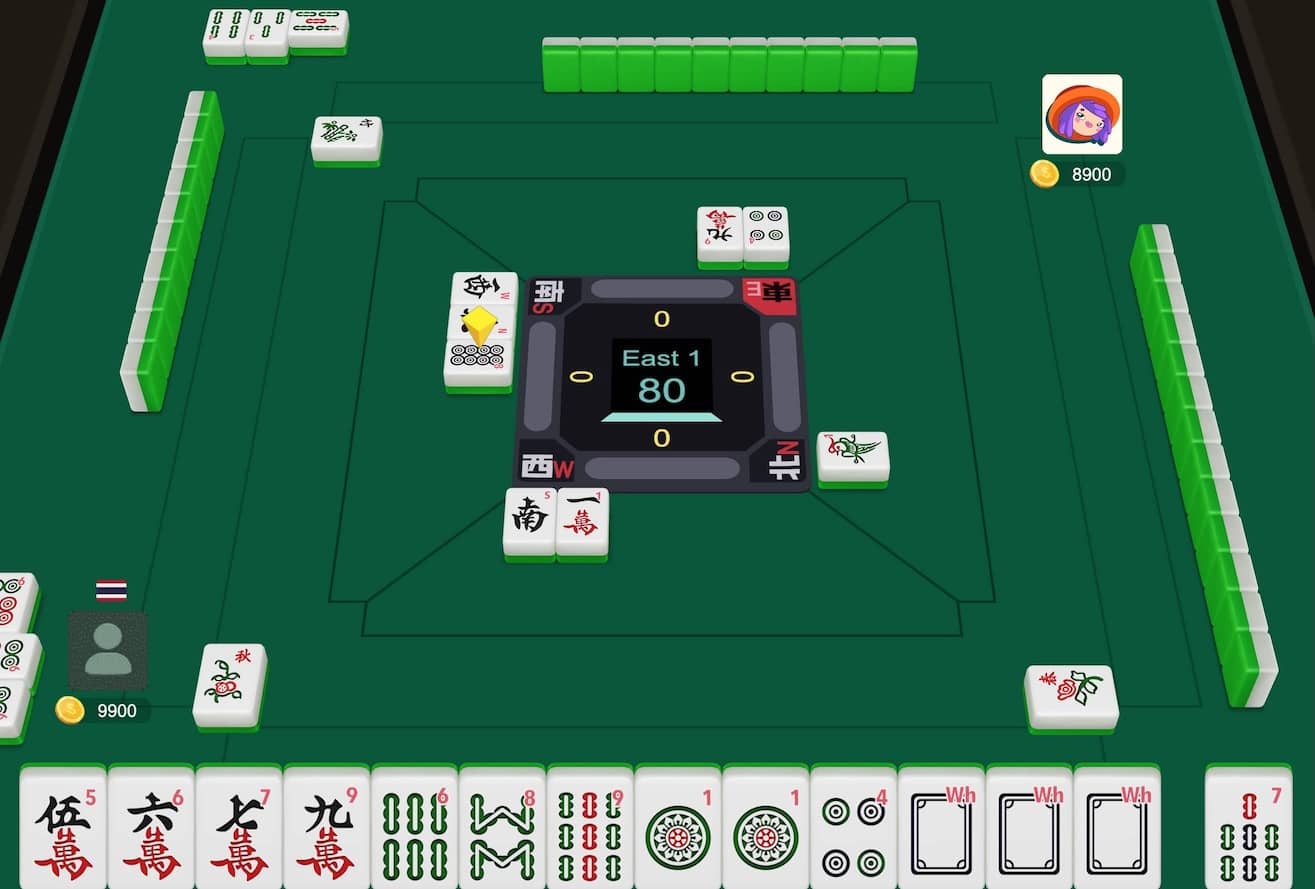
Sichuan Mahjong: Bloody Battle is a four-player mahjong game that runs in a browser; it is not a tile-matching puzzle game played with mahjong imagery. It uses the Bloody Battle ruleset popular in Sichuan, with four players at the table and the goal of drawing and discarding tiles to complete a winning hand. Unlike many mahjong variants, the core feature here is that the round does not end as soon as someone wins: players who have won drop out, and the rest keep playing until the end condition is met.
Bloody Battle rules typically use a reduced tile set with the honor tiles removed, so only suited tiles take part in combinations. That gives the game a different pace and a different range of possible hands compared with mahjong that includes honors. After the deal, players must settle on or declare one suit to leave out, and they adjust their hands around that restriction for the whole round. The missing-suit requirement means players cannot simply hold on to every suit; they have to commit early, which adds strategic weight to how they build their hands.
It is worth noting that the exact scoring and optional rules of Bloody Battle often differ from table to table and from one piece of software to another, so it would be wrong to claim this browser version implements every local option. What it presents is the basic framework of the ruleset: four players, a missing-suit restriction, and continued play after a win. For players curious about how Bloody Battle flows, this web format offers a way to try it without installing anything, though the finer rule details should be judged by the version actually running.
Background and release
The subject of this game is the Bloody Battle variant of Sichuan mahjong, and the title names both the region and the rule type directly. Bloody Battle has a broad following in Sichuan, and its name describes the way a round continues after someone wins rather than referring to any combat-themed story. Putting these rules in a browser so players can set up a game on a web page is the basic premise of this title.
As for the game's origins, the only thing that can be confirmed is that it is a browser implementation. The developer credit "134x" and the 2012 release year that have circulated previously cannot be independently verified, so they should not be cited as established fact. Likewise, the specific author, the first public release date, and the commercial history of this web version all remain unconfirmed. Where reliable material is lacking, those gaps should be left open honestly rather than filled with guesswork.
Judging by its name and how it is implemented, this is a web game built around a regional mahjong ruleset, not an official entry in a well-known series. Because the original platform and version history are unclear, it cannot be tied to a particular company or year. Players coming to it can treat it as one browser presentation of the Bloody Battle rules, but it should not be taken as the authoritative software version of those rules.
Development
From what can be verified, this game runs in a browser, which means players can start it from a web page without installing a separate client. The browser format lowers the barrier to entry, letting anyone interested in the Bloody Battle rules open a page and try it. That the game runs in a browser does not mean it was originally designed as an HTML5 game, however; the original technology stack and any migration process are not documented.
In adapting the rules, the game has to present the flow of a Bloody Battle round on a web page, including four players taking turns drawing and discarding, the missing-suit requirement, and continued play after a win. These rules are common to Sichuan mahjong generally, but how this particular software handles scoring and how it determines the end condition is not covered by the available material. So the optional rules found at local tables should not all be assumed to be features of this game.
There are no reliable records of the development team, the production schedule, or the design approach, so nothing more can be said on those points. What is certain is only that the game chose the Bloody Battle subject and uses the browser as its medium. For rules-driven card and tile games like this, the usual focus is on game logic and interaction flow, but there is no public information on how this title handled those areas, and this article does not speculate.
Reception and legacy
As a browser mahjong game, the value of Sichuan Mahjong: Bloody Battle lies more in showing the rules and being easy to reach. It lets players encounter the Sichuan Bloody Battle variant without installing anything, and for people unfamiliar with the rules, the web format offers a low-barrier way to learn about them. That convenience is worth acknowledging, but it is not enough to establish this implementation as historically authoritative.
Because the author, first release date, and operating history are all unconfirmed, it is hard to say precisely where this game stands among similar titles. It has no verifiable sales, ratings, or awards, and it does not belong to a clearly defined series. Any discussion of its influence therefore needs to be restrained: it may simply be one of many web implementations of Bloody Battle, and its significance lies in preserving and spreading the concept of the rules rather than in starting any kind of trend.
For an encyclopedia entry, this game is a reminder to distinguish the rules themselves from any particular software implementation. Bloody Battle has clear shared features as a regional mahjong variant, but each piece of software may handle scoring and optional rules differently. When material is limited, stating the unknowns honestly is more reliable than granting the game a historical standing it does not have. This title can serve as one entry point for learning about Bloody Battle, but it should not be treated as the only standard.