Gameplay and design
The battle system in Final Fantasy III builds on the series' signature Active Time Battle (ATB) system, where the action gauges of both allies and enemies fill over time, and commands can be issued once they are full. This design combines the strategic depth of turn-based combat with the tension of real-time input. The game introduces a 'Desperation Attack' mechanic, where a character's normal attack transforms into a more powerful special move when they are near death, adding unpredictability and a chance for comeback. Players must adapt their tactics based on character status rather than relying on fixed patterns.
The Magicite system is one of the game's core innovations. Magicite are crystals left behind by summoned beasts (Espers); when equipped, characters can learn the associated spells and summon the Esper to aid in battle. Unlike summon systems in other series entries, Magicite is not just a battle item but also serves as a means of character growth. By equipping different Magicite, characters can learn a variety of spells and even influence the direction of their stat growth. This system deeply intertwines magic learning with character development, offering a high degree of freedom in party building.
The game features 14 permanent playable characters, the most in the series. Each character has unique battle abilities and personal stories, such as Terra's magical transformation, Locke's stealing skill, and Shadow's throwing weapons. In battle, players can field up to four characters, and the complementary abilities of different characters make party composition a key strategic element. There are no strict job classes, and the Magicite system further blurs ability differences, allowing each player to craft their own unique party style.
The story is divided into two parts: the 'World of Balance' and the 'World of Ruin'. The first half follows a linear narrative about resisting imperial oppression, while the second half opens up into a free-form exploration phase where players can choose the order of recruiting companions and the routes to explore. This non-linear design was extremely rare at the time and greatly enhanced the game's replayability. After the World of Ruin, the map is completely transformed, with hidden storylines and powerful enemies waiting to be discovered, extending the adventure's appeal.
In addition to combat and exploration, the game incorporates numerous mini-games and fun elements, such as the opera house performance, snowmobile chase, and a casino run by an octopus monster. These additions enrich the gameplay experience and showcase the development team's ingenuity in blending narrative and gameplay. The opera scene, in particular, requires players to control a character performing on stage, accompanied by Nobuo Uematsu's aria, and has become one of the most iconic moments in gaming history. These designs make Final Fantasy III not just a battle-focused game but a journey full of surprises.
Background and release
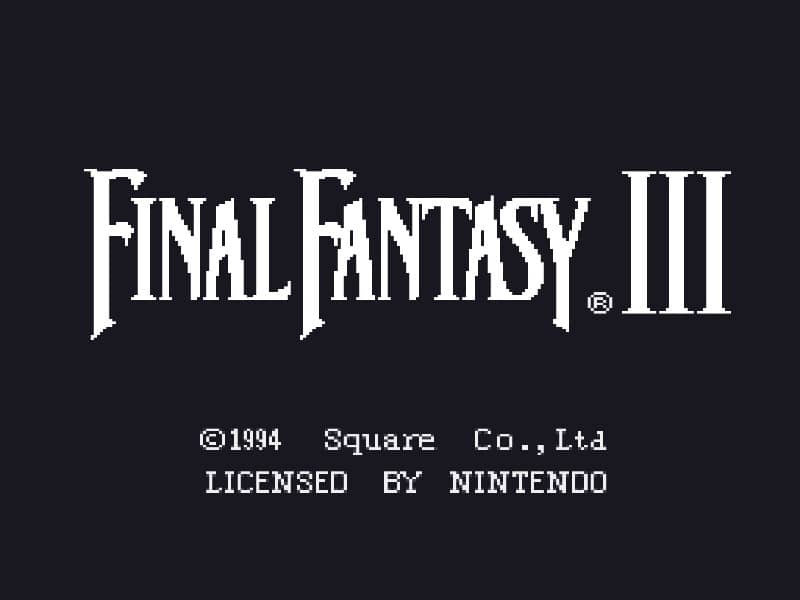
Final Fantasy III was released in Japan on April 2, 1994, for the Super Nintendo Entertainment System. The game achieved significant commercial success upon release, selling over 2.55 million copies in Japan, making it the best-selling game of 1994 in the country. This success not only solidified Square's leading position in the role-playing game genre but also laid a strong foundation for the series' future. By 2003, combined sales of the Super Nintendo and PlayStation versions exceeded 3.48 million copies worldwide, demonstrating its cross-platform appeal.
In North America, the game was released under the title Final Fantasy III, a numbering discrepancy stemming from the fact that the second, third, and fifth entries in the series had not been released in the region. North American players had only experienced the first and fourth games, so Square numbered this installment as 'III' to maintain continuity in the series' numbering. This practice caused confusion but allowed North American players to experience this masterpiece on the Super Nintendo. It wasn't until years later, as the series was gradually ported, that this numbering difference became understood by players.
The release date of the North American version is historically disputed, but it is certain that the game was widely available in North America by October 1994. The North American version was translated by Ted Woolsey, who not only converted the Japanese text into English but also made modifications and cuts due to Nintendo's censorship policies. For example, some dialogues involving religious, violent, or adult themes were adjusted, and some character names were localized. Despite these changes, Woolsey's translation has been praised by many players for its literary quality, significantly contributing to the game's acceptance in North America.
After its initial release, Final Fantasy III underwent multiple ports and remakes. In 1999, the game was bundled with Final Fantasy V for the PlayStation, developed by Tose, adding cutscenes and save features. In 2006, a Game Boy Advance version was released, adding new Espers, dungeons, and a music player. In 2011, the game was re-released via the Wii Virtual Console, with the North American version still using the title Final Fantasy III. These ports allowed players on different platforms to experience this classic.
In 2014, the game was ported to Android and iOS, and in 2015 to Windows PC. In 2022, Square Enix released a pixel remaster with modernized graphics and music, which came to PlayStation 4 and Switch in 2023, and Xbox Series X/S in 2024. Additionally, the game was included in the Super NES Classic Edition console released in 2017, with the North American version again titled Final Fantasy III. These continued ports and remakes attest to the game's enduring appeal among players.
Development
The development of Final Fantasy III took about a year, with a team of approximately 30 people, which was a relatively large production at the time. This was the first game in the series not directed by Hironobu Sakaguchi, who instead served as producer, handing the director's role to Yoshinori Kitase and Hiroyuki Ito. Kitase had previously worked on Final Fantasy V, while Ito was the creator of the ATB system. The two had a clear division of labor: Kitase handled the story and overall direction, while Ito focused on the battle system and game mechanics. This collaboration brought fresh energy to the game.
The game's story concept was 'every character is a protagonist,' a philosophy that permeated the narrative and character design. Unlike previous series entries that focused on a single hero, the characters and plot were conceived by multiple developers, with each character having their own background story and character arc. This multi-protagonist approach was highly innovative at the time, allowing players to experience the changing world from different perspectives. The team aimed to show the impact of war and disaster on individuals, thereby deepening the game's themes.
The game's world is set in a setting reminiscent of the Second Industrial Revolution, where magic and machinery coexist, and an empire oppresses its people with military might. This setting was inspired by the development team's thoughts on history and technology, as they wanted to create an environment that was both familiar and fantastical. Yoshitaka Amano handled character design, his unique style giving characters a sense of mystery and artistry; Nobuo Uematsu composed the classic soundtrack, including the opera scene piece 'Aria di Mezzo Carattere,' which is still frequently discussed by players.
The North American translation was done independently by Ted Woolsey, whose biggest challenge was Nintendo's censorship policies. To pass censorship, Woolsey had to modify certain content, such as toning down religious references, adjusting violent scenes, and even altering some character lines. Despite this, he managed to preserve the original's humor and emotional depth. Woolsey's translation style is considered classic by many players and even influenced the localization direction of later series entries.
During development, the team also faced technical challenges. The Super Nintendo's hardware had limited capabilities, but through clever programming and art design, the team achieved many impressive effects, such as the opera house stage performance and the map changes after the World of Ruin. Although the character sprites were still 2D, their movements and expressions were more detailed, enhancing the narrative's expressiveness. These technical breakthroughs, combined with the team's attention to detail, made Final Fantasy III reach the pinnacle of 2D gaming in both visuals and audio.
Reception and legacy
Since its release, Final Fantasy III has received widespread acclaim, with many critics considering it one of the best games in the series and one of the greatest games of all time. The game has been highly praised for its story, character development, music, and gameplay, particularly the multi-protagonist narrative and the Magicite system, which are hailed as exemplary RPG design. In historical rankings by major gaming media, the game consistently ranks high, and its influence spans generations, still being revered by players and developers alike.
The game has had a lasting impact on the role-playing game genre and is often regarded as a milestone. It demonstrated that games could move players like literature through multi-perspective storytelling and profound themes. Many subsequent RPGs have drawn inspiration from its multi-protagonist structure and non-linear exploration, such as Final Fantasy VII and Chrono Trigger. The game's success further solidified Square's leadership in the RPG genre, laying the groundwork for the series' future glory.
Characters like Terra, Locke, and Shadow have become iconic figures in the series. Terra's half-Esper nature broke the mold of traditional protagonists, and her identity and growth resonated with players. These characters reappeared in later technical demos, such as the Final Fantasy SGI demo in 1995, showcasing Square's exploration of 3D graphics. The enduring appeal of these characters reflects the game's success in character development.
This game was the last mainline entry in the series to be released on a Nintendo platform, with the next one being Final Fantasy Crystal Chronicles in 2003. This shift marked a change in the relationship between Square and Nintendo and foreshadowed the series' expansion to new platforms like the PlayStation. Nevertheless, the game's brilliance on the Super Nintendo still leads many veteran players to regard it as the pinnacle of 2D-era RPGs, with an irreplaceable status.
In 2024, the game celebrated its 30th anniversary, and developers reflected on its influence on the series' character-driven narrative design. In interviews, Yoshinori Kitase and others noted that the game's multi-protagonist concept and emotional expression provided important references for later works like Final Fantasy VII. Over the past 30 years, the game has been ported and remade repeatedly, allowing new generations of players to experience its charm. It is not only a milestone in Square's history but also a valuable asset for the entire gaming industry.