
Gameplay and design
The core innovation in Kirby's Adventure is the copy ability system. Kirby can swallow certain enemies to gain their powers, such as the Fire ability to spit flames, the Sword ability for slashing, and the Ice ability to freeze foes. These abilities not only change how you attack but also affect puzzle-solving and exploration, giving players different experiences on repeated playthroughs. Kirby can discard an ability at any time or replace it by swallowing another enemy, a flexible design that adds strategy to both combat and exploration.
Beyond copy abilities, this game introduces running and sliding moves. Running lets Kirby traverse levels faster, while sliding allows him to squeeze through narrow gaps or quickly close in on enemies. These actions combine with the existing inhale, spit, and flight abilities to make controls feel smoother and the pace quicker. Masahiro Sakurai intentionally added depth to the simple controls, so newcomers can pick it up easily while veterans can find creative ways to play.
The game features 41 levels spread across 7 worlds, each with a lobby, regular stages, boss battles, and warp stars. Warp stars are a series staple, letting Kirby fly into hidden rooms or bonus stages. The level design is diverse, from grasslands and volcanoes to underwater areas, each world with its own theme and gimmicks. Boss battles test your use of copy abilities, as different powers can be particularly effective against certain bosses, adding fun to the fights.
This game also introduces a save feature, automatically saving progress after each level, which was quite player-friendly for a home console at the time. You don't have to finish the game in one sitting; you can continue anytime. Additionally, there are a museum and an arena: the museum lets you sample enemies to try out copy abilities, while the arena challenges you to consecutive boss battles. These extras enrich the gameplay and encourage exploration and practice.
Hidden elements are another highlight. By finding hidden items, you can unlock bonus content like a music test and a gallery. This was a first for the series and set a tradition for later games. Hidden items are often tucked away in seemingly ordinary spots, requiring careful observation or specific abilities to discover, which adds to the fun of exploring and gives players a reason to revisit levels after finishing the game.
Background and release
Kirby's Adventure was released in Japan on March 23, 1993, followed by North America in May and Europe on September 12. At this time, the NES had been out for a decade and was at the end of its life, with most players having moved on to 16-bit consoles like the Super Nintendo and Sega Genesis. Despite this market environment, the game still launched on the NES, partly because the previous game in the series had been successful on the Game Boy, and partly reflecting Nintendo's final commitment to the 8-bit market.
Even though the platform was aging, the game topped the Famitsu sales chart in its first week in Japan, showing Kirby's strong appeal. Players were excited about this new colorful Kirby game, especially the copy ability mechanic, which sparked discussion before release. Contemporary reviews were generally positive, praising the precise controls, varied level design, and the fresh gameplay brought by the copy ability.
Nintendo Power noted in its review that the game's difficulty was higher than its cute theme suggested, breaking the stereotype that Kirby games were too easy. While the copy ability added complexity, it also gave players more tools to handle challenges. This balance between difficulty and fun earned the game recognition from both core and casual players.
GamePro magazine named it NES Game of the Year in late 1993, a testament to its quality. At the end of the NES era, many third-party developers had abandoned the platform, but HAL Laboratory still put in the effort, showcasing the skill of a first-party developer. This award helped cement the game's place in gaming history as one of the 8-bit era's standout titles.
Looking back, the game's success was no accident. It inherited the cute style and basic gameplay of the previous Kirby game, while elevating the series to new heights with copy abilities, colorful graphics, and richer level design. In the twilight of the NES, this game was like a late gift, letting old players relive the charm of 8-bit and showing new players the platform's potential.
Development
Development began in 1992, initially planned as a port of the Game Boy Kirby to the NES, but the team quickly decided to create a brand-new game. Director Masahiro Sakurai returned, aiming to keep the simple, accessible nature of the previous game while adding more depth and challenge. The original Kirby had been criticized for being too easy, so Sakurai conceived the copy ability system, letting players gain different skills by swallowing enemies, thereby increasing strategy and replay value.
Implementing the copy ability was no easy feat. HAL Laboratory's team created over 40 ability prototypes, eventually selecting a subset for the game. Each ability required unique animations, hit detection, and interactions with level elements, posing a huge challenge for programmers and artists. Sakurai mentioned in interviews that they wanted each ability to have a clear purpose rather than just piling on numbers, so the final abilities were carefully polished.
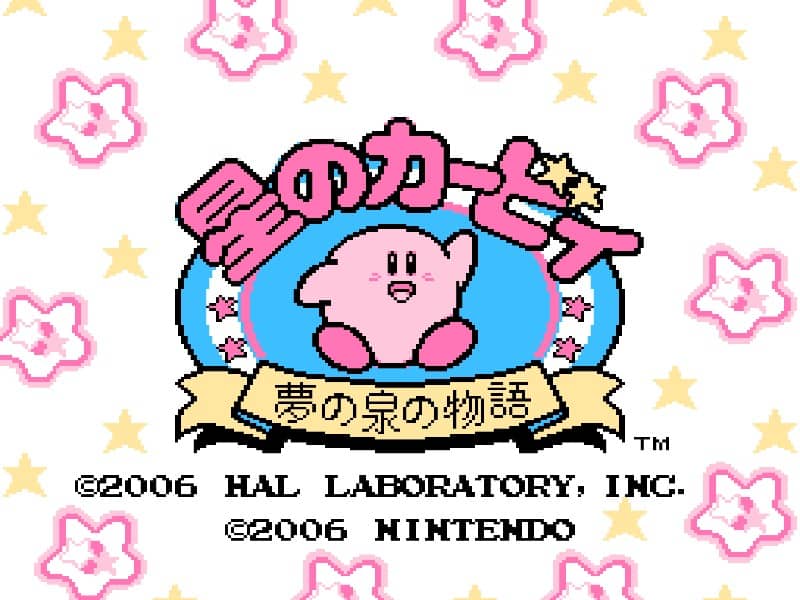
This game marked Kirby's first appearance in color. Sakurai had always envisioned Kirby as pink, but the Game Boy's monochrome screen meant Kirby appeared white in the previous game. When the team saw pink Kirby on the NES, they were reportedly surprised, as pink was uncommon for game characters at the time. This design later became Kirby's iconic look, reflecting Sakurai's unique eye for character design.
Despite the NES's limited hardware, HAL Laboratory's programmers made full use of its graphics capabilities to achieve vibrant colors and smooth animations. Kirby's sprite was larger than in the previous game, and his movements were more detailed, thanks to the NES's palette and sprite multiplexing techniques. The backgrounds and characters were full of life, showcasing the visual limits of the 8-bit system, and IGN later called it one of the greatest visual and audio technical achievements on the NES.
This game also introduced Meta Knight, who appears as a nameless boss in one level. Meta Knight's design was inspired by Sakurai's love of mysterious swordsmen, and his mask and cape left a strong impression on players. Although he's just one of many bosses here, he later became a major character in the series and a playable fighter in the Super Smash Bros. series, showing his lasting impact.
Reception and legacy
Kirby's Adventure received widespread acclaim upon release and is often listed among the best NES games in retrospective reviews. IGN called it one of the greatest visual and audio technical achievements on the NES, and that's not an exaggeration. The game showcased stunning graphics at the end of the 8-bit era, and the music, crafted by the series' composers, left a lasting impression. These achievements are due not only to technology but also to the development team's dedication to quality.
The copy ability system became a core mechanic of the series, with nearly every subsequent game using and expanding on it. From Kirby Super Star to Kirby and the Forgotten Land, copy abilities have remained the foundation of Kirby gameplay. The game's introduction of unlocking content by finding hidden items also became a series tradition, encouraging players to explore every corner of each level. In many ways, this game laid the groundwork for modern Kirby games.
Meta Knight's debut added new charm to the series. He later became a playable character in the Super Smash Bros. series, starting with Super Smash Bros. Brawl, introducing this mysterious swordsman to a wider audience. Although he was just a regular boss here, later games gave him a richer backstory and personality, making him one of the most beloved characters in the series.
Years after its release, the game remains in the public eye. In 2002, Nintendo released an enhanced remake on the Game Boy Advance called Kirby: Nightmare in Dream Land, with the core gameplay and level design largely unchanged but with improved graphics and sound, plus new content. Additionally, the original NES version has been re-released multiple times through the Virtual Console, the Wii compilation Kirby's Dream Collection, the NES Classic Edition, and the Nintendo Classics service, allowing new and old players alike to experience this classic.
In 2011, a 3D Classics version was released on the 3DS eShop, supporting stereoscopic 3D effects and customizable controls, breathing new life into the game. These ports and remakes not only prove the game's enduring appeal but also make it part of Nintendo's historical legacy. For many players, this game was their introduction to the Kirby series and a bright spot in their childhood memories. In the series' over thirty-year history, Kirby's Adventure remains an important milestone.





