
Gameplay and design
Metal Slug Advance continues the series' classic run-and-gun gameplay, where players control a character through side-scrolling levels, using various firearms and grenades to eliminate enemies. However, its most significant change is replacing the traditional life count with a health bar. In the arcade originals, players typically had a few lives, and a single hit would cost one. In this game, the character has a health bar that depletes based on damage taken, and items like food can restore health. This adjustment allows players on the handheld to handle combat more calmly, without having to restart after a single mistake.
The health bar system isn't just about increasing forgiveness; it introduces more nuanced damage calculation. Different enemies deal varying damage, with some taking only a small chunk and others causing severe harm. Players must decide whether to push forward or seek supplies based on their remaining health. However, the game retains instant-death mechanics: if the character is crushed, such as by a tank tread, or falls into a deep pit, they die regardless of health. This design preserves the series' hardcore edge while giving handheld players more breathing room.
Card collection is another major feature and a key differentiator from other series entries. There are 100 cards in total, obtained by shooting specific background elements, like suspicious walls or crates, or by rescuing captured soldiers. Each card has a unique function: some provide detailed encyclopedias of series weapons and characters, others enhance abilities such as movement speed or attack power, and some unlock special new Metal Slug vehicles. Collecting cards is not only part of completion but also directly impacts gameplay.
Players can choose between two rookie characters: Walter Ryan and Tyra Elson. They have no significant differences in base abilities, but offer a choice to players. The game's progression unfolds on a nameless island, with levels featuring jungle, base, and beach environments, and enemies including General Morden's soldiers, tanks, and aircraft. Compared to the arcade versions, the level length and difficulty are adjusted for shorter play sessions on the handheld, while maintaining the series' signature explosive action and humorous details.
Compared to other series entries, the health bar system is the most notable departure in Metal Slug Advance. In the arcade games, players had limited lives, faster pacing, and less forgiveness; this game, through the health bar and food recovery, allows for more sustained combat, while the card system adds replay incentive. This design isn't a compromise but a deliberate adaptation to the GBA's characteristics, letting players enjoy Metal Slug during commutes or breaks without frequent Game Overs.
Background and release
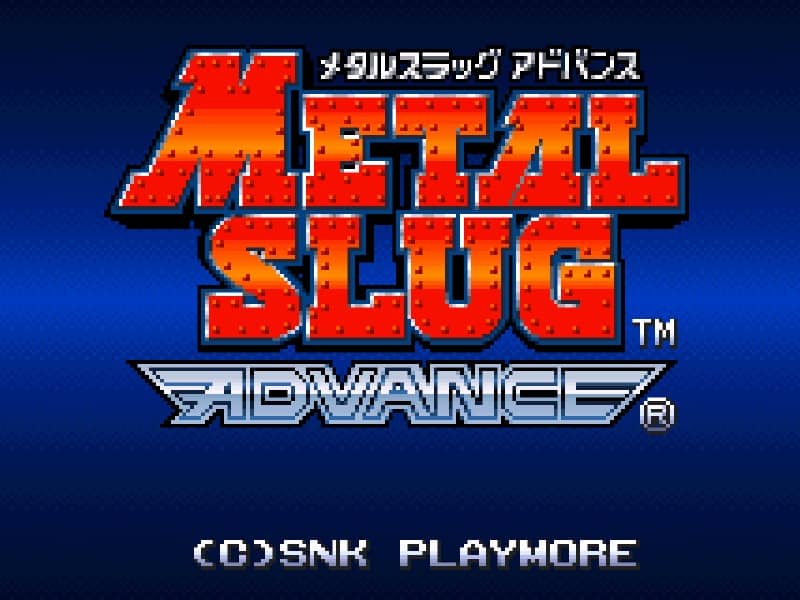
Metal Slug Advance was released on November 12, 2004, as a Game Boy Advance title in the Metal Slug series. It is not a port of an arcade numbered entry but a new exclusive developed specifically for the handheld. Its release filled a gap in the series' presence on handhelds, allowing players to experience Metal Slug combat anytime, anywhere. The game was developed by Noise Factory and published by SNK Playmore, representing a typical outsourcing collaboration for the series.
As a mainline entry, the story continues the conflict with General Morden. Set at the Peregrine Falcons' training camp, Morden's forces launch a surprise attack, destroying the camp and forcing the rookies into combat. Players control the rookie Walter or Tyra, who must contend with enemy forces on a nameless island and ultimately thwart Morden's scheme. This setup explains why the protagonists are newcomers while providing series veterans with familiar villains and world-building.
At the time of release, the GBA was in the late stage of its lifecycle but still had a large player base. SNK Playmore chose this moment to release a handheld Metal Slug, aiming to expand the series' audience, especially younger players without access to arcades. This game is not a simple port but a redesign for the handheld, including the health bar and card systems, reflecting the publisher's consideration of platform differences.
In the series timeline, Metal Slug Advance's story occurs outside the main plot but is not a spin-off. Through the training camp attack, it shows Morden's ongoing threat and echoes other series entries. The in-game card encyclopedia also includes classic weapons and characters, providing nostalgia for veterans and a window into series history for newcomers.
The release also reflects SNK Playmore's strategy at the time: amid the decline of the arcade market, actively expanding into home and handheld platforms. The GBA's popularity and portability opened new possibilities for the series, and Metal Slug Advance is a representative of this attempt. Although it lacks the arcade versions' flashy graphics and multiplayer, it successfully preserves the core experience on the handheld through unique system design.
Development
Development of Metal Slug Advance was handled by Noise Factory, a studio that had worked on several SNK titles. SNK Playmore, as publisher, entrusted this important IP to an external team, showing confidence in Noise Factory's technical abilities. The primary challenge was recreating Metal Slug's fluid action and explosive scenes on the GBA's limited hardware while incorporating innovative designs suitable for the handheld.
The introduction of the health bar was a key adjustment for the GBA platform. In the arcade games, the life count was simple and direct, but handheld players often have fragmented play sessions, and frequent Game Overs could be discouraging. Therefore, the team opted for a health bar, allowing players to experience levels more persistently. This design doesn't lower difficulty but offers more strategic choices through detailed damage management.
The card collection system was conceived from an insight into handheld players' collecting habits. GBA games often use collectibles to extend longevity, and the Metal Slug series' rich weapon and character designs lent themselves well to a card encyclopedia. The team designed 100 cards covering weapons, characters, and enemies, obtained through exploration and rescuing prisoners. This system adds depth and gives players completion goals.
The story's training camp attack setting was chosen partly due to development resources. Compared to crafting a grand war narrative, a training camp backdrop naturally introduces rookie characters and explains their limited abilities. It also allowed the team to focus on level design rather than complex storytelling. The nameless island provides diverse environments, from jungle to base, showcasing the team's dedication to level craftsmanship.
Throughout development, the team also preserved the series' signature humor, such as exaggerated enemy expressions and comical death animations. These details were recreated in GBA pixel art, evoking familiarity for veterans. Despite being outsourced, Noise Factory's understanding and respect for the series ensured that Metal Slug Advance remained consistent with mainline entries in both gameplay and style, making it a heartfelt effort on the handheld.
Reception and legacy
Metal Slug Advance received generally positive reviews from media and players upon release, as reflected in its Metacritic score. Reviewers commonly praised the game for successfully recreating the series' core experience on the handheld, especially the health bar and card collection, which were seen as reasonable improvements to traditional gameplay. Despite graphics and sound limited by GBA hardware, the fluid action and rich level design earned recognition.
The card system became the game's most distinctive legacy, not directly inherited by later series entries, but its design philosophy influenced other handheld games. The 100-card collection provided long-term goals, and combining collection with ability enhancement was quite novel for handheld games at the time. Many players replayed to collect all cards, boosting replay value.
As a handheld title, Metal Slug Advance contrasts sharply with the arcade numbered entries. It proved the series could thrive beyond arcade hardware and find a place on portable devices. The game's success gave SNK Playmore confidence to release more titles on handhelds, and although no direct sequel followed on GBA, it remains a favorite among handheld Metal Slug enthusiasts.
In the broader series, Metal Slug Advance holds a special status. It's not the most famous entry, but its unique health bar and card systems left a lasting impression. Many players first encountered the series through this game, making it a gateway to learning about series history. The card encyclopedia also served an educational role, introducing new players to classic elements.
Even today, Metal Slug Advance remains a worthwhile title in the GBA library. Its design approach offered a reference for later handheld action games on how to adapt core gameplay to portable characteristics. Although it lacks multiplayer, the single-player experience is substantial. For fans of the Metal Slug series or retro handheld gaming, this title is worth revisiting.





