Gameplay and design
The most immediate change in SimCity 2000 is the shift from a top-down view to an isometric projection, giving buildings and roads a three-dimensional feel and making terrain elevation more visible. The game also introduces an underground layer for the first time, where utilities like water pipes and subways are placed, adding a vertical dimension to city planning. Terrain height is no longer just decorative; slopes and hills affect traffic and construction, so players must adapt their layouts to the landscape rather than placing things arbitrarily on flat ground.
The query tool is a practical feature in the game. Clicking on a building reveals detailed information such as population, income, and power consumption. More intriguingly, if you click on a library and select "Ruminate," the game displays an article written by Neil Gaiman, with whimsical content that serves as an easter egg for observant players. Such details make the city feel less like cold data and more like a place with character.
The budget system is more detailed than its predecessor, allowing players to adjust tax rates for residential, commercial, and industrial zones separately, and to enact ordinances that influence city development, such as promoting education or limiting pollution. Neighbor connections also become important, as you can trade utilities or dispose of garbage with adjacent cities, making inter-city interactions feel real. However, balancing taxes and ordinances is tricky: raising them may cause citizen dissatisfaction, while lowering them can strain finances, so players must constantly monitor the income and expenditure reports.
The game has no traditional victory condition, but it includes a hidden "Exodus" event: when you build 300 launch domes in your city, the population collectively leaves Earth, ending the game. This design carries a touch of sci-fi humor and reflects the developers' unconventional style. Additionally, the game offers several scenarios based on real disasters, such as the Oakland fire, Hurricane Hugo, and the Great Flood of 1993, challenging players to rebuild cities amid these crises.
The newspaper system is a standout feature, periodically publishing city news that includes both satirical takes on city problems and fictional humorous stories. Although this feature was later adopted by other games in the series, SimCity 2000's newspaper is particularly rich, and some players treat it as a collectible easter egg. It makes the city feel alive rather than just a simulation sandbox.
Background and release
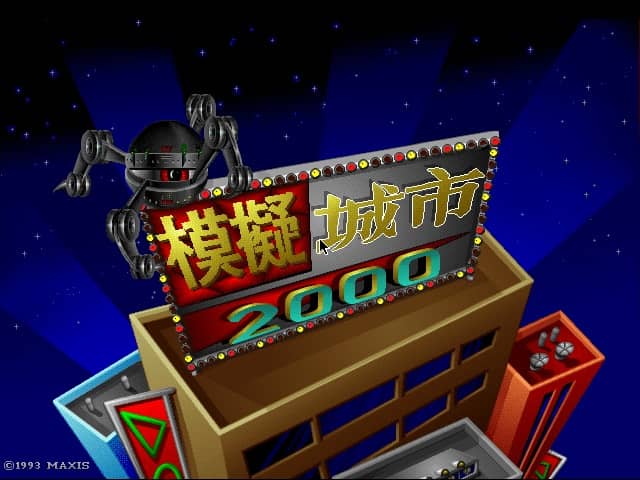
SimCity 2000 was first released in 1993 for Apple Macintosh and MS-DOS, four years after the original SimCity. At that time, Maxis had already built a reputation with the first game, but technical limitations forced the original to use a top-down view. For the sequel, the team decided on a complete overhaul, adopting an isometric perspective and a more complex simulation system, which laid the foundation for the game's new visual and gameplay style.
In the years following its release, the game was ported to multiple platforms, including Super Nintendo, Sega Saturn, PlayStation, Nintendo 64, and Game Boy Advance. Each version had adjustments; for example, the Sega Saturn version added CD-quality music and live-action cutscenes, and the Japanese version even replaced the 30,000 population reward statue with Sonic the Hedgehog. The Nintendo 64 version, released only in Japan, included odd content like mini-games and a dating game, making it the most unusual of the ports.
In 1994, Maxis released an expansion pack, Scenarios Vol. I: Great Disasters, adding multiple disaster scenarios for players to tackle under more extreme conditions. In 1995, a special edition was released, featuring remastered music, new cities, additional scenarios, and a video called "WillTV" where Will Wright discusses the game's development. These additions enriched the gameplay and gave veteran players a reason to revisit the game.
In 1996, a network version was released, supporting up to four players in online cooperative or competitive play. This was quite forward-thinking at the time, allowing players to share resources or compete to see who could develop a better city. However, due to the limitations of the internet at the time, the online experience was not entirely smooth, but it provided ideas for future multiplayer simulation games.
The release timeline of SimCity 2000 has a slight inconsistency: the Chinese Wikipedia states it was first released in 1994, but English sources and Wikidata clearly indicate 1993. After verification, 1993 is the correct initial release year. This detail doesn't affect the game itself, but it shows how early game information can be prone to errors in transmission.
Development
Development of the game began in December 1990, initially led by Fred Haslam, who attempted to create city graphics using an isometric view but struggled for a year without success. Later, Will Wright joined, and the two collaborated to solve the technical challenges. Wright brought extensive programming and design experience, while Haslam had unique ideas about simulation systems, and their complementary skills helped shape the final game.
The art team, led by Jenny Martin, used Deluxe Paint software on 486 PCs to draw building graphics, a process that took four months. Due to the isometric perspective, each building had to be rendered from multiple angles, making the workload immense. But this meticulousness resulted in a city that looked both realistic and detailed, making it one of the most visually polished simulation games of its time.
The music was composed by Sue Kasper, who originally aimed for a sci-fi atmosphere reminiscent of Blade Runner, but due to the limitations of sound cards at the time, the final result was relatively simple. Nevertheless, the background music is distinctive and complements the rhythm of city building, helping players immerse themselves. The special edition later remastered the music, significantly improving the audio quality.
The game manual, written by Michael Bremer, is quite unusual, containing not only basic instructions but also poems, paintings, and essays about the meaning of cities. This unconventional approach made the manual itself a collectible item and reflected Maxis's dedication to game culture. As players read it, they can sense the developers' thoughts on cities and life.
During development, the team also designed unique systems like the newspaper and the "Exodus" event. These were not merely for humor but aimed to provide players with an alternative feedback mechanism. Will Wright later mentioned in interviews that they wanted the game to include unexpected surprises, allowing players to smile amid serious planning.
Reception and legacy
SimCity 2000 was a commercial success, selling 1.4 million copies in the United States and approximately 3.4 million worldwide (as of 2002). It won the 1994 Codie Award for Best Simulation Game and the Origins Award for Best Military or Strategy Computer Game. These accolades affirmed its standing among players and the industry, solidifying Maxis's leading position in the simulation genre.
The game's influence on subsequent simulation games is profound. Its isometric view, underground layers, and complex budget system became the foundation for later titles like SimCity 3000 and SimCity 4. In fact, SimCity 3000's design referenced SimCity 2000's expansion tool SCURK, which allowed players to modify building images, and this player-customization approach became a series tradition.
In 2012, the Museum of Modern Art added SimCity 2000 to its permanent collection, marking the game's recognition as an art form by a mainstream cultural institution. The museum valued not only its historical significance but also its innovative design, such as how it simulates complex urban ecosystems through simple rules.
The game also spawned several spin-offs, including SimHealth, SimCopter, and Streets of SimCity. Although these games varied in gameplay, they were all based on SimCity 2000's world or engine, allowing players to experience simulation from different angles. While the reception of these spin-offs was mixed, they at least demonstrated the IP value of SimCity 2000.
In the hearts of players, SimCity 2000 is more than just a game; it's a cultural icon. It gave countless people their first taste of being a mayor and inspired many later city-building games. Even today, players revisit this classic through emulators, enjoying its unique charm. Its influence extends far beyond the game itself, making it a milestone in the history of simulation games.