Gameplay and design
The battle system in Super Mario RPG - Legend of Seven Stars is turn-based, but it introduces a timed-button mechanic that would later become a hallmark of the series. When attacking, defending, or using items, players can press a button at the right moment to enhance the effect—boosting damage, reducing incoming damage, or adding extra benefits to items. This design makes the otherwise static turn-based combat engaging and tense, as players must stay focused and learn the rhythm of each move rather than simply watching characters trade blows. This emphasis on timing was later carried forward in Paper Mario and the Mario & Luigi RPG series, becoming a defining feature of the Mario RPG franchise.
The game does not feature random encounters; enemies appear directly in the field, and players can see them and choose to engage or avoid them. If you don't want to fight, you can simply walk around them, which makes exploration more free and reduces unnecessary battles. This design was fresh at the time, giving players more control over the game's pace. Exploration uses an isometric 3D perspective, allowing Mario to jump, dash, and even stomp on enemies, adding action elements that make the game feel more like a platformer than a traditional RPG. This blend keeps exploration from feeling tedious and gives it a familiar, Mario-like charm.
The player's party consists of five characters: Mario, Mallow, Geno, Bowser, and Princess Peach, with up to three in battle at a time, and they can be swapped out at any moment. Each character has unique abilities and roles—Mario's jumps and hammer attacks, Mallow's magic and healing, Geno's powerful skills, Bowser's defense and fire attacks, and Peach's support and recovery spells. This party setup lets players adapt flexibly to battle situations, adding strategic depth. The dialogue and interactions between characters are also lively and humorous, making the party feel vibrant rather than just a set of combat tools.
Beyond combat and exploration, the game includes puzzles and mini-games. For instance, in a musical level with Toadofski, players must press buttons in rhythm to perform a tune, adding a lighthearted and enjoyable atmosphere. The game also hides many secrets and easter eggs, such as hidden chests, special rooms, and events that require specific characters to trigger. These elements encourage players to explore and experiment, offering more to do beyond the main story.
The game's pacing is well handled, with a balanced mix of story progression, combat, and exploration. The plot revolves around collecting seven Star Pieces, but along the way, players encounter a variety of interesting characters and events that keep the adventure full of surprises. The difficulty curve is also reasonable—easy at first, with challenges increasing later, but never to the point of frustration. Overall, the gameplay is both fun and deep, appealing to RPG newcomers and veterans alike, and this balance is a key reason for its success.
Background and release
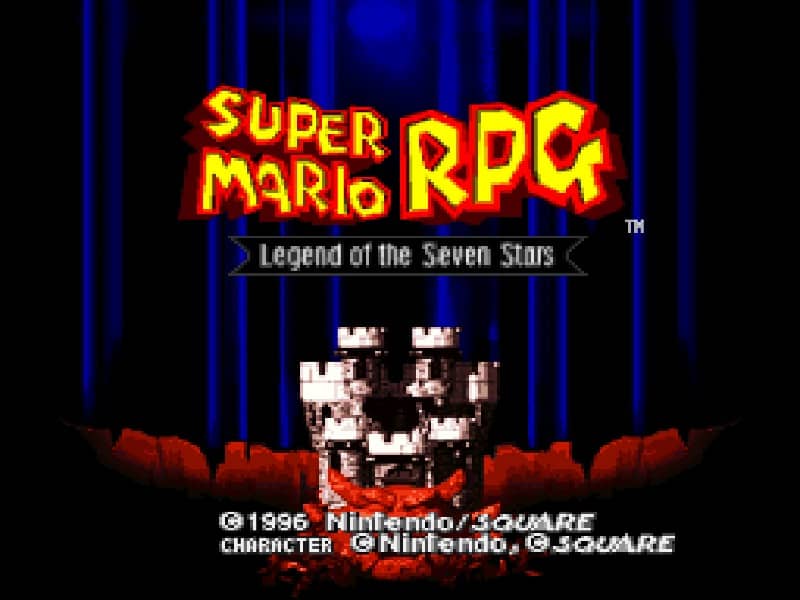
Super Mario RPG - Legend of Seven Stars was first released in Japan on March 9, 1996, for the Super Nintendo (SNES), and in North America on May 13 of the same year. It was the last Mario game on the SNES and the first role-playing game in the Mario series. Its release marked the first time Mario, a character known for platforming, stepped into the RPG genre. At the time, Nintendo and Square were both giants in the gaming industry, and their collaboration was itself a major talking point, and the final quality of the game proved the value of this partnership.
The game sold 1.47 million copies in Japan, making it the third best-selling game of 1996 in that country. In North America, the initial shipment was 300,000 units, with over 200,000 sold within a month, and Nintendo projected sales could exceed one million by year's end. Ultimately, it became the sixth best-selling game of 1996 in North America and topped the U.S. rental charts for 14 consecutive weeks. These results were impressive for a new type of Mario game and demonstrated strong player acceptance of Mario RPG.
The game was not initially released in PAL regions (Europe, Oceania, etc.), with Nintendo citing the need to optimize for PAL television displays and translate into multiple languages. It wasn't until 2008 that the game was first released in Europe and Australia via the Wii Virtual Console service, and in North America on September 1 of that year. In 2015, it came to the Wii U Virtual Console, and in 2017, it was included in the Super NES Classic Edition, one of 21 classic games. These later releases allowed more players to experience this classic title.
In 2023, Nintendo released a Switch remake of Super Mario RPG - Legend of Seven Stars, bringing the old game back to players with updated graphics and sound. The remake preserved the core content of the original while modernizing visuals, music, and some systems, attracting both new and returning players. However, the original's historical status and influence remain significant, as it laid the groundwork for many design concepts that were later adopted.
This game was Square's last SNES release in North America, but its last two SNES games in Japan were Treasure Hunter G and Rudra no Hihou. This distinction is sometimes confused, but understanding it helps clarify Square's release strategy in the late SNES era. The game came out at the end of the SNES's life cycle yet still performed well, reflecting both the game's quality and the platform's enduring vitality.
Development
Development began in early 1994, stemming from Shigeru Miyamoto's desire to create a Mario RPG and Square's wish to develop an RPG that would perform better overseas. After business meetings, the project was launched, co-directed by Chihiro Fujioka and Yoshihiko Maekawa, with Miyamoto as producer and Yoko Shimomura composing the music. This cross-company collaboration was uncommon at the time, with Nintendo and Square each playing to their strengths: Nintendo provided the Mario IP and platforming design experience, while Square contributed RPG systems and narrative techniques.
Early in development, the team considered adding a weapon system, but after Miyamoto's guidance, it was removed, leaving only the hammer he insisted on. Miyamoto believed that Mario's iconic weapon is the hammer, and adding other weapons would be unnecessary. This decision kept the game true to Mario's identity and made combat simpler and clearer. Additionally, the team deliberately avoided making a 'generic RPG with replaced characters,' so they emphasized action and movement elements like jumping and dashing, making the game feel more like Mario.
The game uses isometric 3D graphics and pre-rendered visuals, which was a technical challenge on the SNES hardware. The development team used advanced computer modeling techniques and applied special lighting effects to enhance the 3D elements, giving the visuals a sense of depth. Shinya Takahashi designed the CG models, which were rendered and then converted into in-game sprites, making characters and environments look more detailed than traditional 2D pixel art. This visual style was a benchmark on the 16-bit console, making the game stand out among its contemporaries.
Yoko Shimomura composed the score, blending arrangements of Koji Kondo's Super Mario Bros. music with three tracks from Nobuo Uematsu's Final Fantasy IV. This musical mix preserved Mario's classic melodies while adding the epic feel of Square's RPGs, creating a unique style. The original soundtrack was released by NTT Publishing on March 25, 1996, as a two-disc album containing all the game's music, and it was well received by players and critics alike.
The game was officially announced at the V-Jump Festival in 1995 by Miyamoto and Fujioka, with development about 70% complete. This announcement gave players an early look at the title and generated anticipation. The game uses the SA-1 chip, one of seven SNES games released outside Japan to use this chip, which provided a higher clock speed and enhanced memory mapping, allowing for more complex graphics and smoother performance. These technical details reflect the team's efforts and innovation within hardware limitations.
Reception and legacy
Super Mario RPG - Legend of Seven Stars received widespread acclaim upon release, with critics praising its graphics and humor, though some criticized the battle system and characters. However, most media gave it high marks; for example, Electronic Gaming Monthly called its visuals 'the best seen on the SNES,' and GamePro gave it four perfect scores. These reviews affirmed the game's technical achievements and its innovative gameplay. The game also enjoyed a strong reputation among players, becoming a classic of the SNES era.
The game did not have a direct sequel, but it established conventions for the Paper Mario and Mario & Luigi RPG series, such as shared flower points, timed hits, and collecting seven stars. These elements became hallmarks of the Mario RPG subseries and influenced many later titles. In essence, although this game had no direct sequel, it pioneered a new genre and expanded the possibilities for the Mario series.
Characters like Geno and Mallow became fan favorites, with Geno appearing as a cameo in later works, reflecting his cultural impact. Geno is a puppet possessed by a star spirit from Star Road; his unique design and distinct personality endeared him to players. Although he never starred in a subsequent game, he appeared as a Mii Fighter costume in Super Smash Bros., delighting fans. The enduring appeal of such characters demonstrates the game's success in character development.
The game has been listed by multiple media outlets as one of the greatest games of all time, such as Official Nintendo Magazine ranking it 34th and Complex ranking it 8th. These accolades further solidify the game's place in gaming history. As a representative of technical achievement on the SNES, its 3D graphics and music were widely praised and influenced later game development.
In summary, Super Mario RPG - Legend of Seven Stars is not only an excellent RPG but also a model of collaboration between Nintendo and Square. It proved that partnerships between different companies can produce outstanding works and opened a new direction for the Mario series. Although time has passed, the game is still remembered by players, and its design principles and creativity can still be seen in today's games. For fans of Mario and RPGs, this is a classic worth experiencing.