
Gameplay and design
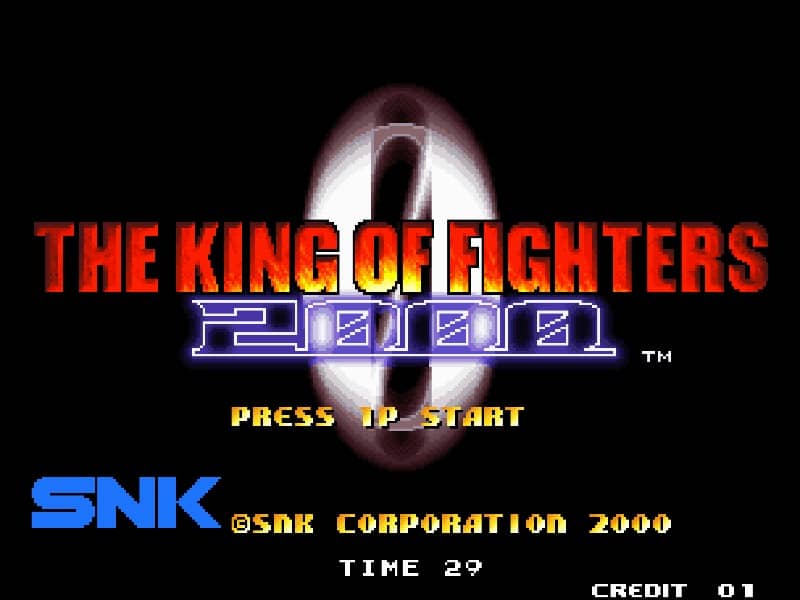
The King of Fighters 2000 continues the series' classic 3-on-3 team battle format, but the core gameplay revolves around the Striker system. In addition to selecting three main fighters, players can choose a Striker as a fourth support character. During battle, by consuming the Strike Bomb gauge, players can call in their Striker at any time to launch an attack, creating opportunities for combos or defusing dangerous situations. This design makes the pace of combat more dynamic and encourages players to find synergy between their main fighters and the support character.
The game puts considerable effort into the Striker system, introducing two special types: Another Striker and Maniac Striker. Another Strikers are variants of certain characters with different moves or attributes; for example, Kyo Kusanagi's Another Striker uses the Orochinagi. Maniac Strikers are rarer and typically require entering specific codes or fulfilling hidden conditions to unlock; they often possess overpowered abilities, making them a subject of study for advanced players. These additions make Striker selection more varied and add strategic depth.
The Strike Bomb replenishment mechanics have also been adjusted. Players can quickly build up the gauge by taunting opponents, or automatically gain a portion after losing a round. Taunting carries inherent risk but offers a substantial reward, giving psychological mind games a place in matches. Additionally, Counter and Armor modes return, but with tweaked values and hitboxes, making offense and defense transitions more balanced and reducing the mindless rush-down tactics seen in the previous game.
In the arcade version, depending on the player's performance in earlier stages, they may encounter the mid-boss Kula Diamond at a specific point. She is a young girl who uses ice-based abilities, with agile moves and considerable damage output, leaving a strong impression on many players. After defeating her, the final boss Zero appears, possessing powerful long-range attacks and a full-screen super move, serving as the ultimate test of the player's skill. This conditional encounter system adds replay value to the arcade mode.
Overall, the gameplay of The King of Fighters 2000 builds on the framework of its predecessor, enriching the combat through the expanded Striker system and fine-tuned details, making it more varied and exhilarating. While balance remains a point of contention, the new combo possibilities and character pairing ideas give the game a unique standing among fighting game enthusiasts. For players who enjoy delving into systems and combos, this title offers considerable depth to explore.
Background and release
The story of The King of Fighters 2000 picks up directly after The King of Fighters '99 and serves as the second chapter of the NESTS saga. In the previous installment, K' and Maxima exposed the NESTS organization's plot to use the fighting tournament for human experimentation, but the organization continues to operate in the shadows. In this game, Hikari army commander Heidern organizes a new fighting championship, ostensibly to seek out strong fighters, but in reality to lure K' and Maxima into a trap, hoping to extract information about NESTS from them. This setup imbues the story with a sense of conspiracy from the very start.
As the plot unfolds, players discover that NESTS's influence is far greater than imagined. New character Kula Diamond, a cyborg created by NESTS, makes her debut; she shares a complex past with K' and is dispatched to hinder his investigation. The final boss Zero, a high-ranking NESTS official, orchestrates a larger scheme, attempting to use the satellite weapon Zero Cannon to destroy South Town and seize power from the organization's leadership. These characters enrich the NESTS saga's world and set the stage for future installments.
The story is set after The King of Fighters '99 but does not directly continue all threads from the previous game; instead, it shifts focus to the internal strife within NESTS. Heidern's motives, K''s origins, and the relationship between Kula and K' intertwine to form a more complex narrative web than before. Although fighting games are not typically known for their stories, The King of Fighters 2000 offers plenty of memorable details through character dialogues and ending animations.
Notably, this is the last King of Fighters game SNK produced before its bankruptcy. During development, SNK faced severe financial difficulties, and internal turmoil directly impacted the game's progress and final quality. Despite this, the game was released on schedule for the Neo Geo arcade platform on July 26, 2000, and later ported to multiple home consoles. In a sense, this title embodies SNK's perseverance in adversity and bears witness to a trying period in the company's history.
From a series perspective, The King of Fighters 2000 serves as a bridge in the storyline. It completes the narrative tasks of the second chapter of the NESTS saga while leaving ample suspense for the third chapter, The King of Fighters 2001. The ending, in which Zero Cannon destroys South Town, delivers a massive shock to the game's world and leaves players eager for what comes next. Although SNK later underwent restructuring, the NESTS storyline continued in subsequent titles, cementing this game's historical importance.
Development
Development of The King of Fighters 2000 began in June 1999, but the project faced hurdles from the outset. Original producer Takashi Nishiyama was absent from development due to personal reasons, and he later left SNK to found Dimps. The change in producer led to some adjustments in the team's direction, but core members strove to continue the series' traditions. The development team focused on expanding the Striker system and planned to add more characters related to the NESTS organization to advance the storyline.
During development, SNK's financial situation continued to deteriorate, eventually leading to bankruptcy in 2000. This upheaval dealt a heavy blow to the development team, with many staff members leaving mid-project, resulting in numerous glitches and balance issues in the final product. For instance, some characters had abnormal hitbox properties, or certain Strikers were overpowered, issues that players discovered after release and became hot topics in the community. Nevertheless, the team managed to complete the game within the limited time and released it on arcade platforms as scheduled.
The design of new characters reflects SNK's consideration of market demographics. Ramon, a Mexican wrestler, was added to appeal to South American players, as the Neo Geo was very popular in that region. Vanessa and Seth were originally planned for The King of Fighters '99 but did not make the cut; they finally appeared as Strikers in this game and later became full characters in sequels. These characters feature diverse styles, ranging from boxers to secret agents, enriching the roster and catering to different player preferences.
The game was initially titled The King of Fighters Millennium, but it was later discovered that The King of Fighters '99 had already used a similar subtitle, so to avoid confusion, the final name was changed to The King of Fighters 2000. This renaming decision, though seemingly simple, reflects the team's caution in naming. Additionally, the development process experimented with new technologies, such as more detailed character animations and background effects, but due to hardware limitations and time constraints, the final result appeared somewhat dated to some players.
Despite the arduous development, the team managed to incorporate creative elements within the constraints. For example, the unlock conditions for Maniac Strikers are quite obscure, requiring specific codes or conditions, adding a sense of discovery and exploration. The game also planned subsequent home console ports, but the arcade and home versions differed in content, which became a topic of discussion among players. Overall, the development story of The King of Fighters 2000 is a microcosm of SNK's struggle for survival during a difficult period.
Reception and legacy
Upon its arcade release, The King of Fighters 2000 received a positive market response. Japan's Game Machine magazine, in its September 1, 2000 issue, listed it as the second most successful arcade game of the month, indicating its popularity at the time. In terms of media reviews, GameSpot praised the game for improving on the previous installment's issues, adding new attacks and elements to the Striker system, but felt the character designs were less appealing than before. IGN gave a higher rating, considering the Striker system and new characters to be improvements, making it one of the best games in the series.
The game was ported to multiple platforms, including Dreamcast, PlayStation 2, PlayStation 4, and Nintendo Switch. The North American PlayStation 2 version was bundled with The King of Fighters 2001 and published by SNK Playmore USA, being among the company's first releases. However, the North American version featured censorship, including the removal of Whip's gun and adjustments to Mai Shiranui's chest, which sparked some controversy at the time but also reflected differing regional standards for game content.
In terms of commercial performance, the PlayStation 2 version sold 37,316 copies in Japan in 2002, which, while not particularly high, was a respectable figure given SNK's circumstances. In 2017, the game became one of the most downloaded titles in the PlayStation Classic series, demonstrating its enduring appeal among players. Additionally, official audio drama CDs and two light novels were released, published by Scitron Digital Contents and Kadokawa Shoten respectively, further expanding the game's world and character stories.
From a series impact standpoint, The King of Fighters 2000 left a lasting impression on the player community. The expansion of the Striker system provided a reference for subsequent titles, and although The King of Fighters 2001 and 2002 adjusted the mechanics, some design concepts from this game were carried forward. The glitches and balance issues, while criticized by some, also spawned extensive community discussion and patch modifications, and even became a source of enjoyment for players studying combos and tactics.
In summary, The King of Fighters 2000 is a title with clear strengths and weaknesses. It inherits the series' fine traditions and boldly innovates on the system, but the turmoil during development left its mark. Nevertheless, it remains an indispensable part of the NESTS saga and a classic in the hearts of many veteran players. For fans of fighting games and the King of Fighters series, this title is worth trying, especially those interested in the Striker system, who will appreciate its unique charm.





