Gameplay and design
The core mechanic of Majora's Mask is the three-day cycle. Time in the game is compressed into 54 real-time minutes; once the three days pass, the moon falls and the world is destroyed. Players use the Ocarina of Time to play the Song of Time and return to the first day, keeping key items and masks, and relive the cycle. This design gives each replay a clear purpose and lets players gradually understand the world's rules through repetition.
The mask system is another major innovation. Link can wear various masks to gain different abilities, with three primary masks allowing full transformations: the Deku Mask turns him into a Deku Scrub, capable of gliding and spitting projectiles; the Goron Mask turns him into a Goron, able to roll and ground-pound; and the Zora Mask turns him into a Zora, adept at swimming. Each form has unique moves and puzzle solutions, greatly enriching exploration and combat.
The NPCs in the game are not static backdrops; they have their own schedules and stories. Players can use the Bombers' Notebook to track each character's movements and interact with them at specific times and places, triggering side quests or obtaining masks. This design makes the world of Termina feel alive and real, and lets players experience the bonds and regrets between people within the cycle.
To support the more complex graphics and effects, the game required the Nintendo 64 Expansion Pak, which was extremely rare at the time. The Expansion Pak increased memory, allowing for finer textures, longer draw distances, and smoother animations, making grand scenes like the moon's descent more imposing. This technical choice also reflected the development team's commitment to a complete experience.
The three-day cycle and mask system are not mere gimmicks; they are deeply intertwined with the narrative. As players collect masks through the cycles, they gradually uncover the stories of Termina's residents and understand why Skull Kid summoned the moon. This deep integration of gameplay and theme gives each time reversal emotional weight, and the game, beneath its action-adventure surface, conveys reflections on loss, hope, and redemption.
Background and release
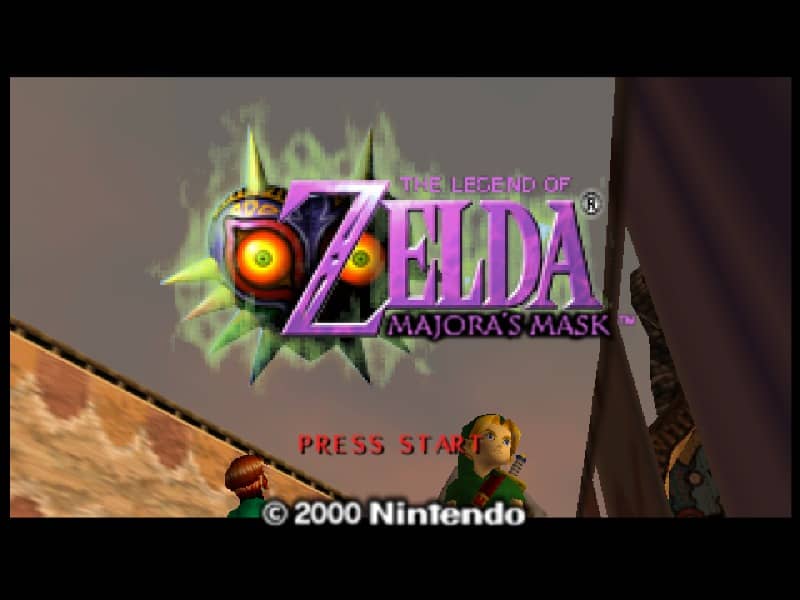
Majora's Mask is a direct sequel to Ocarina of Time, set after Link defeats Ganon. While searching for his companion Navi, Link wanders into a mysterious forest, where Skull Kid steals his ocarina and transforms him into a Deku Scrub. With the help of the fairy Tatl, he arrives in the parallel world of Termina, which faces the threat of the moon crashing down. This setup continues the series' timeline but shifts the stage from Hyrule to a new world.
The game was not originally planned as a standalone title. The development team initially intended to create a remixed version of Ocarina of Time for the 64DD peripheral, but Shigeru Miyamoto felt the plan lacked originality and demanded that the team create a brand-new game using the existing engine within a year. This decision completely changed the project's direction, turning Majora's Mask from a spin-off into a true sequel.
The development schedule was extremely tight, with less than two years to complete the game. To meet the deadline, the team reused many character models, stage assets, and engine code from Ocarina of Time, but boldly reworked them. This asset reuse was not laziness; it was about recombining familiar content to create a distinctly different experience, such as transforming Hyrule's towns into Termina's Clock Town.
The game was released in Japan on April 27, 2000, and in North America on October 26 of the same year, with a gold cartridge as a commemorative edition. Despite the short development period, it was commercially successful, selling about 600,000 copies in Japan and about 1.2 million in North America, with total N64 sales reaching 3.36 million worldwide. While this was less than Ocarina of Time, it was impressive given its unique positioning and release timing.
The creation of Majora's Mask was fraught with challenges and compromises, but it was this pressure that fostered its innovation. From the 64DD project to a standalone game, from asset reuse to the time loop, every decision stemmed from careful management of time and resources, yet unexpectedly shaped the game's unique artistic character. It proved that under constraints, creativity can shine even more brightly.
Development
The game's development was co-led by Eiji Aonuma, Yoshiaki Koizumi, and Shigeru Miyamoto. Miyamoto set the challenge of creating a new game with the existing engine within a year, and Aonuma was responsible for turning that requirement into concrete designs. Koizumi later revealed that the idea of the falling moon came from one of his dreams, and this dreamlike image became the game's central visual symbol, establishing its surreal tone.
One inspiration for the time loop concept was the 1998 film Run Lola Run. Aonuma mentioned in an interview that the film's repeated replay of the same event deeply moved him, leading him to consider how to achieve a similar structure in a game. This borrowing was not simple imitation but a transformation of cinematic narrative into interactive experience, allowing players to personally feel the anxiety and hope of 'doing it over.'
Art director Takaya Imamura coined the name 'Majora,' a combination of his surname and 'jura' from the film Jurassic Park. The name carries a personal mark while hinting at ancient and dangerous connotations, fitting the mask's mysterious power. The game's art style was also deliberately contrasted with the brightness of Ocarina of Time, using distorted shapes and gloomy tones to create an unsettling atmosphere.
The development process was marked by intense overtime, with the team completing the game in 15 months. To meet the deadline, they had to sacrifice rest, and some even suffered health issues. This work style is not commendable by today's standards, but Nintendo's development culture at the time was known for 'pursuing perfection.' Many details in the game, such as the complex NPC schedules, were meticulously polished under this pressure.
The game originally planned to support a voice recognition unit, allowing players to interact with NPCs by speaking, but this feature was removed before release. Although it was not realized, this attempt reflected the team's desire for innovation. In terms of music, the game reused much of Ocarina of Time's material, but through rearrangement and key changes, it gave them new emotional colors, especially Clock Town's theme, which became an unforgettable melody for players.
Reception and legacy
Majora's Mask received high critical acclaim upon release, with a Metacritic score of 95, matching or even surpassing Ocarina of Time. Critics praised its bold design, deep emotion, and the unique experience of the time loop. The game also won two awards at the 4th Annual Interactive Achievement Awards: 'Console Action/Adventure' and 'Game Design,' further cementing its industry status.
Among players, the game went from controversy to classic. At first, some players were put off by the time limit and dark tone, but over time, more and more people came to appreciate its depth and artistry. Today, it is often listed as the most experimental work in the series and is considered by many as an 'underrated masterpiece.'
The game left a lasting influence on subsequent works. Its time loop mechanic inspired indie games like Outer Wilds, and the mask transformation system was borrowed by titles such as Kena: Bridge of Spirits. Additionally, the game's Great Bay stage appeared in Super Smash Bros. Melee and Super Smash Bros. Ultimate, allowing more players to glimpse the charm of this world.
The game has been ported and remade multiple times since its release. In 2003, it was included in The Legend of Zelda Collector's Edition for GameCube; later, it was released on Wii and Wii U Virtual Console and Nintendo Classics. In 2015, a 3DS remake by Grezzo, The Legend of Zelda: Majora's Mask 3D, was released worldwide, and while the graphics and controls were improved, the original's unique character remains irreplaceable.
The game also spawned the famous internet horror story 'Ben Drowned,' which used the game's eerie phenomena to create a terrifying atmosphere and helped define the 'creepypasta' genre online. This phenomenon demonstrated the game's profound influence on popular culture, elevating it beyond mere entertainment to a cultural icon.