


01
Where the series began
In 1986, Enix released the original Dragon Quest for the Famicom in Japan. Yuji Horii handled game design and scenario, Akira Toriyama designed the characters, and Koichi Sugiyama composed the music. From the very first game, this trio established a long-lasting, recognizable identity: friendly monster designs, straightforward menus, and a fairy-tale world.
The original Dragon Quest distilled the exploration, combat, and growth of computer RPGs into a console controller and menu system. It guided players new to RPGs with relatively clear goals, letting them grasp the rhythm of adventure through a limited set of commands. This design made the game accessible even to those unfamiliar with the genre at the time.
Early in the series' life, it was known as Dragon Warrior in North America due to trademark issues, and it wasn't until after 2005 that the English market reverted to Dragon Quest. The old English name for the same game should not be mistaken for a different series. This site's section consistently uses "Dragon Quest" as the title, and while the English name may be noted as the old one depending on the release period, the section name remains Dragon Quest.
02
How the series evolved
Dragon Quest II expanded the scope with a multi-character party and a larger world, so players no longer adventured alone. Dragon Quest III introduced a class and job-change system, and its story structure linked the first three games into what fans later called the Roto trilogy. These three titles laid the series' foundation: parties, classes, and world exploration.
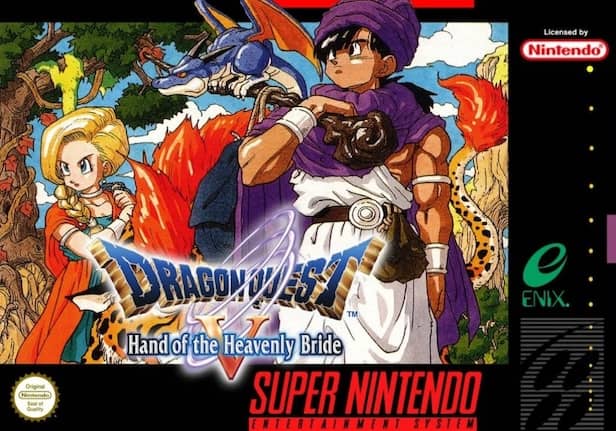
Dragon Quest IV used a chapter-based narrative, letting different companions take the spotlight in turn, each with their own story. Dragon Quest V followed the protagonist from childhood to parenthood and let monster allies join the party—a bold design choice at the time. Dragon Quest VI, meanwhile, revolved around travel between the real world and a dream world, exploring the relationship between the two.
Dragon Quest V and VI were later remade for the Nintendo DS. This site covers those DS versions, as well as the original Super Famicom version of V, so pages must clearly distinguish between original and remake content. The remakes adjusted graphics and systems, but the core stories and gameplay remained unchanged.
The series' turn-based combat has long relied on command menus, levels, equipment, spells, and party roles. Each installment may tweak classes, skills, or perspective, but clear feedback and gradual growth have always been the entry point. This design lets players jump into each new game quickly while still experiencing fresh changes.
03
Design and identity
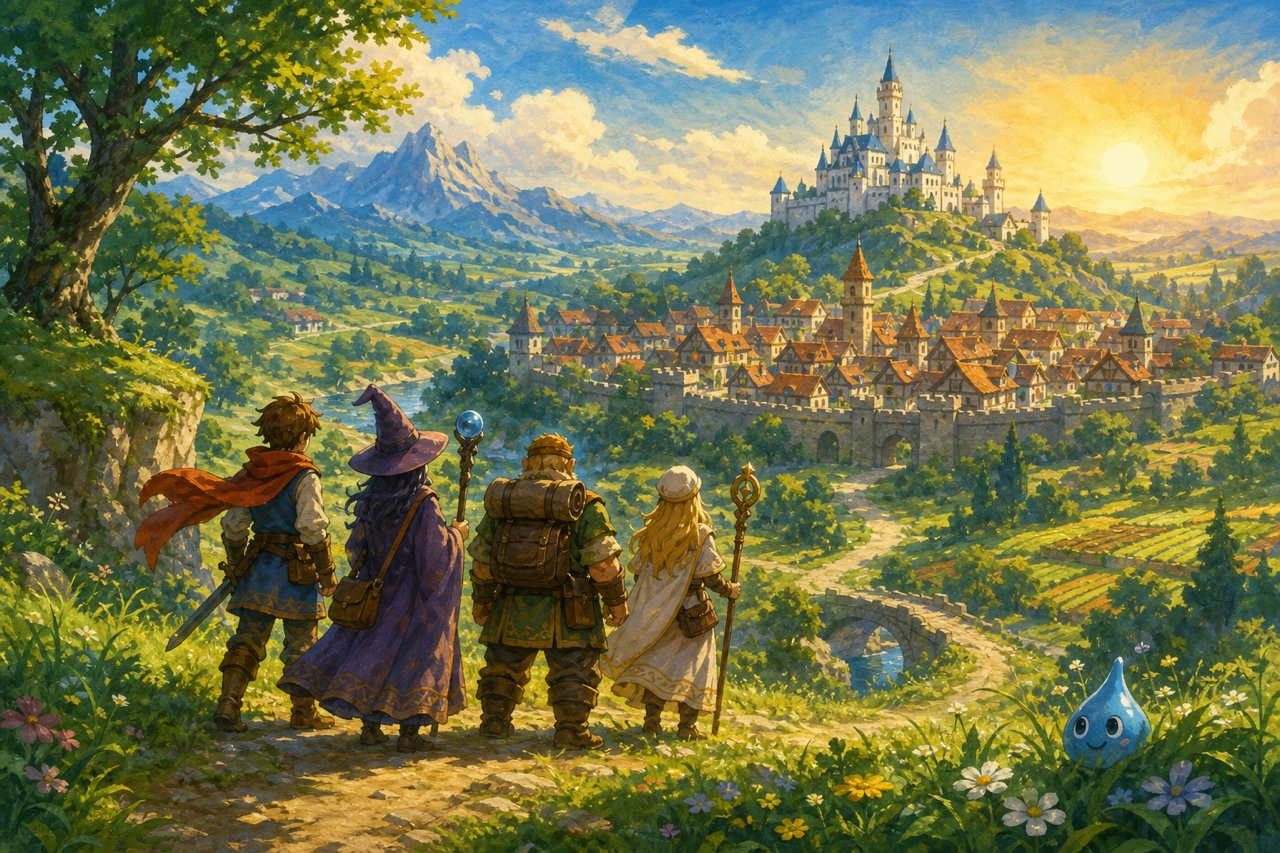
The slime has appeared since the first game, and its simple outline and expression turned it from a common enemy into the series' most recognizable icon. Its round body and friendly face left a lasting impression, and it became a key entry point for the Monsters spin-off line. The slime's image also appears on all sorts of merchandise, making it a symbol of the series.
Dragon Quest Monsters launched on the Game Boy in 1998, starring Terry from Dragon Quest VI. It put capturing, raising, combining, and breeding monsters at the center, forming a long-running branch independent of the numbered mainline. The Monsters games let players collect and nurture a variety of creatures, offering a different experience from the main adventures.
Dragon Quest often wraps its long journeys in friendly monster designs, straightforward menus, and a fairy-tale world. It doesn't shy away from parting and growth, but it usually lets players find a comforting rhythm in towns, companions, and familiar melodies. This balance makes the series stand out among serious RPGs.
04
Player culture and its place today
The Game Boy Color Dragon Warrior I & II packed the first two games onto a single cartridge. The 1985 date in this site's directory is an old data error; the games actually belong to the 1999 handheld compilation. Similarly, the Game Boy Color Dragon Quest III is a handheld remake of the third game, released in Japan in 2000 and North America in 2001—it is not a 1985 title.
The 2002 Japan-only PlayStation Dragon Quest Monsters 1+2 remade and combined the two Game Boy Monsters games; it is neither a numbered mainline entry nor a brand-new third Monsters game. Such compilations and remakes share the series' symbols but occupy different historical positions. The site's ordering should place numbered mainline games first, then spin-offs like Monsters, with compilations and remakes clearly labeled as such.
The playable games on this site cover only a small slice of the series, including V and VI, plus a few handheld Monsters titles, compilations, and remakes—this should not be presented as a complete numbered mainline collection. Players browsing should be aware of version differences to avoid confusing originals with remakes, or mainline with spin-offs.