AllGamesGo editorial
Why Is the Arcade Version of Contra Different from the NES Version?
The 1987 arcade original and the 1988 NES home version share the same run-and-gun core, but they differ in aspect ratio, level design, and presentation—it's not simply a matter of graphics quality.
Last updated:August 20, 2026
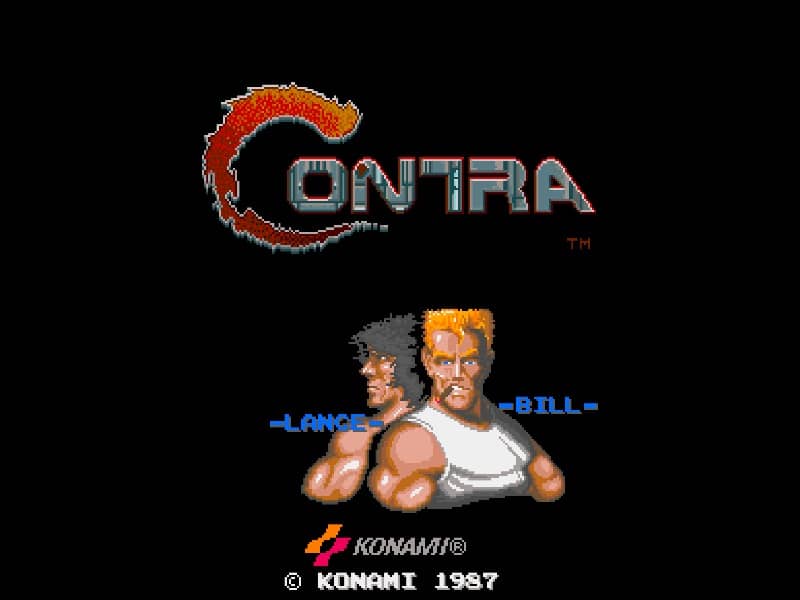
Konami released Contra in arcades in 1987, and followed up with a Family Computer version in Japan and an NES version in North America the next year. Many players first encountered the eight levels on the NES, and when they later saw the arcade version, they thought, "It looks more detailed, but why does it play differently?" This isn't just about resolution—the arcade and home versions have real differences in aspect ratio, level structure, and presentation. You can think of them as two distinct versions built on the same core gameplay.
Same Name, Different Build
Konami first released Contra in arcades in 1987, then released the Family Computer version in Japan and the NES version in North America in 1988. The official description of the arcade original highlights alternating side-scrolling, vertical-scrolling, and pseudo-3D levels, with massive fortresses and bosses as standout moments. The home version retains these core elements, but it's not simply a direct port of the arcade ROM into the cartridge.
The arcade original uses a vertical screen, while the home version was rearranged for horizontal TV screens, changing the characters, field of view, and level layout. This results in completely different pacing and feel between the two versions—it's not just a matter of "shrinking the arcade screen." The home version expanded the maps and added new enemy attack patterns; the Japanese FC version even included intermission cutscenes. These changes make it more than just a scaled-down copy of the arcade version.
Aspect Ratio and Pacing
The arcade version's screen is vertical, so characters and environments take up more space on screen, making details easier to see. Because the vertical view is longer, enemies and bullets press in from above and below, creating a strong sense of pressure. The levels are more compact, and the perspective shifts quickly. The home version, adapted for horizontal TVs, uses a horizontal TV format, giving a wider left-right view but with relatively smaller characters and less environmental detail.
The wider horizontal view changes the game's rhythm—you can see enemies ahead and to the sides more easily, but the threat from above and below is reduced. The home version also expands the maps, making each stretch longer and extending the overall level length, so it's no longer the short, dense pacing of the arcade. So while the two versions feel similar in handling, their pacing and pressure points are quite different. Neither is absolutely better; they each have their own rhythm.
Level Restructuring and Expansion
Both the arcade and home versions retain the core elements: side-scrolling run-and-gun, waterfall climbing, and behind-the-back base levels. But the home version reorganizes the levels and expands the maps. The final stretch of the arcade version is split and expanded in the home version, forming longer, more clearly defined eight stages, rather than eight entirely new levels.
A typical difference is the base level. In the arcade version, the base section is more like a corridor with a map and time pressure—you check the map while rushing, and the time limit creates urgency. The home version makes the base route more linear and removes the time limit, allowing players to explore and fight at a more relaxed pace. Overall, the home version's eight levels have a clearer structure and longer playtime.
| Aspect | 1987 Arcade | 1988 Home |
|---|---|---|
| Screen | Vertical orientation, larger characters and scenery | Horizontal TV format, wider left-right view |
| Levels | Compact segments, quick perspective shifts | Expanded maps, later content split into clearer stages |
| Base | Corridor with map and time pressure | More linear route, time limit removed |
| Presentation | Relies on arcade visuals and large bosses for impact | Compensates with longer playtime and version-specific content |
Japanese FC and English NES Are Not Identical Either
Many players treat the Famicom version as a single entity, but the Japanese FC and North American NES versions are not pixel-for-pixel identical. The Japanese FC version uses different cartridge hardware and retains the opening, intermission communications, and map, as well as animations like trees, snow, and alien nests; the English NES version removes or simplifies these presentations.
However, the main eight levels and gameplay of the Japanese FC and English NES versions are still closely aligned; the differences are mainly in presentation, some animations, difficulty, and minor details. They're not two completely different games, but if you play the Japanese version and then the English version, you'll notice the missing cutscenes and dynamic effects, as well as subtle difficulty adjustments.
Core Rules That Stayed the Same
Despite the changes in visuals and level structure, both the arcade and home versions support two-player simultaneous co-op, and both retain the basic rules of one-hit death, somersault jumps, eight-way shooting, and weapon capsules. These elements are the foundation of Contra's feel and are present in both versions.
So, regardless of which version you play, the core running, jumping, shooting, and cooperative experience is shared. The differences lie in how the maps are laid out, how enemies come at you, and how the screen presents the action. These differences are enough to make the two versions feel distinct, but the foundation is still the same Contra.
Which Version to Choose on This Site
This site currently offers the 1987 arcade version and the 1988 English home version. The home version is categorized under the Famicom/NES platform family, and its content is in English, so it's not the Japanese FC cartridge with full mission briefings and extra animations.
If you want the arcade original's large-scale visuals and compact pacing, choose the 1987 arcade version. If you prefer the horizontal TV composition, expanded maps, and the eight-level rhythm that Chinese players are more familiar with, choose the 1988 English home version. Both versions are worth trying, but if you're expecting the Japanese FC's opening animation and extra cutscenes, this site's NES version doesn't have those—it's the English home version, which retains the core gameplay and eight levels but lacks the Japanese version's visual details.