AllGamesGo editorial
Is Patapon a Rhythm Game or a Strategy Game? How Its Four Drums Give Orders
It is a hybrid of rhythm, strategy, and simulation: four buttons produce four drum sounds that form commands, while army composition and battlefield judgment still matter.
Last updated:August 30, 2026
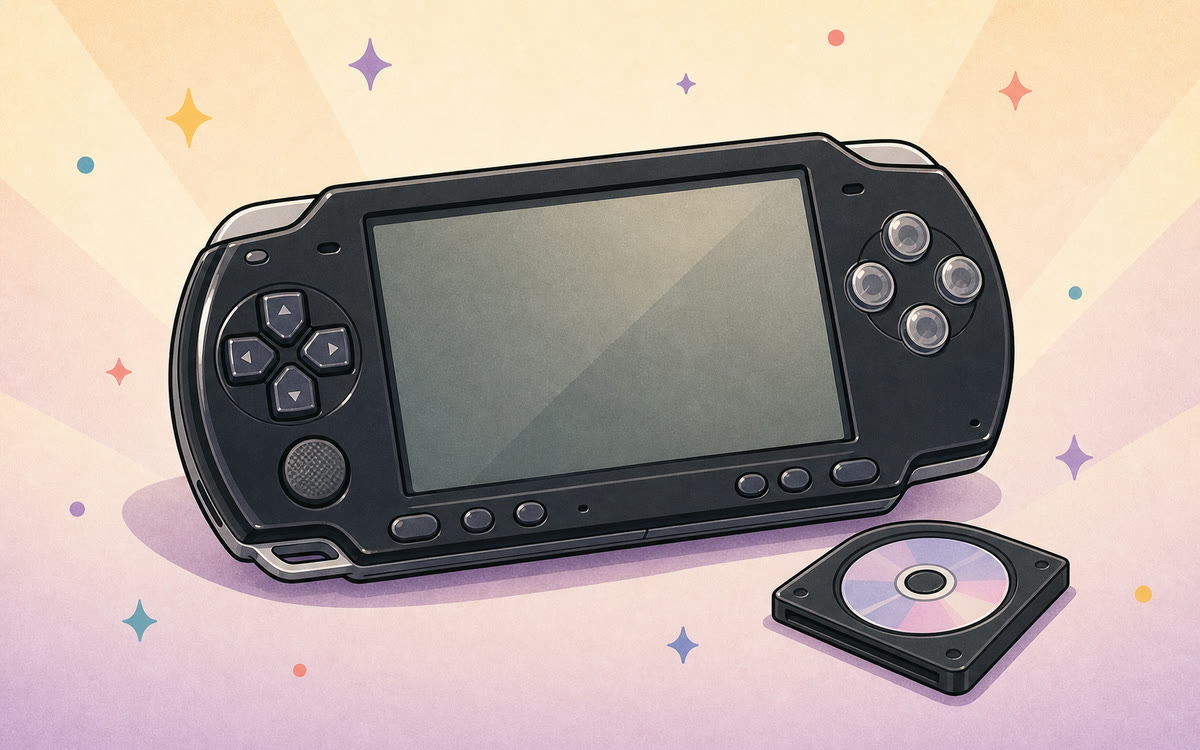
Patapon looks like a one-eyed army that learned to sing and sounds as though the PSP has become a set of four tiny drums. Playing it, however, also means commanding troops in real time. You do not push every warrior forward with the directional pad. You beat patterns made from Pata, Pon, Don, and Chaka, then the whole army acts on the order. Rhythm is the language; tactics decide what that language should say.
The short answer: it is both, with simulation too
A PlayStation interview with the creators calls Patapon 'Command & Carnival' and describes it as a blend of strategy, simulation, and music-game elements. Its orders require a steady beat, so rhythm forms the mechanical backbone. Yet perfect timing cannot rescue every bad order or unsuitable formation; the army may simply march into danger with excellent musical discipline.
Calling it only a rhythm game misses troop development and battlefield decisions. Calling it only a strategy game misses its defining input system. A more useful description is that rhythm delivers an order, while strategy determines which order should be delivered now.
Which button plays each of the four drums
The official PATAPON 1+2 REPLAY page maps the four sounds to PlayStation buttons. Think of them as syllables that can form a sentence, not four shortcuts that each complete a tactical action when pressed once.
| Drum sound | PSP button | Role inside a command |
|---|---|---|
| Pata | Square | A syllable used to build rhythm commands |
| Pon | Circle | A syllable used to build rhythm commands |
| Don | Cross | A syllable used in special rhythms |
| Chaka | Triangle | A syllable used to build rhythm commands |
How a rhythm becomes an order
The creators traced the system's breakthrough to 'pata pata pata pon': beat those four counts and the Patapons begin marching. Their interview also explicitly identifies 'chaka chaka pata pon' as the defensive command. The goal is not to mash the buttons quickly, but to place a group of syllables on an even pulse.
After the player's call, the Patapons sing the pattern back and carry out the action. This call-and-response design makes the exchange feel like communication with the tribe rather than a dry menu selection. Four buttons become drum sounds, the sounds become a short phrase, and only then does the phrase become an order such as marching or defending.
Why staying on the beat is not enough
Combat does not pause while the player remembers a pattern. Producer Hiroyuki Kotani explained that there may be only about two seconds to decide whether to attack, defend, or retreat, all while reading the enemy and keeping time. A defensive rhythm can be perfectly entered yet still arrive one cycle too late to prevent a heavy hit.
Consistent performance also builds toward FEVER and makes the music more lively, but it should not be reduced to an unsupported multiplier formula. Timing creates the condition for execution; battlefield judgment determines whether that execution was wise. Patapon quickly exposes whichever half is missing.
Army building is the other half
The official store description illustrates the strategy layer through jobs. Hatapon stands in the center and leads with a flag, Tatepon protects allies with a large shield, and Yumipon attacks from range with arrows. Different jobs serve different functions, so the player must shape the army and its equipment around the next challenge.
The same correct command can therefore produce a different result with a different formation. Rhythm does not replace familiar strategy choices; it turns those choices into a live performance. A good commander needs an ear for the pulse and a small mental ledger for troop roles.
A beginner-friendly way to learn
Start with only a few core orders and make the spacing between the four beats reliable. Then move attention toward enemy tells. Once counting no longer consumes all of your focus, compare jobs and equipment. This separates 'my rhythm was wrong' from 'my tactical choice was wrong' instead of blending both failures together.
The 2025 PATAPON 1+2 REPLAY adds difficulty selection, timing adjustment, and an option to keep drum icons visible. Those are support features in the newer release, not features that should be projected backward onto the 2007 PSP original. In either version, the central loop remains listening, choosing, drumming, and reading the response.
- Learn marching first: even spacing across four beats matters more than memorizing many orders immediately.
- Read the enemy next: decide whether the moment calls for offense, defense, or a change of pace before entering the pattern.
- Tune the army last: combine units by job and never treat rhythmic accuracy as an automatic victory.
Sources
- PlayStation Blog / Sony Interactive Entertainment:The complete story behind rhythm-action classic Patapon, as told by the game's creators
- PlayStation Store / Sony Interactive Entertainment:PATAPON 1+2 REPLAY — four drums, classes, and strategic combat
- PlayStation Blog / Sony Interactive Entertainment:Marching to the beat of their own drum: an interview with the creators of Patapon