Gameplay and design
In PATAPON, players assume the role of an invisible deity worshipped by the Patapon tribe, issuing commands by inputting specific sequences on the PSP's face buttons. A pulsing border cues players to the rhythm, and successfully syncing commands triggers a 'Fever' state, boosting attack and defense. This design, which fuses musical rhythm with strategic command, lets players enjoy the beat while also pondering tactical decisions.
The game features eight selectable unit types, such as Tatepons with shields and swords, Yaripons with spears, and Yumipons with bows, each with up to three or six soldiers. Players must tailor their forces to mission requirements, using different drum combinations to command the tribe to advance, attack, defend, or retreat. This simple yet deep command system makes every battle full of variables.
The Fever state is a core mechanic, achievable by maintaining a 10-hit combo or perfect timing. While in Fever, players can perform 'Miracles' that affect the weather, such as summoning rain or strong winds, which can shift the battlefield and add more strategic depth. Mastering the rhythm to enter Fever and using Miracles at critical moments becomes a key skill.
After completing missions, players can revisit previous ones to gather resources like materials, weapons, armor, and the currency 'Ka-ching.' These resources are used to create new Patapons at the Tree of Life in the village 'Patapolis,' requiring Ka-ching and materials like branches and stones. This collect-and-customize loop lets players freely strengthen their tribe alongside the main story.
If a Patapon falls in battle, it drops a hat that can be retrieved after the mission to revive it; if not picked up, it is lost permanently. This mechanic adds tension and risk assessment, as players must weigh whether to risk grabbing the hat or prioritize completing the mission. This design makes every battle a series of choices and deepens the emotional bond between players and their tribe members.
Background and release
PATAPON was first released in Japan on December 20, 2007, followed by Europe on February 22, 2008, and North America on February 26, 2008. Developed by Pyramid, produced by Japan Studio, and published by Sony Computer Entertainment, it quickly drew attention as an original PSP title thanks to its unique gameplay, becoming a gem in the PSP library.
The game's story follows the Patapon tribe's journey to the 'End of the Earth' to gaze upon 'IT,' encountering giant beasts and the rival Zigoton tribe along the way. As the deity, players guide the tribe through these trials, and this narrative framework provides emotional drive for the rhythm gameplay, immersing players in the tribe's adventure as they tap out drumbeats.
Upon release, the game received widespread critical acclaim and multiple awards and nominations. It earned a Famitsu Platinum Hall of Fame honor and won Best Music/Rhythm Game, Best Art Direction, Best Original Score, Best New IP, and PSP Game of the Year at the IGN 2008 awards. These accolades underscored the game's excellence across several areas.
On August 1, 2017, the PS4 version, Patapon Remastered, launched worldwide, allowing new and old players to revisit the classic in high definition. On July 12, 2025, Patapon 1+2 Replay, developed by sAs and published by Bandai Namco Entertainment, was released for Nintendo Switch, PS5, and Windows, with the Switch version featuring exclusive multiplayer modes, injecting new vitality into the series.
As of January 2009, the game had sold 229,000 copies in North America, showing solid commercial performance. It also received nominations for the BAFTA Games Award for Handheld, and the Academy of Interactive Arts & Sciences' Handheld Game of the Year and Casual Game of the Year. These achievements indicate that PATAPON was not only well-received by players but also recognized by the industry.
Development
The game concept was conceived by designer Hiroyuki Kotani, who discovered the Patapon design on French artist Rolito's personal website in 2004. Intrigued by the unique character, Kotani contacted Rolito and invited him to collaborate on the game. This cross-cultural partnership infused the game with a distinctive artistic style and creative foundation.
The name 'Patapon' was coined by Rolito, inspired by an old French children's song, and Kotani chose it because it sounded like marching and drumming. The name is catchy and cleverly aligns with the game's rhythmic theme, becoming a key part of the brand. Kotani initially envisioned controlling characters with adjectives and complex grammar, but later simplified it to onomatopoeic commands for more intuitive controls.
Development spanned two years, with the first 21 months dedicated to prototyping and the last 3 months to production. The lengthy prototype phase allowed the team to refine the core gameplay, ensuring a balance between rhythm and strategy. Kotani dubbed the genre 'Command Carnival' because it defied existing categories, a name that also captures the game's festive spirit.
The music was composed by Kenmei Adachi, with lyrics by Kotani, using a variety of African instruments, and vocals provided by Kotani's 10-year-old son. This unique approach to music production gave the game a raw, energetic rhythm that perfectly matched its world and gameplay. Music is not just background; it's integral to the gameplay, as players must follow the beat to input commands.
The game was promoted at a Sample Lab event in Omotesando, Tokyo, from December 5 to 17, 2007, and a demo was released in Japan on February 7, 2008. North American and European demos followed on February 14, 2008, including an exclusive weapon transferable to the full game. These promotional efforts effectively raised the game's profile and set a positive market tone for the launch.
Reception and legacy
PATAPON received 'generally favorable reviews' on Metacritic, with IGN's Jeff Hayes calling it 'one of the best rhythm games ever made and one of the best games on the PSP.' Critics universally praised the art style and music but criticized the repetitiveness and lack of a pause option. These reviews accurately reflected the game's strengths and weaknesses, providing direction for future installments.
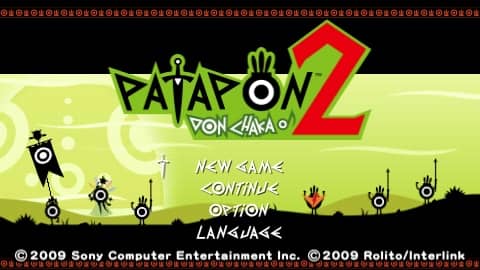
The game spawned two sequels, Patapon 2 and Patapon 3, making it the first in a trilogy. The sequels built on the core gameplay, adding more unit types and systems to enrich the content. The series' success proved the enduring appeal of PATAPON's creativity and influenced later rhythm-strategy games.
In 2013, unauthorized clone games appeared, indirectly reflecting the influence of PATAPON's gameplay. Though the quality of these clones varied, the phenomenon showed the broad appeal of the game's ideas and prompted developers to consider protecting original designs.
A spiritual successor, Ratatan, was announced by Ratata Arts and Tokyo Virtual Theory, with Kotani as director and Adachi as composer, launching a Kickstarter campaign on August 1, 2023. The project received an enthusiastic response from players, demonstrating the loyalty of the PATAPON fanbase and proving that its creativity still resonates years later.
PATAPON's lasting impact in reviews goes beyond awards and sales; it lives on in players' hearts. Its unique blend of rhythm and strategy, along with its bold art style, makes it an indelible memory of the PSP era. The game's success also encouraged more developers to experiment with cross-genre innovation, opening new possibilities for the industry.