Gameplay and design
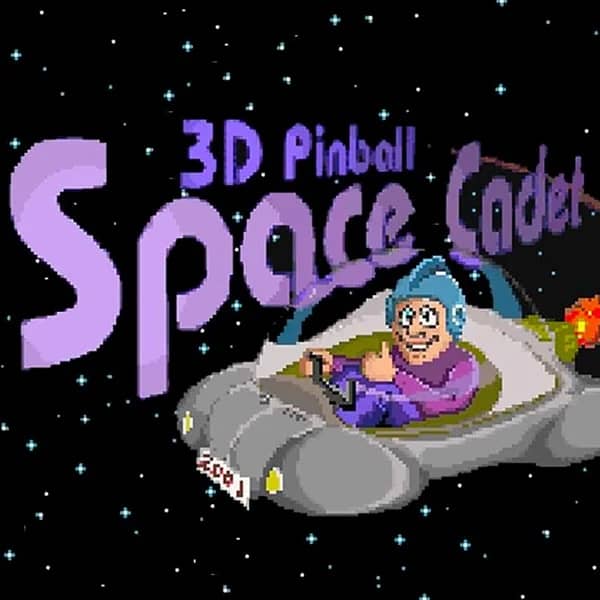
The core gameplay of 3D Pinball: Space Cadet revolves around advancing through the ranks of the Space Cadet program. Players control the pinball, hitting targets on a sci-fi-themed table to complete a series of missions. Each mission has clear instructions, such as hitting the attack bumpers eight times, and completing them earns a corresponding rank promotion. Ranks range from the lowest, Cadet, to the highest, Fleet Admiral, with nine levels in total, providing a clear progression path for players.
The mission system is a highlight of the game. Players select missions by hitting mission targets, then launch them by shooting the ramp. During a mission, fuel lights gradually go out, and if fuel runs out, the mission is aborted. Players can relight the fuel lights by passing through specific areas or shooting again, adding strategic depth and tension. After completing all blue circle lights, the rank increases, and orange circle lights light up, signaling the start of new challenges.
In addition to the Space Cadet table, the game includes two other distinctly themed tables. Skulduggery is treasure-hunting themed, where players help the pirate Peg Leg find treasure, full of mystery and adventure. Dragon's Keep is set in a fantasy world, where players complete multiple missions to slay a dragon, earning rewards such as spells, weapons, and armor along the way, enriching the gameplay experience.
Compared to Full Tilt! Pinball, the Microsoft version made some gameplay adjustments. Most notably, completing missions awards bonus points instead of extra balls, changing players' strategic choices. Additionally, hitting same-colored wormholes locks the ball but does not trigger multiball mode, making the game's pacing slightly different. These subtle differences give each version its own character, catering to different player preferences.
The game uses a 2D top-down perspective with pre-rendered 3D graphics, which was an innovative visual approach at the time. Although not true 3D, the carefully designed images and animations create a sense of depth and space. The physics engine, built by Mike Sandige, is almost entirely data-driven, making the ball's trajectory realistic and natural, with responsive flipper feedback, providing a smooth gameplay experience.
Background and release
3D Pinball: Space Cadet originally was a table in Full Tilt! Pinball, developed by Cinematronics and published by Maxis, released in 1995. Microsoft saw the potential in this table, licensed it separately for inclusion in Microsoft Plus! for Windows 95, and renamed it 3D Pinball for Windows – Space Cadet. Subsequently, the game was bundled with Windows NT 4.0, 2000, Me, and XP, becoming the first pinball game many players encountered.
After Windows XP, the game gradually disappeared from Windows systems. According to Microsoft employee Raymond Chen, the game was removed during early 64-bit Windows development due to collision detection issues. Although Windows XP Professional x64 Edition included an official 64-bit version with only minor graphics issues, the game was ultimately not retained. Raymond Chen later noted that the collision issues appeared on Alpha AXP hardware, possibly fixed by the compiler or runtime team, but the game was eventually abandoned due to its outdated visual style.
The game was particularly popular among Filipino schoolchildren in the 2000s, ranking alongside Solitaire and Minesweeper as classic Windows bundled games. Many Filipino students would secretly open the game during computer class to enjoy pinball fun. This popularity made the game a shared memory for a generation, and even after its removal from Windows, many players still miss it.
In 2018, Raymond Chen revealed an attempt to revive the game as a Microsoft Garage project, but licensing restrictions prevented success. This news sparked widespread community interest, with many players expressing a desire for the game's return. Although the official revival did not happen, reverse-engineering efforts in the 2020s allowed the game to run natively on multiple platforms, letting both new and old players relive the classic.
The game's history is not just a story of technological development but also a story of player sentiment. From its initial bundled software status to becoming a cultural icon, it witnessed the evolution of Windows systems and the power of the player community. Although no longer officially supported, the game's legacy lives on in players' hearts, marking a milestone in pinball game history.
Development
Development of Full Tilt! Pinball began in 1994, initially designed for Windows 95. Product manager Kevin Gliner was responsible for rules, scoring, and layout, and he delved into pinball machine history to design the game's rich mission and scoring systems. The development team initially used Delphi for programming but later switched to C/C++ to accommodate more complex physics simulation and graphics rendering needs.
The game's physics engine, built by Mike Sandige, is almost entirely data-driven, allowing fine-tuning of physics and materials through a scripting system. The team paid special attention to the realism of the flippers; feedback from physical pinball designers led to adjustments in roller lights and flipper angles, which were eventually incorporated into the Full Tilt! Pinball version. This attention to detail resulted in excellent game feel, beloved by players.
Pre-rendered 3D graphics were a major feature of the game. Ryan Medeiros used photos of pinball machines from the Santa Cruz Beach Boardwalk as references to ensure table authenticity. The pre-rendered assets were created using TrueSpace and later converted to MS-DOS programs, a process that was quite advanced at the time, bringing beautiful visual effects to the game.
Microsoft included the game in Windows NT 4.0 primarily to showcase NT's graphics and audio APIs. Microsoft executive Jim Allchin hoped to attract developers, so the game was used as a technical demonstration. Dave Plummer converted x86 code to C/C++ to support Alpha, MIPS, and PowerPC architectures, while Raymond Chen implemented a frame rate cap to reduce CPU usage, which he called his proudest XP feature.
During development, the team also faced licensing and porting challenges. Maxis commissioned Marc Ericksen to create illustrations for the box cover, combining elements from all three tables. After Microsoft licensed the game, adjustments were made in the 3D Pinball version, such as supporting only 640×480 resolution, changing side images to 2D, and altering the Maxis and Cinematronics logos to dark red. These changes reflect differences between platforms and versions.
Reception and legacy
3D Pinball: Space Cadet received considerable praise upon release. PC Gamer's Todd Vaughn gave it an 86% score, praising its graphics and sound but criticizing the limited number of tables. A Next Generation reviewer gave the Windows version two stars, noting that Space Cadet was good but the other tables had cluttered graphics. Despite mixed reviews, the game won over many players with its unique gameplay and polished visuals.
The game left its mark on popular culture. In 2020, Lil Uzi Vert's song "You Better Move" sampled sound effects from Space Cadet, bringing the old game back into the spotlight for a younger generation. This crossover reference demonstrates the game's cultural influence and its special place in players' hearts.
As the game was removed from Windows, the community began reverse-engineering and porting efforts. In the 2020s, these efforts enabled the game to run natively on multiple platforms, including modern operating systems and mobile devices. The community's enthusiasm has allowed the game to endure, giving new players the chance to experience this classic.
Additionally, Deeproot Pinball attempted to create a physical machine prototype but did not obtain the theme license. Although this attempt was unsuccessful, it reflects the game's status among pinball enthusiasts. Had the physical machine been realized, it might have allowed players to experience the Space Cadet's charm in a more realistic way.
Overall, 3D Pinball: Space Cadet is not just a game but a memory. It accompanied countless players through their childhoods and influenced later pinball game design. Although no longer officially supported, its place in players' hearts remains unshakable, making it a shining gem in gaming history.