Gameplay and design
The core of Bai Wan Xiong Bing is "xiangqi mahjong," a tile game popular in Taiwan that uses tiles engraved with the names of xiangqi pieces such as the general, chariot, horse and cannon. These pieces are not moved around a board; instead, players draw and discard them like mahjong tiles and try to assemble specific combinations in hand. The game is therefore a mahjong-style set-building game, not a game of xiangqi or a puzzle.
In bringing it to screens, IGS moved this tabletop ruleset onto arcade hardware. Players insert coins to start and then play hands against the computer or other players. The game keeps the basic framework of xiangqi mahjong: drawing from the stack, discarding, and comparing the strength of combinations. Because the available material is limited, the specific winning hands, scoring method and special rules are not clear and cannot be described further. What is certain is that it is not a simplified version of four-player mahjong but is based on xiangqi mahjong, a separate ruleset of its own.
It is worth noting that this game differs from the common mahjong solitaire or matching games. It does not involve clearing pairs of identical tiles, and it does not include the chi, pon and kong calls of four-player mahjong. What makes xiangqi mahjong distinctive is that its tile system comes from xiangqi while its play logic is closer to mahjong's set-building and comparison. This difference in rules gives Bai Wan Xiong Bing a character of its own among the many mahjong-themed games, though it may also feel unfamiliar to players used to standard mahjong.
Background and release
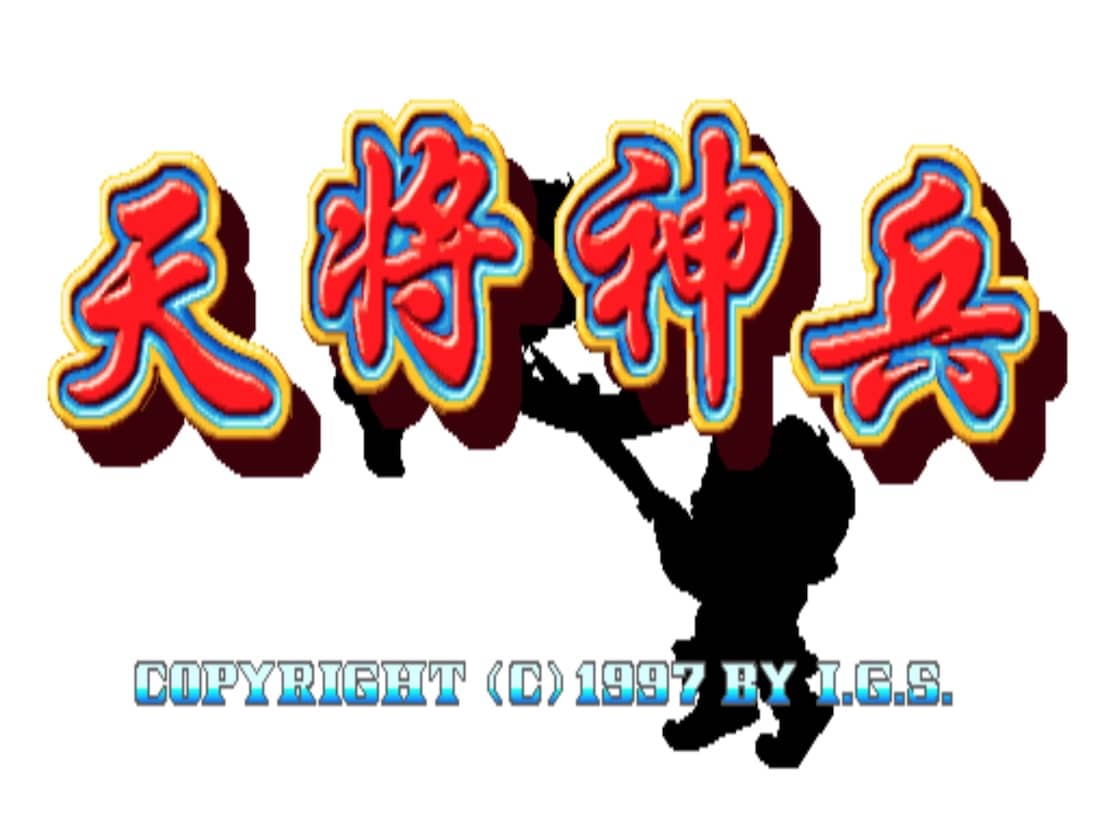
Bai Wan Xiong Bing was released in 1997 by the Taiwanese company IGS (International Games System) as an arcade title. In some listings the game is also called Tian Jiang Shen Bing; the two names refer to the same game, so players searching for it may want to try both. IGS, a well-known Taiwanese arcade developer, has released a number of puzzle and card games, and this is one of them. The original platform was arcade hardware, not the web or a home console.
The game is adapted from xiangqi mahjong, a folk tile game passed down in Taiwan. Unlike standard mahjong, xiangqi mahjong uses xiangqi pieces as tile faces, but play does not involve moving pieces; instead, players draw and discard to build combinations. This regional game reflects the variety of Taiwan's tabletop culture, and IGS's electronic version let more players experience it in arcades. Detailed information on the origins and popularity of xiangqi mahjong, however, is currently lacking.
There is no reliable data on the game's global sales or on any collected reviews. Its reach was probably limited mainly to arcades in Taiwan and some Chinese-speaking regions. Because it is old and the surviving material is scattered, its place in history lies more in being a sample of a regional tabletop game brought to screens than in any great commercial success. For enthusiasts studying Taiwanese arcade games or folk tile games, it offers an interesting case.
Development
Verifiable information about the development is quite limited. It is known that IGS ported the rules of xiangqi mahjong to arcade hardware, but the specific team, development period and design documents have not been made public. It can be assumed that the team had to turn the flow of a physical tile game into an electronic program, including dealing, drawing and judging combinations. These assumptions, however, lack supporting material and cannot be taken further. There are also no official records or interviews to consult regarding the design approach or sources of inspiration. Such gaps are not unusual for early arcade games, especially one with a strongly regional character. This section can therefore only outline what is known and cannot offer more detailed inside information on development.
As for the hardware, the game runs on an arcade board, but the specific model and performance specifications are unknown. The nature of the arcade platform means a game has to suit coin play and limited session times, but whether the rules were adjusted for this is not known. The browser version offered on this site was later made possible through emulation and was not the form of the original release. A player starting the game in a browser does not mean it was originally an HTML5 title. The original arcade hardware and the later emulated environment should be kept clearly distinct and not conflated. This distinction matters for understanding the original design intent and the feel of play, since the performance limits of arcade boards and the coin mechanism may have influenced the game's pacing and difficulty, though the material does not say how.
On licensing, xiangqi mahjong as a folk game may not have had strict copyright ownership, but whether IGS obtained formal permission or worked with a particular organization is not mentioned in the material. Whether original elements were added or the scoring was adjusted during the conversion of the rules also cannot be verified. These gaps make it hard to fully reconstruct the development background, and only more historical material can fill them in. At the same time, both Chinese names, Bai Wan Xiong Bing and Tian Jiang Shen Bing, appear in different listings, so searching both is advisable to make sure the information found concerns the same game. Despite the unclear licensing details, IGS's attempt to bring a regional tile game to screens in itself shows an interest in local subject matter, though this judgment still needs more historical support.
Reception and legacy
With no reliable sales figures or press reviews, the historical assessment of Bai Wan Xiong Bing is hard to quantify. From what survives, it looks more like an arcade title aimed at a particular region and group of players than a widely known classic. Its value may lie in preserving an electronic form of a regional tile game and offering a lead for later study of Taiwan's tabletop culture. In arcade history, many games failed to spread widely because of limits of region and subject matter, and this is one of them. Despite the lack of a striking commercial result, it serves as a concrete reference for understanding how folk tile games in Taiwan evolved. For game historians, such titles often reflect the cultural life of a particular time and place better than bestsellers do.
Within IGS's catalog this game is not a flagship title, and discussion of it is sparse. It does show an arcade-era company exploring local subject matter, which gives it a layer of cultural documentation that purely imported or imitated works lack. For players who enjoy curiosities or study game history, it may offer a different kind of experience. IGS, a well-known Taiwanese arcade developer, has released a number of puzzle and card games, and this one stands out somewhat among them because it is adapted directly from a regional tile game rather than a general ruleset. That choice was uncommon in the market of the time and has kept the game mentionable years later, if only within a limited circle. Its existence is a reminder that companies sometimes take on the role of recording local culture alongside commercial considerations.
Overall, the influence of Bai Wan Xiong Bing is limited, but as an attempt to bring xiangqi mahjong to screens it fills a gap in a niche area. Without more material, its standing should be judged cautiously, without exaggeration or dismissal. Its existence reminds us that the diversity of game history is often hidden in unremarkable corners. For enthusiasts who want to learn about Taiwanese arcade games or the electronic adaptation of folk tile games, it offers a concrete entry point, though many details remain to be verified. If more historical material surfaces in the future, its value may be understood more fully, but for now it is more like a cultural record waiting to be read.