Gameplay and design
The heart of Mahjong Connect 2 is path-based tile matching. The board is covered in mahjong tile faces, and you need to find two identical tiles and connect them with a path. That path can't wander freely: it may bend at most twice, meaning no more than two right-angle turns. In other words, the two tiles must link in a straight line, with one turn, or with two turns; any route needing more than two right angles doesn't count. That restriction makes finding pairs more than a test of eyesight, since you also have to plan the route quickly in your head.
Tiles on the board aren't always available to clear. If two matching tiles are blocked by other tiles, or no legal path with the allowed turns can be drawn between them, they can't be connected for now. You have to clear the surrounding tiles first to open a route before you can deal with the pair that was stuck. Each round therefore plays out like a shifting maze, where the order in which you clear pairs directly affects whether paths remain open later. That sense of unlocking the board layer by layer is the game's core pleasure.
The goal is straightforward: clear the board within the given time and layout constraints. Time pressure plus the path restriction keeps every round tight and brisk. The game has no rules connection to four-player mahjong. There's no drawing or discarding, no scoring of hands or points; the mahjong tiles mainly serve as visual markers. What you actually do is recognize tiles, find pairs, and plan routes, folding tile matching and spatial planning into a compact browser puzzle.
Background and release
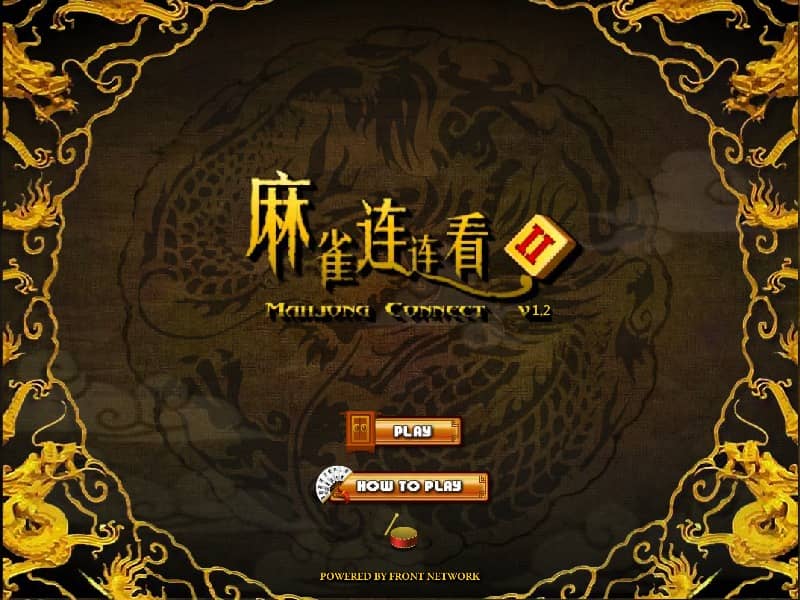
Mahjong Connect 2 is a Flash-based tile-matching puzzle game made by t45ol.com. The "2" in the title is part of the name and should be kept that way rather than swapped for the Roman numeral "II." Some older sources write it as "Mahjong Connect II," but that comes from legacy link naming and isn't the more accurate title. Being clear on this helps distinguish the game from others with the same or similar names. The "2" also suggests it was named as a sequel, but the available material offers no information about a predecessor, so there's no way to tell whether the number reflects a planned series. All that can be confirmed is that it's a fixed part of the title.
The game's original release platform was Kongregate, and it launched on February 5, 2009. Kongregate's release record provides more reliable dates and developer clues than some later reposting sites. Earlier claims of a GameHouse connection and a 2005 date are incorrect and should be corrected. When looking back at the game, Kongregate's record is the basis for getting its origins and timeline right. Note that the Kongregate record only establishes the platform and date; it doesn't offer more detail on team size or production schedule, and those remain unknown rather than something to fill in with guesswork.
It's worth stating that the game was originally released as a Flash title, not an HTML5 game. It can still be played on some sites today because those sites run old Flash content through a modern compatibility layer. The fact that a browser can launch this old game doesn't mean it shipped in a newer web format. Keeping the original platform separate from how it runs now avoids misunderstanding its technical background. The material doesn't say who maintains the compatibility layer or when it went live, and those gaps should be left as they are. It's also worth remembering that the mahjong tiles are purely visual assets, the gameplay is tile matching, and there's no connection to four-player mahjong rules.
Development
Based on verifiable information, Mahjong Connect 2 was developed by t45ol.com and distributed through Kongregate. The material doesn't provide further detail on team size, production schedule, or design inspiration, so the account has to stay within what's known. What's certain is that the game chose Flash as its medium, targeted browser players, and took the lightweight puzzle route. Its arrival fits the era when Flash games were popular on the web, but the available material doesn't explain why this particular game was made.
In terms of rule design, the game uses mahjong tile faces as matching material without bringing in four-player mahjong rules. It takes the visual recognizability of the tiles and combines it with path connection, turning it into a quick browser puzzle. That approach wasn't unusual among Flash games, but this game's specific handling, especially the two-turn limit, gives it its own rule identity. The material doesn't say whether that rule was original or borrowed, so it can only be described on its own terms.
On technical migration, what can be confirmed is that the old Flash title continues to run in modern browsers through a compatibility layer. This wasn't a cross-platform plan set up during development but later handling to keep old content accessible. The material doesn't mention who maintains the compatibility layer, when it went live, or whether the migration ran into technical obstacles. Those gaps should be left as they are rather than filled with speculation.
Reception and legacy
Mahjong Connect 2's appeal lies in compressing tile recognition and route planning into a very short browser experience. Players don't need to know mahjong scoring rules or build hands; they just need to recognize matching tiles and find a legal connecting path to get started. That low barrier plus a clear goal gives it a light place among Flash puzzle games. It doesn't try to simulate a real table; instead it treats mahjong tiles as visual material and turns out a brisk little tile-matching game.
From a preservation standpoint, part of the game's value comes from its age. It's a game that depends on Flash and now needs a compatibility layer to open in modern browsers. That makes it a concrete example of how early browser games are preserved and accessed. Kongregate's release record also leaves relatively reliable date and developer information, holding up better to checking than some later reposting sites. For anyone curious about puzzle games of the Flash era, it's a documented sample.
As for its place in a series, the "2" in the title shows it was named as a sequel, but the material provides no information about a predecessor and doesn't say whether the number reflects a planned series. So there's no way to judge where it sits in any supposed series, and certainly no basis for inventing sales, review scores, or industry impact. What can be said is that it represents an approach to turning mahjong visuals into a connecting puzzle, with simple rules and clear boundaries, best understood as a short-session browser puzzle game.