Gameplay and design
Lucky Grand Slam is an arcade game built around mahjong play. According to the available material, it follows mahjong hand rules rather than the mahjong solitaire style in which matching tiles are paired and cleared. Both use mahjong tiles, but they play nothing alike: the first involves forming sets and hands the way mahjong does, while the second is just about finding pairs. Assuming it is a matching game simply because the word "mahjong" appears would misread what the game actually is.
Confirmed gameplay information is fairly limited; all that is known is that it revolves around mahjong matches. The material does not spell out the specific rules, such as whether it is four-player or two-player mahjong, whether there is a special scoring system, or how a round unfolds. The words "Lucky" and "Grand Slam" in the title also cannot be taken to imply a lucky-bonus mechanic or a tournament mode, since the material states plainly that these words do not by themselves represent any particular algorithm or structure. The finer details have to remain unknown rather than being filled in by guesswork.
As a 1994 arcade game, its design had to suit the arcade environment. IGS was making a number of coin-operated board, card and gambling-style video games in Taiwan at the time, and Lucky Grand Slam was presumably one of them. Games of this kind usually move quickly so players can drop in a coin and start playing. The material does not describe its coin mechanism or how long a session lasts, though, so at most the company's background suggests it may share the general traits of arcade games; it cannot be claimed to have any specific design for certain.
Background and release
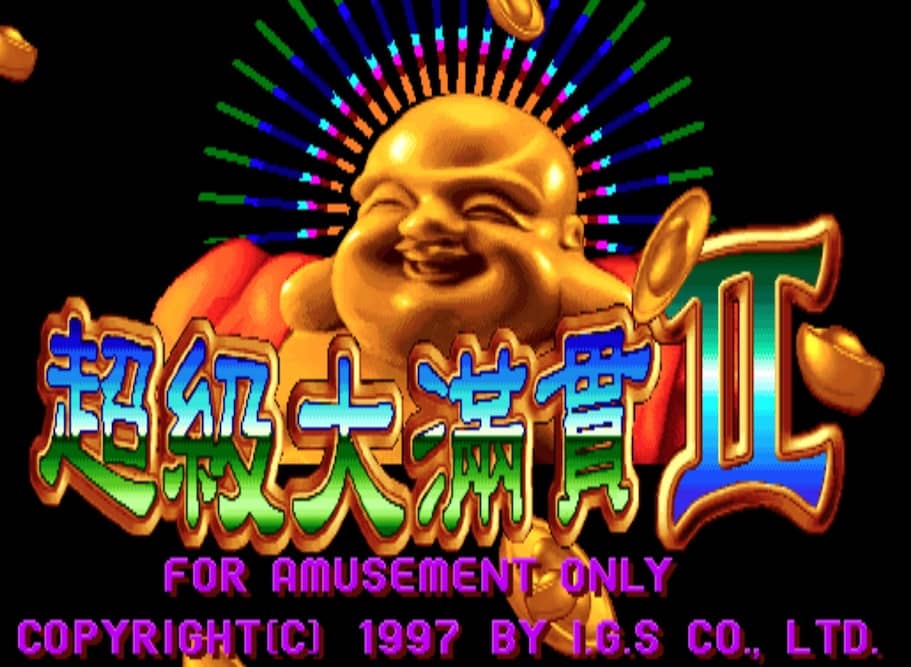
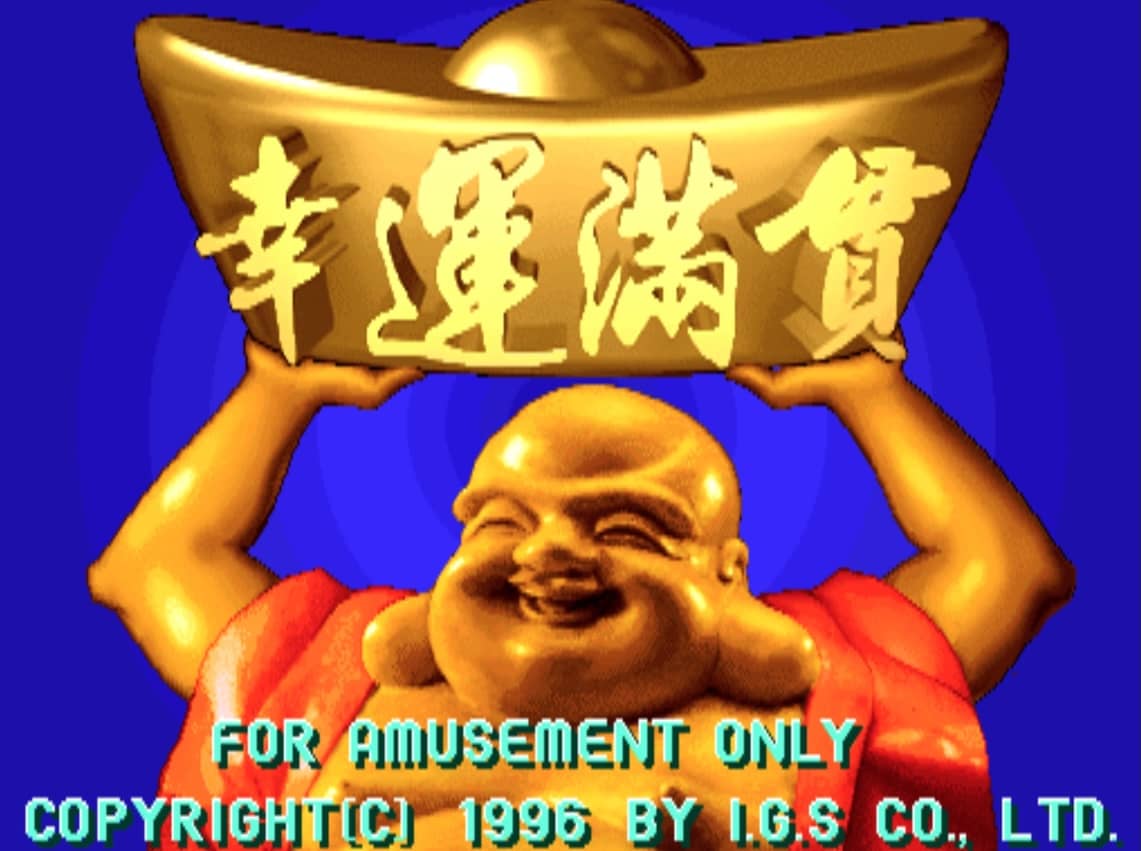
The game's English title is Lucky Grand Slam, and its Chinese catalog name is "幸運大滿貫"; both refer to the same game. It was made by the Taiwanese company IGS and released in 1994, originally as an arcade title. IGS was actively producing coin-operated board, card and gambling-style video games during that period, and this mahjong game was one entry in that product line. 1994 is only the catalog year; the exact release month and date cannot currently be confirmed.
On regional distribution, the material only notes that IGS is a Taiwanese company and does not state clearly whether Lucky Grand Slam was released outside Taiwan or whether other versions exist. So it can only be established that it came from IGS in Taiwan; which regions it was officially released in cannot be inferred. Likewise, although "Lucky" and "Grand Slam" in the title invite associations, the material stresses that these words alone do not prove any specific bonus algorithm or tournament structure, so its modes should not be imagined from the title.
At present, the game's identity rests mainly on catalog records, with no contemporary reviews, staff credits or sales data. That means its historical standing remains fairly unclear: we do not know who its development team was or how many copies it sold. These gaps are themselves part of the game's history and should be stated honestly rather than filled with speculation.
Development
Lucky Grand Slam was originally a game on arcade hardware, and that has to be kept distinct from the way it is accessed in browsers today. The material makes clear that HTML5 is only the current browser access layer and does not mean the original was an HTML5 game in 1994. Players once dropped coins into it in arcades; being able to open it in a browser now is the result of a later port or emulation. The distinction matters because it is easy to mistake the current way of running it for the original platform.
On the production process, the material offers no specific development details, such as what board it used, how long development took, or who worked on it. All that is known is that IGS was making this kind of coin-operated game in Taiwan at the time and that Lucky Grand Slam was one of its mahjong titles. With no staff list or development records, its production background cannot be reconstructed, and no anecdotes should be invented. This section can only cover verifiable information: its original platform, its current browser access, and the preservation value that shift brings.
The current browser version lets more people reach this arcade title, especially since physical arcade materials for it are hard to find. The material notes that documentation for the physical board is limited, while the browser version at least preserves a way to access the game. That does not mean the porting process has a detailed public record, however; we do not know who did the port or what technology was used. On development, only the difference between the original platform and the current access method can be confirmed, while the steps in between remain unknown.
Reception and legacy
No reliable contemporary reviews, ratings or award records for Lucky Grand Slam have been found. That means there is no way to cite how players or the press saw it at the time, nor to claim how popular it was. The material states plainly that there are no reliable reviews, staff lists or sales figures, so any statement about its reputation or market performance would be unfounded. It can only be assessed on the basis of its existence, not on invented praise or criticism.
In terms of its place in a lineup, Lucky Grand Slam is better seen as one entry in IGS's 1990s mahjong catalog than as a groundbreaking, influential work. The material cautions against crediting it with broad influence on a genre, since the available evidence does not support that conclusion. It was simply one of the many coin-operated games IGS produced at the time, standing alongside other mahjong games. Its significance lies more in being a sample of Taiwan's arcade industry in that period than in being an industry benchmark.
From a preservation standpoint, the game has gained new accessibility through its browser version, keeping an arcade title with scarce physical materials from being entirely forgotten. The material points out that the current browser version preserves a way to access it while documentation for the physical board is limited. That is a reminder that game preservation is not only about keeping code but also about recording a game's history and context. Although many details of Lucky Grand Slam remain unclear, its existence and accessibility have value in themselves, especially for people studying early Taiwanese arcade games.