Gameplay and design
The core of Mahjong Denshi Kiban: Super Express is Japanese mahjong. Players sit at an arcade mahjong cabinet and play against computer-controlled opponents, completing hands under Japanese mahjong rules. It is not a tile-matching puzzle game: both use mahjong tile imagery, but the rules and the experience are entirely different. Rather than a story campaign like those found on home consoles, the game centers on repeated matches against the computer, which is typical of the arcade mahjong experience.
As an arcade mahjong game, its matches are direct contests between the player and the computer. The available material does not detail how the computer opponents behave, how many players take part, or whether any special rules apply, so its tactical specifics cannot be described further. What can be confirmed is that the game follows the basic flow of Japanese mahjong, with players making decisions based on their own hand and the tiles their opponents discard. This design keeps each round fairly self-contained, which suits short arcade sessions.
It is important to distinguish this game from mahjong tile-matching puzzle games. Those usually aim at clearing tiles and have simple, direct rules; this title is a full Japanese mahjong match involving drawing, discarding, calls such as chi, pon and kan, and winning hands. The material does not describe any rule variations or special modes unique to this game, so it cannot be claimed that its play differs in specific ways from other arcade mahjong titles. Its character comes more from being one entry in Dynax's arcade mahjong line than from any original mechanic.
Background and release
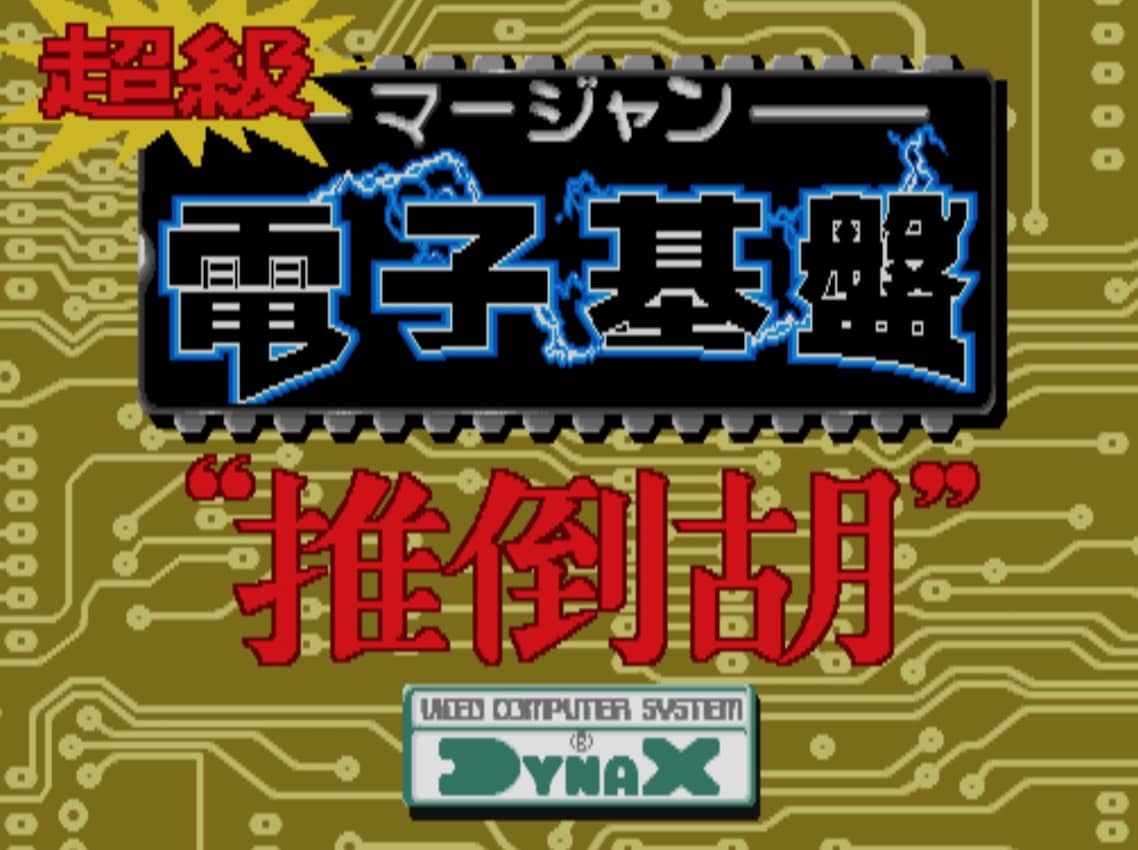
The game's full Japanese title is "麻雀 電子基盤 スーパーエクスプレス", commonly romanized as Mahjong Denshi Kiban: Super Express. The "Denshi Kiban" part is simply part of the name and does not refer to a game mechanic, which helps avoid misreading it as a description of play. Dynax released it in 1990 as a Japanese arcade mahjong game on arcade hardware. In MAME, its short name is mjelctrn, a useful clue when looking up and verifying the game in emulator records today. These details form the basis for identifying the title and for correcting errors in older catalogs.
Some past catalogs listed the game as a 1981 or 1993 release, attributed it to Nichibutsu, or even called it an HTML5 game. None of this matches the original release. This is a 1990 arcade title from Dynax, not a Nichibutsu product and not a native HTML5 game. A browser page is only a modern way to run it, a layer of presentation for accessing an old game today, and it is not evidence of an HTML5 release in 1990. The genre also needs to be kept straight: this is a Japanese arcade mahjong game in which players face computer opponents at a dedicated cabinet, not a puzzle game that matches mahjong tile images. Both use mahjong tiles, but the rules and the experience are not the same.
Dynax was an established maker of Japanese arcade mahjong hardware at the time, and this game was part of its arcade mahjong line. Today such titles are identified and studied mainly through board records and emulator preservation data, and it is thanks to those records that basic details such as title, manufacturer, year and platform can be confirmed. As for its commercial performance, no reliable sales figures or contemporary reviews have been found, nor any verified review scores or developer interviews, so its market reception cannot be judged. Its place in history should rest on confirmed release information rather than unverified rumor; where the record is blank, leaving it unknown is more accurate than filling the gap with a plausible-sounding year or manufacturer.
Development
No developer interviews or detailed production material about Mahjong Denshi Kiban: Super Express have been found. What can be confirmed is that Dynax developed and released it in 1990 on arcade hardware. Dynax focused on Japanese mahjong arcade hardware at the time, and this game was one of its products in that field. Because first-hand material is lacking, the specific development team, design approach and production anecdotes cannot be described.
The game was originally released in arcades, with players competing at a dedicated cabinet. Today it can be run through emulation or in a browser, but that is only a modern presentation of an older game, not the form in which it originally shipped. The fact that a browser can launch the game does not mean it was an HTML5 title in 1990. Keeping this in mind helps avoid mistaking a modern way of running it for an original development fact.
The material provides no details on hardware specifications, licensed subject matter or rules adaptation. It is therefore impossible to discuss whether the game made special adjustments to mahjong rules during development, or to confirm whether any licensed content was involved. Its production background can only rest on the basic facts of manufacturer, year and platform. Where the record is blank, leaving it unknown is the more responsible approach rather than filling it with speculation.
Reception and legacy
Mahjong Denshi Kiban: Super Express has left no reliable contemporary reviews, sales figures or award records. No verified review scores or developer interviews can be found, so its commercial performance and player response at the time cannot be assessed. Its value is not in demonstrating some broad influence, but in being preserved and identified as a 1990 Dynax arcade mahjong title. For game history research, that preservation is meaningful in itself.
The game is one entry in Dynax's arcade mahjong line. Through board records and emulator preservation data, it remains accessible and open to study today. Its existence helps show what Japanese arcade mahjong games of the period were like, but the material is not enough to say what influence it had on later titles. When assessing it, its historical standing should not be overstated; the focus should stay on its practical value as a preserved object.
Overall, the game's encyclopedic significance lies in identifying it accurately: an arcade mahjong game released by Dynax in 1990, not a title from another year, manufacturer or genre. The browser version is only a modern means of access and does not change the facts of the original release. In the absence of sales and review data, its legacy rests more on emulator preservation and catalog correction than on broad cultural influence.