Gameplay and design
At its core, Star 3 Missing 1 is authentic Taiwanese 16-tile mahjong, played through the familiar routine of drawing and discarding, claiming tiles to form chows and pungs, and going out. The player sits at the table with three computer-controlled opponents, and the rules themselves have not been reworked into casual fare like matching puzzles or tile-pairing games; the original structure of a mahjong match is kept intact. For anyone familiar with Taiwanese mahjong there is almost no learning curve, and the challenge lies in how you handle three opponents with very different styles.
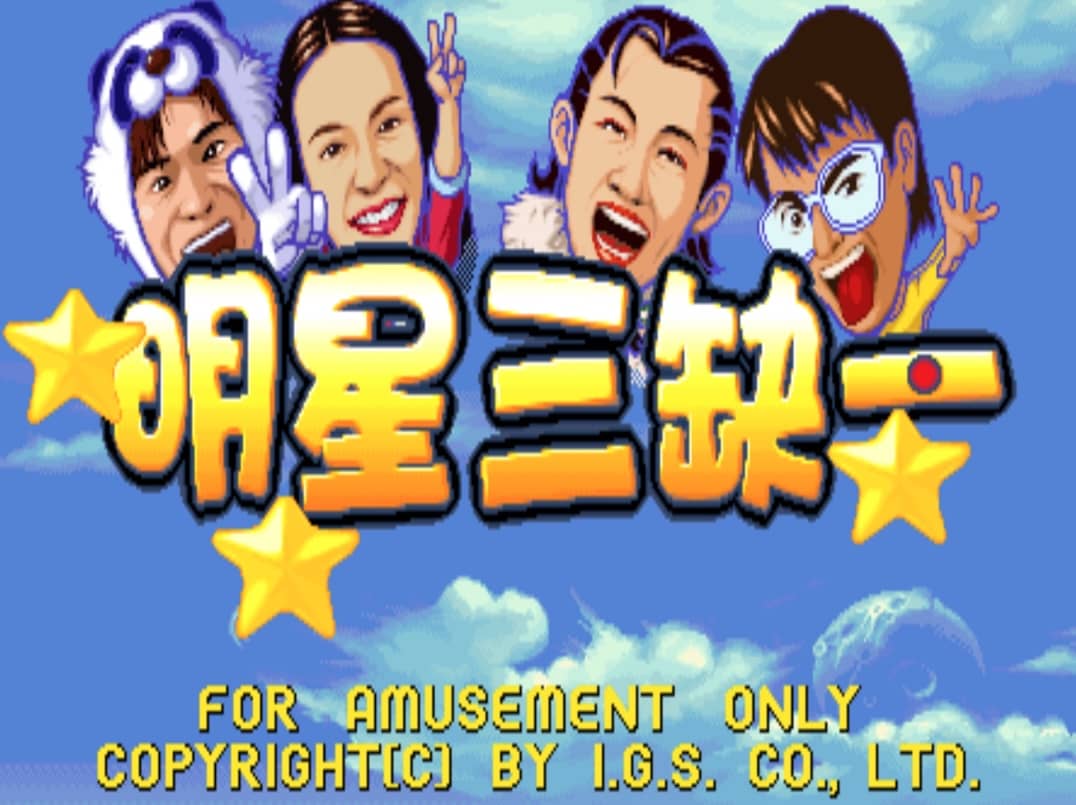
The game puts a lot of effort into presentation. The three opponents across the table are exaggerated celebrity figures, each with highly recognizable voice work, and a character may react every time a tile is claimed, a hand is won, or a player deals into someone else's win. These voices and expressions are not decoration; they are the main source of the game's humor. It doesn't try to get laughs by changing the rules of mahjong. Instead it lets the characters talk and trade barbs during the match, turning an ordinary game of mahjong into something with the feel of a variety show.
In some documented versions, the game also offers the Cantonese 13-tile variant, so players used to different rules can find a fit. Whichever ruleset you choose, though, the match is always a contest between the player and computer characters, not online multiplayer or a tile-based puzzle. This design, built around single-player matches and carried by character performances, gives the first game its most distinctive gameplay identity.
Background and release
Star 3 Missing 1 was released in 2001 by the Taiwanese game company International Games System (IGS), originally as a computer game. The phrase in the title, "three missing one," is a common mahjong-table expression for three people waiting for a fourth to sit down, which maps neatly onto the setup of a player facing three computer opponents. The name signals the mahjong subject matter while carrying a light, teasing tone that fits the game's overall entertainment flavor.
The game was born in Taiwan, where mahjong culture has a deep player base and 16-tile mahjong is a common household and casual pastime. Rather than inventing new rules from scratch, the game brought the familiar table onto the computer screen and then wrapped the match in celebrity-parody characters and voice performances. That approach set it apart from other mahjong games of the time and quickly gave the title "Star 3 Missing 1" a recognizable identity.
One point worth clarifying: the 2001 original is a computer game, and the version people can reach in a browser today is a later form of presentation. The HTML5 tag on the web page only indicates that the game can currently be accessed through a browser; it does not mean the original was a web game when it was released. As for the first game's exact sales figures or its current player count, the available material gives no reliable numbers, so it's best not to guess.
Development
From what can be verified, development of the first Star 3 Missing 1 centered on the computer platform. The core work was putting the full rules of Taiwanese 16-tile mahjong into the game while designing exaggerated celebrity figures and matching voice work for the three computer opponents. Character performance is not an added garnish here; it is the main expressive device running through the match, and the team clearly put considerable effort into making each seat at the table distinctive.
A browser version of the game appeared later. That was a shift in how the game was distributed, not a technical direction settled on during the original development. The web entry point makes the game easier for today's players to reach, but it sits on the other side of a change in release format from the 2001 computer game. The material does not describe how that transition happened, so details such as who handled the port and when it went online remain unknown.
As for the licensing arrangements around the subject matter, the available material only mentions that the game uses exaggerated celebrity-style characters and recognizable voice performances; it does not say whether those likenesses were officially licensed or which people were involved. Information such as production anecdotes, team size, and development timeline is likewise absent from the verified facts. These gaps don't stop us from understanding the game's basic character, but they are a reminder not to fill in the first game's production story with impressions from the later series.
Reception and legacy
Star 3 Missing 1 went on to become a long-running series under IGS, with multiple sequels and updated versions released over the years. When assessing the first game, though, it's important to look back at the 2001 computer game itself and not read characters, modes, or online features from later entries back into it. The formula the original established, familiar mahjong rules plus localized voice work and exaggerated characters, set the tone for the series.
The game's lasting recognizability comes from the way it combined mahjong, an everyday pastime, with celebrity parody and voice-driven banter. It never tried to turn mahjong into a different kind of game; instead it made the atmosphere around the table lively and expressive. For Taiwanese players the 16-tile rules were already second nature, and what was genuinely new was that the three opponents across the table would speak and react. That light social atmosphere is the most tangible thing it passed on to the series.
From a preservation standpoint, the first Star 3 Missing 1 represents an attempt to package local tile-game culture as mass-market entertainment. Its value lies not in sales numbers or industry awards but in using character performance to give mahjong matches the feel of a variety show. Being able to reach the game through a browser today also gives later audiences a chance to see what the series looked like at the start. As for how many copies it sold or how many people it influenced, the material offers no reliable answer, so we won't invent one here.