Gameplay and design
The core gameplay of NBA JAM is 2-on-2 arcade basketball, where players pick two players from an NBA team and engage in fast-paced matches on the court. Unlike real basketball rules, the game eliminates fouls and free throws, and apart from goaltending and the 24-second shot clock, there are few restrictions. Players can freely shove and elbow opponents, a freewheeling design that fills matches with intensity and entertainment.
The game's most iconic system is the "on fire" state: when a player scores three consecutive baskets, they catch fire, boosting their speed and shooting accuracy and enabling even more spectacular dunks. This mechanic not only heightens the drama of matches but also gives players a greater sense of achievement, making it one of the game's most recognizable features.
Beyond regular matches, the game is packed with easter eggs and hidden content. Players can unlock hidden characters through specific actions, such as former U.S. President Bill Clinton and Hugo, the Charlotte Hornets mascot, whose appearances on the court are often hilarious. Additionally, the arcade version hides a mini tank game that players can access by pressing specific joystick and button combinations before a match starts, adding extra fun.
The game's visuals used the then-advanced digital video technology, with player movements captured from real actors and digitized. While they may look rough by today's standards, they offered unprecedented realism at the time. Combined with exaggerated dunks and fiery competition, this visual style perfectly suited the entertainment needs of arcade games, delivering a strong impact from the very first play.
NBA JAM is extremely fast-paced, with short matches and high scores, letting players revel in the thrill of offense. The game has no complex tactics or controls, making it easy to pick up, but the "on fire" system and hidden elements provide enough depth to encourage repeated play. This straightforward yet surprising design is a quintessential example of the golden age of arcade gaming.
Background and release
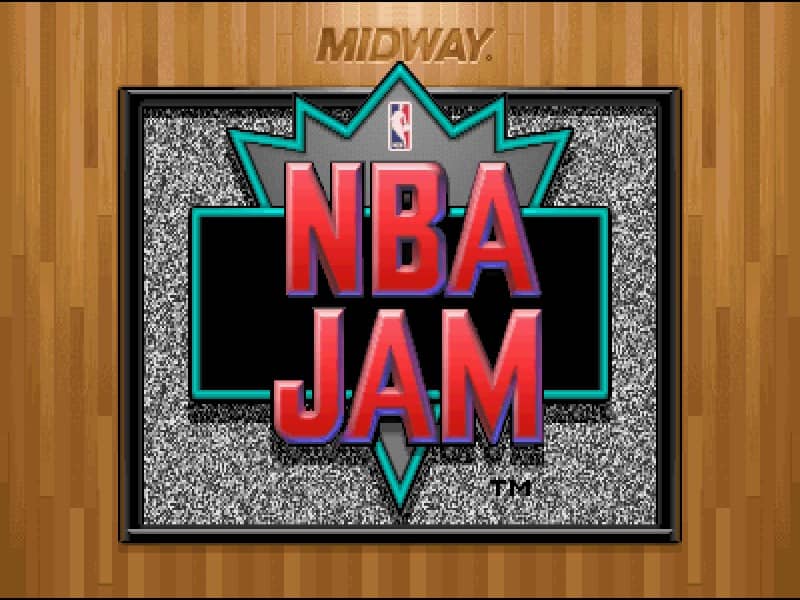
NBA JAM first hit arcades in April 1993, developed and published by Midway. The game quickly became a sensation, achieving massive success in the U.S. arcade market. From April to October 1993, it topped RePlay magazine's monthly chart, making it one of the hottest arcade games of the year.
The arcade version's success brought substantial commercial returns, with estimated global revenue exceeding $1 billion in its first year, and by 2012, over 20,000 arcade cabinets had been sold. This achievement not only proved the game's appeal but also showcased the potential of combining NBA licensing with arcade gameplay, setting a benchmark for future sports games.
In 1994, home console ports were released by Acclaim for platforms like the SNES and Genesis. While retaining the core arcade gameplay, the console versions adjusted rosters and features, such as using the 1993-94 season player roster and adding new hidden characters. Despite compromises in graphics and controls, they were warmly received by players.
Following the original version, Midway released NBA JAM: Tournament Edition (T.E.) in 1994, a standalone update with updated rosters and new features. The T.E. version featured three players per team (two on the court) and introduced a "Rookies" team with five players, further enriching the game's strategic depth and replayability.
The NBA JAM series continued to evolve through the mid-1990s, with home console sales also impressive; by 2019, combined SNES and Genesis versions had sold 6 million copies. The game's success extended beyond commercial numbers, as it became a cultural phenomenon, influencing an entire generation of players and future sports game design.
Development
The development of NBA JAM stemmed from the commercial failure of Midway's previous game, Total Carnage. To turn things around, the company decided to create a game with broad appeal, and basketball was an ideal choice due to its popularity and spectator appeal. The development team drew inspiration from Midway's 1989 game Arch Rivals, establishing the 2-on-2 format.
Securing the NBA license was not easy. The NBA was initially skeptical of the arcade game concept, but after a second pitch from the development team, they agreed to license it. Under the agreement, Midway paid the NBA $100 in royalties for each arcade cabinet sold. This license brought real teams and players to the game, greatly enhancing its appeal.
The game's visuals used digital video technology, with the team hiring amateur basketball players for motion capture, including future NBA player Stephen Howard. These movements were digitized and applied to the game, making player actions more realistic. Although the technology was advanced for its time, the filming and processing costs were not low, but the final results proved the investment worthwhile.
NBA JAM was written entirely in assembly language, which was quite a programming challenge at the time. The game's marketing budget was a staggering $10 million, reflecting Midway's high expectations. During development, the team also planned to include Godzilla and Bart Simpson as secret characters, but these were ultimately scrapped due to licensing issues.
Notably, the game's famous catchphrase "Boomshakalaka" was recorded by voice actor Tim Kitzrow, but the script was written by designer Jon Hey. This phrase later became a classic in basketball culture. Additionally, designer Mark Turmell confirmed in 2008 that the game had a bias toward the Chicago Bulls, possibly due to the development team's personal preferences.
Reception and legacy
NBA JAM received widespread acclaim upon release, with Electronic Gaming Monthly giving the SNES version a 9/10 score and awarding it "Game of the Month." Several outlets have listed it among the greatest games of all time, such as Next Generation ranking it at #99. These honors underscore the game's standing among players and critics.
The game left a lasting impact on the sports genre, with its fast-paced, exaggerated action and entertainment-first design inspiring Midway to produce similar titles like NFL Blitz. These games continued NBA JAM's style, blending sports competition with arcade fun, creating a unique "Midway-style" sports game subgenre.
Catchphrases like "Boomshakalaka" quickly entered pop culture, becoming common expressions in basketball and everyday language. The "on fire" system was also adopted by many later sports games, becoming a classic design for enhancing drama. In short, NBA JAM is not just a game but a cultural icon.
In 2010, EA released a reboot of NBA JAM, with original designer Mark Turmell involved in development. The reboot retained the classic gameplay while adding modern graphics and online features, allowing a new generation of players to experience the charm of this classic. In 2020, Arcade 1Up released a replica arcade cabinet, further extending the game's life.
Although the NBA JAM series has gradually faded from the mainstream, its place in gaming history is unshakable. It proved that sports games could transcend simulation and become pure entertainment. For many players, the game carries memories of the arcade era, and its influence still resonates in various basketball games and pop culture today.