Gameplay and design
The core gameplay of "Rhythm Tengoku (Japan)" is simple: follow the musical rhythm and press buttons at the right moment. There is no complex story or lengthy tutorial; players jump straight into a series of short, sharp rhythm mini-games. These mini-games are organized into eight chapters, each containing six stages: the first five are varied mini-games, and the sixth is a "remix" that combines the previous five, testing players' ability to maintain the rhythm over time.
The game's rating system is straightforward: after each mini-game, players receive a rating of "Try Again," "OK," or "Superb." Only an "OK" or better unlocks the next stage. Achieving a "Superb" rating also earns a medal. These medals are key to unlocking extra content, such as endless games, rhythm toys, and drum lessons, giving perfectionists a reason to replay challenges.
Beyond the standard rhythm challenges, the game includes a "Perfect Campaign" mode. In this mode, players must complete a series of mini-games consecutively, but they are allowed only three mistakes. Three mistakes end the challenge. Successfully clearing all challenges rewards players with a certificate and a mysterious gift. This mode demands high rhythmic precision and focus, making it a goal for many players to conquer.
The drum mode is a standout feature. In this mode, players use all the GBA buttons to tap out rhythms as if playing a real drum kit. There are no fixed tracks; it functions more like a free-form sandbox, letting players enjoy improvisational play once they grasp the basics. It not only adds to the game's content but also reflects the development team's thoughtful approach to musical interaction.
Compared to Nintendo's other "microgame" series, "WarioWare," "Rhythm Tengoku (Japan)" shares the short-level format but offers a fundamentally different experience. "WarioWare" emphasizes quick reactions and visual stimuli, while "Rhythm Tengoku (Japan)" focuses on auditory cues, allowing players to complete actions by rhythm alone, even with eyes closed. This emphasis on audio became the game's defining design philosophy and set the tone for the entire series.
Background and release
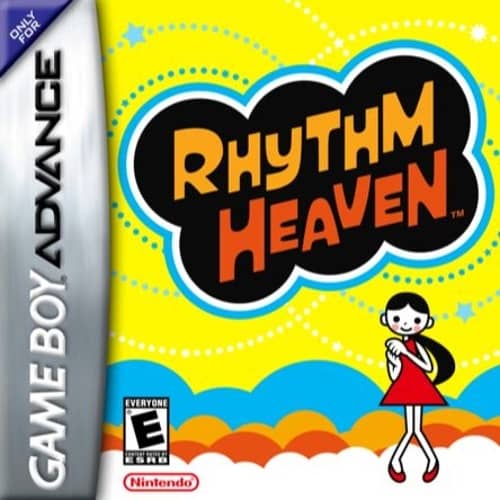
"Rhythm Tengoku (Japan)" was released in Japan on August 3, 2006, for the Game Boy Advance. It was Nintendo's last first-party title for the platform, marking the end of the GBA era. At the time, Nintendo's focus had shifted to the NDS, but the release of "Rhythm Tengoku (Japan)" still showed players the final dedication of the GBA's twilight years.
The game was first announced in "Famitsu" magazine, and the news immediately drew attention. As a collaboration between Nintendo and music producer Tsunku, and with its unique rhythm gameplay, it built up considerable anticipation before release. Prior to launch, Nintendo offered a playable demo, "Rhythm Tengoku Taikenban," in stores, allowing players to try three mini-games in advance, which helped the game gain a positive reputation early on.
A year after the original release, Sega launched an arcade version on September 20, 2007, based on the Sega Naomi hardware, also exclusive to Japan. The arcade version was not a simple port; it added a two-player mode, leaderboards, and adjusted some mechanics, such as introducing a life system. It was the only game Nintendo licensed to Sega Naomi and a rare collaborative development between the two companies, a unique chapter in gaming history.
After its release, "Rhythm Tengoku (Japan)" received industry recognition, winning the Excellence Award in the Entertainment Division at the 2006 Japan Media Arts Festival. This award acknowledged the game's achievements in interactive entertainment and artistic expression, helping more people see that rhythm games could be more than just music-game offshoots—they could be a unique form of expression.
Despite its success in Japan, "Rhythm Tengoku (Japan)" was never released in the West. This decision disappointed many overseas players and made the game a "legendary title" among GBA enthusiasts for a long time. Years later, sequels in the series reached Western markets, but the Japan-exclusive status of the original still gives it a special mystique.
Development
The concept for "Rhythm Tengoku (Japan)" originally came from composer Tsunku. He pitched the idea to Nintendo but felt he couldn't complete it alone, so he suggested Nintendo handle it, believing they could do it better. Nintendo accepted, and the project began in 2002 under the working title "Rhythm IQ."
In the early stages, Kazuyoshi Osawa created a GBA tech demo where players could play a drum set using different buttons. Though simple, it proved the feasibility of rhythm gameplay on the GBA and laid the groundwork for future development. The entire team, under Tsunku's guidance, refined the core mechanics to ensure players could enjoy the game purely through sound.
To improve the team's sense of rhythm, developers took dance lessons, a suggestion from Tsunku. By feeling rhythm physically, team members gained a deeper understanding of music, which helped them design mini-games with a better fit between rhythm and controls. This seemingly unrelated training had a direct impact on the game's quality.
Development was full of interesting anecdotes. For example, the "Rhythm Tweezers" mini-game initially featured real faces, but the team found them "a bit gross," so they switched to onion faces, which became a classic image in the game. Another mini-game, "Bon Odori," was based on the real Japanese Bon Festival dance, incorporating traditional culture into the game and showcasing the team's clever use of local heritage.
The arcade version was another significant chapter. It was proposed by Sega and approved by Nintendo president Satoru Iwata, leading to a collaboration. Sega handled the hardware and arcade operations, while Nintendo provided the game content and design. Such partnerships were uncommon at the time, but the result proved its value. The arcade version retained the original's essence while adding two-player mode and leaderboards, offering a new social experience for arcade players.
Reception and legacy
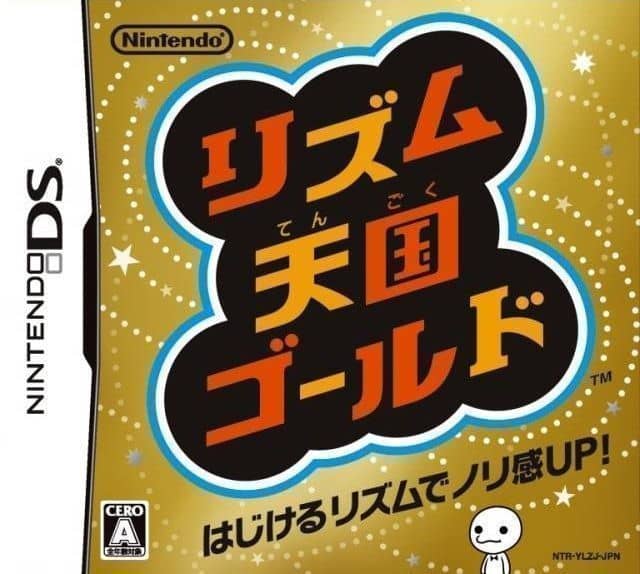
"Rhythm Tengoku (Japan)" as the series' first entry laid a solid foundation for future installments. Its unique "audio-first" design philosophy and its blend of humor and music became hallmarks of the series. Later titles like "Rhythm Heaven Gold" continued these core elements, adding new mini-games and mechanics, but the original's charm remains irreplaceable.
Many mini-games from the game became series staples, the most notable being "Karate Man." After debuting in the original, nearly every sequel featured a new version based on it, making it a signature element. This continuity not only feels familiar to veteran players but also proves the classic and enduring appeal of the original design.
The influence of "Rhythm Tengoku (Japan)" extends to other games. It inspired numerous indie rhythm games such as "Beat City," "Beat Sneak Bandit," and "Melatonin," which show its influence in gameplay or style. In many ways, the original "Rhythm Tengoku (Japan)" was not just a successful game but a disseminator of a design philosophy.
In terms of media reception, "Rhythm Tengoku (Japan)" received widespread acclaim. GameSpy's Andrew Alfonso praised its music, gameplay, and variety, though he noted the game's length was somewhat lacking. 1UP.com's Bob Mackey stated that the game's absence from North America was "one of the great injustices of the GBA in 2006." These reviews affirmed the game's quality while reflecting players' affection and regret.
Game designer Frank Lantz listed it among his five favorite games, and Eurogamer staff and readers both voted it one of the games of the year for 2006. This recognition from industry figures and players further cemented "Rhythm Tengoku (Japan)"'s place in gaming history. Despite not being released in the West, it became a classic in many players' hearts through word of mouth and continues to influence later game creation.