Gameplay and design
What makes LocoRoco special is that players don't directly control the round little creatures; instead, they play as the planet they inhabit. The game uses only two shoulder buttons: pressing the left button tilts the world left, and pressing the right tilts it right, causing the LocoRoco to roll with gravity. This design makes the controls incredibly simple yet still fun; players must observe the terrain and time their tilts to guide the LocoRoco safely to the goal.
LocoRoco can eat red berries scattered across the levels, growing larger with each one, up to a chain of twenty. When they need to squeeze through narrow gaps or split up for different tasks, players can press both shoulder buttons to split them into smaller individuals, then merge them back together afterward. This split-and-merge mechanic runs throughout the game, with many levels designed around it—for example, sending some LocoRoco to trigger switches while others collect items.
The game features five worlds, each with eight levels, where players guide the LocoRoco to the house at the end. Scoring is based on how many LocoRoco you find, how long you take, and the number of items collected. However, the game doesn't take scoring too seriously; even if you miss some LocoRoco, you can still finish easily. This lenient design lets players of all ages enjoy the experience.
There are six colors of LocoRoco in the game; besides the default yellow, the others are unlocked by completing specific levels. Choosing a different color doesn't change the gameplay, only the lead vocal in the background music, offering a small touch of personalization. This design reflects the game's relaxed and carefree nature, avoiding hardcore differentiation and letting players choose as they like.
Music is a major highlight of LocoRoco. As you collect more LocoRoco, the background music gradually adds new vocal parts, with each LocoRoco singing a portion of the same song, creating a choir-like performance. This dynamic music system makes collecting feel rewarding and encourages players to find as many LocoRoco as possible, because the more there are, the livelier the music becomes.
The lyrics in the game are in a completely fictional language created by producer Tsunomu Kono. He did this to avoid making international players feel alienated by Japanese lyrics, since the game was released worldwide. This invented language sounds like a mix of nursery rhymes and exotic tunes, paired with reggae, soul, and R&B melodies, creating an innocent and whimsical atmosphere.
In level design, LocoRoco emphasizes exploration and discovery. Each level hides secret areas and hidden passages, some requiring players to use the split mechanic to enter small holes, others to use bounce pads to reach high places. Finding these hidden elements often yields more LocoRoco or unlocks fun rewards, giving dedicated players something to do.
Although the controls are simple, the feel is finely tuned. The angle, force, and timing of tilts affect the rolling speed and direction of the LocoRoco, requiring players to practice to master them. This design, seemingly simple but actually nuanced, gives the game both a casual side and depth worth replaying, making it a great example of something for all ages.
Background and release
LocoRoco is an original platformer developed by Sony Computer Entertainment Japan Studio for the PSP, released in 2006. The concept was conceived by Tsunomu Kono, who had previously worked on Ico and had his own unique ideas about game design. At the time, the PSP already had many titles emphasizing complex controls and deep stories, but Kono wanted to make a light, simple game that would bring a smile to players' faces.
The game launched globally in 2006: European players got it first on June 23, Australia on June 29, Japan on July 13, and North America last on September 5. Although Japan was the development home, its release came later, perhaps reflecting Sony's focus on overseas markets. After release, the game quickly attracted a loyal fanbase with its unique style.
LocoRoco performed well in game awards that year. At the 2006 British Academy of Film and Television Arts (BAFTA) awards, it won 'Best Children's Game' and 'Best Character,' and received six nominations. At the 10th Interactive Achievement Awards, it also won 'Children's Game of the Year' and 'Outstanding Achievement in Original Music Composition,' with two nominations. These honors showed it was recognized in professional circles.
The Associated Press named LocoRoco the Handheld Game of the Year in 2006, a nod from mainstream media. However, sales in Japan were not strong, with about 30,000 copies sold in the first week and roughly 170,000 for the year. But in Europe and North America, it performed better, showing Sony the potential of the IP and paving the way for future titles.
The success of LocoRoco spawned a series of follow-ups. On the PSP, there was a sequel, LocoRoco 2, and a spin-off, LocoRoco Midnight Carnival; on the PS3, there was an interactive screensaver called LocoRoco Cocoreccho!. In 2017, an HD remaster was released for PS4, allowing new players to experience the classic. Additionally, mobile versions and multiple demos were released, showing its wide influence.
Development
The idea for LocoRoco was born in the spring of 2004. While on a train, Tsunomu Kono sketched a rough drawing on his PDA, featuring several similar-looking characters that weren't directly controlled by the player. This idea later became the core of the game. He chose the PSP because its shoulder buttons were well-suited for tilt controls, and he also wanted to create something different from the complex sequels common on the PSP at the time.
However, the concept wasn't initially well-received by the company. Kono pitched it to management twice in early 2005 and was rejected both times. He didn't give up; instead, he built a pre-prototype himself, spending a month with a team of four to create the rolling gameplay. After showing this pre-prototype internally and receiving positive feedback, the team got the resources to continue development.
After the pre-prototype, an eight-person team spent three months creating a full prototype, establishing the core mechanics, including tilt controls, split-and-merge, and collection systems. Then, a sixteen-person team at Sony Computer Entertainment Japan Studio spent eleven more months to complete the game. The entire development process, from concept to finished product, took about two years and involved many ups and downs.
Music was a crucial part of development. Kono created the fictional language himself and handed the lyrics, along with his favorite reggae, soul, and R&B styles, to composers Nobuyuki Shimizu and Kemmei Adachi. He specifically requested minimal use of electronic instruments to create a 'live' feel. The team eventually created about sixty songs, and the soundtrack, LocoRoco No Uta, was released by Columbia Records in October 2006, featuring forty-two tracks.
The development also faced some controversy. Before the North American release, some bloggers compared the Moja characters to blackface, sparking accusations of racism. However, the developers clarified that the design was inspired by artist Keigo Tsuchiya's hairstyle and had no racial connotations. Although the incident caused some discussion, it didn't affect the game's overall reputation.
Reception and legacy
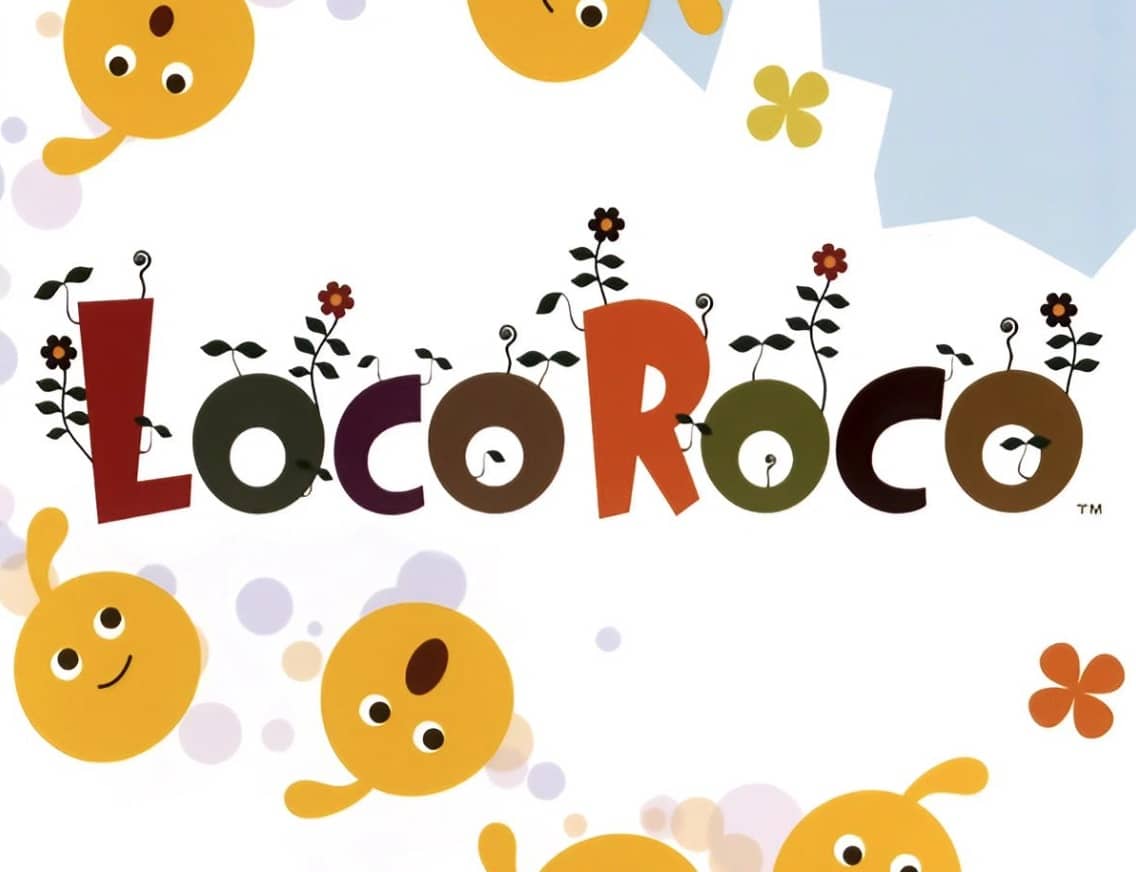
LocoRoco received high praise from players and critics alike, especially for its unique control scheme and adorable character design. The yellow LocoRoco even became a mascot for the PSP system, appearing in various promotions and system interfaces. This success of the character made LocoRoco more than just a game; it became a cultural icon of the PSP era.
Although sales in Japan were modest, the game performed well overseas, proving its style had cross-cultural appeal. Its success showed Sony the potential of original casual games and encouraged Japan Studio to continue experimenting with non-traditional projects. In a way, LocoRoco added a splash of color to the PSP platform and left players with a memorable round and cute image.
LocoRoco's influence is also seen in the series it spawned. Besides the sequel and spin-off on PSP, the PS3's LocoRoco Cocoreccho!, though an interactive screensaver, continued the game's lighthearted style. The 2017 PS4 remaster allowed old players to revisit the classic and new players to experience it. These titles together form the LocoRoco series lineage.
In terms of game design, LocoRoco's tilt control mechanic and dynamic music system have been borrowed by many later games. It proved that even simple controls can offer deep gameplay, and that without a complex story, music and characters can still move players. This design philosophy has inspired later casual and indie games.
As of 2024, LocoRoco characters even make a cameo in the PS5 game Astro Bot, showing its enduring place in Sony's gaming culture. Although LocoRoco is many years old, its round silhouette and cheerful songs remain in the memories of many players, becoming a childhood memory for a generation.