Gameplay and design
The core gameplay of Mario Tennis: Power Tour follows the series' traditional tennis matches, allowing players to engage in singles or doubles and master basic strokes like topspin and slice. The matches are fast-paced with solid controls, but what truly sets this game apart is its full-fledged RPG growth system. In the story mode, players take on the role of a student at a tennis academy, leveling up through matches and training to enhance attributes such as shot power and movement speed. This integration of role-playing elements into a sports game was quite uncommon at the time, giving every match a sense of progression and purpose.
The game's most striking feature is the Power Shots system, divided into offensive and defensive types. Offensive Power Shots deliver devastating hits that can knock back or stun opponents, seizing control of the rally, while defensive Power Shots nullify these effects, helping players recover from tricky situations. Each Power Shot has unique activation methods and visual flair, and players learn them through mini-games. This system not only adds strategic depth to matches but also makes the action more spectacular and dramatic.
The story mode is the heart of the game. Players awaken as the protagonist at the Royal Tennis Academy, only to find that the academy champion has been defeated by a masked challenger. Determined to rise through the ranks, they aim to compete in the Island Open and uncover the masked figure's true identity. Along the way, players freely explore the academy, converse with other characters, take on training tasks, and challenge opponents at various levels. This RPG-like exploration and narrative progression lets players experience a complete coming-of-age story between intense matches.
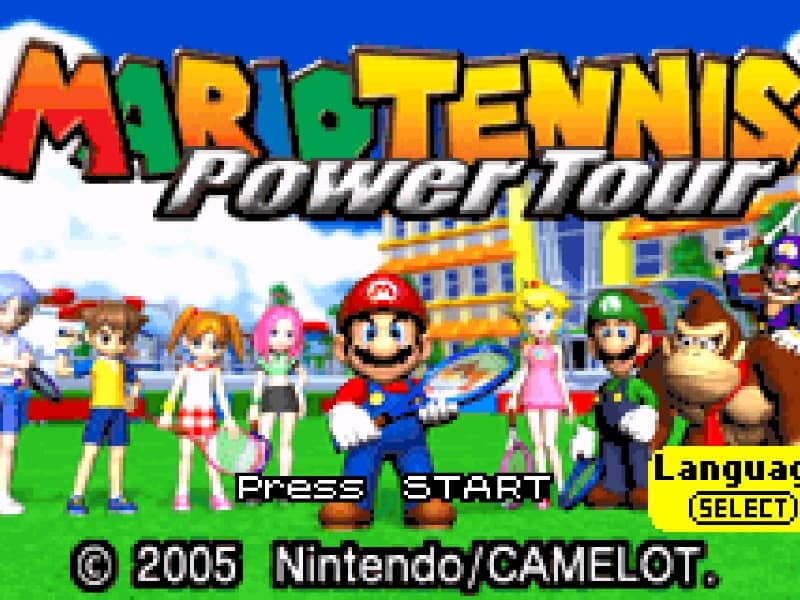
Beyond the story mode, the game offers an exhibition mode where players can choose from classic Mario characters such as Mario, Luigi, Princess Peach, Donkey Kong, Bowser, and Waluigi, as well as original academy characters, each with distinct ability tendencies for varied playstyles. Additionally, the game includes several mini-games designed to practice and master the various Power Shots, with multiple difficulty levels to cater to both newcomers and seasoned players.
The game also thoughtfully includes a detailed tennis glossary, allowing players to look up unfamiliar terms at any time. This seemingly simple feature reflects the developers' care for newcomers, making the game accessible to those less familiar with tennis. Overall, the gameplay is rich and varied, combining deep RPG progression with satisfying tennis action and a host of supplementary content, delivering a complete and fulfilling experience.
Background and release
Mario Tennis: Power Tour is the sequel to the Game Boy Color title Mario Tennis, released for the Game Boy Advance in 2005. The predecessor established the series' core mechanics on the GBC, and this installment builds on those foundations while boldly introducing RPG elements, shifting the focus from pure sports competition to an adventure driven by character growth and narrative. This transformation drew significant attention from players at the time and made the game stand out within the series.
The game was released alongside the GameCube version of Mario Tennis earlier that same year, serving as companion titles on handheld and home console. They share some characters and settings but have no connectivity features. While some players hoped for cross-platform interaction, the developers clearly intended for each game to stand alone, focusing on their respective platforms' strengths. The GameCube version emphasized multiplayer battles on the couch, while the GBA version prioritized a solo RPG-style progression, complementing each other without interfering.
The game first launched in Japan in 2005 under the title Mario Tennis Advance, followed by releases in Western regions. The European version was titled Mario Power Tennis, while North America used Mario Tennis: Power Tour. The regional title differences sometimes caused confusion, especially since the European title matched the subtitle of the GameCube Mario Tennis, but the two are entirely different games.
Years after its original release, the game came to the Wii U Virtual Console in 2014, allowing a new generation of players to revisit this classic on a modern platform. This re-release extended the game's lifespan and gave those who missed the GBA version a chance to experience this unique Mario Tennis title. The Virtual Console version preserved the original content without any alterations.
From a series perspective, this game is the only handheld entry in the Mario Tennis series to feature an RPG-style progression system. It boldly broke the traditional sports game mold by incorporating role-playing elements, and while the attempt wasn't flawless, it injected new vitality into the series. Although later handheld entries did not continue this design, the game holds a unique place in the series' history, remaining a memorable classic for many players.
Development
Mario Tennis: Power Tour was developed by Camelot Software Planning, a studio renowned for high-quality sports and RPG games, having worked on the Golden Sun series and the Mario Golf series. Camelot had extensive experience on handheld platforms and excelled at blending RPG depth with the excitement of sports games, and this title is a prime example of that philosophy. Nintendo, as the publisher, provided the Mario characters and world-building support, ensuring consistency with the rest of the series.
The game's music was composed by the celebrated Motoi Sakuraba, a frequent collaborator with Camelot who had scored the Golden Sun and Mario Golf series. Sakuraba's style is grand and emotive, and for this game, he crafted several upbeat tracks for tennis matches and academy scenes, enhancing the tension of matches and the relaxed atmosphere of school life. The music complements the game's overall tone and is an integral part of the experience.
During development, the team clearly aimed to create something different from traditional sports games. They drew inspiration from RPG mechanics like character growth and story progression, making tennis the core gameplay while adding academy exploration, character interactions, and a quest system. This design approach was quite forward-thinking at the time, but it also posed challenges: balancing RPG elements with the pace of tennis matches and keeping players engaged throughout their progression. Judging by the final product, they delivered a satisfying solution.
The character design also shows thoughtful touches. Players can choose between a male protagonist named Clay (Max in Europe, Norty in Japan) or a female protagonist named Ace (Tina in Europe, Tabby in Japan), and can customize their name and dominant hand. The character not chosen becomes the player's doubles partner, but the partner's name cannot be changed. This allows players to shape their character to some extent, increasing immersion while maintaining fixed story roles.
Notably, this is the only Mario game where Waluigi appears without Wario. Waluigi, typically paired with Wario as a villain duo, makes a solo appearance here as a significant character in the story mode. This unique choice surprised series fans and became a talking point. The developers' bold character selection added a distinctive charm to the game.
Reception and legacy
Mario Tennis: Power Tour received generally positive reviews from critics and players upon release. On Metacritic, it holds a score of 81, and on GameRankings, it achieved an 80.76% approval rating. These scores reflect the game's popularity at the time and attest to its quality as a handheld sports title. While not a perfect score, the game won over many players with its unique RPG elements and solid tennis gameplay.
Major gaming outlets gave high praise. IGN awarded it 9/10, lauding the RPG elements and leveling system for greatly enhancing replayability, but criticized the lack of connectivity with the GameCube Mario Tennis. GameSpot gave it 8.5/10, appreciating the options and character design, though noting that the RPG mode might be too complex for some. Eurogamer scored it 8/10, calling it the best tennis game on the GBA, a testament to its standing among peers.
GameSpy gave it four out of five stars, praising the mini-games and single-player mode, but critiquing the aesthetics of the 3D court models. Nintendo World Report, however, gave it a perfect 10, highly commending the RPG elements, game depth, graphics, and content, calling it a masterpiece on the GBA. While opinions varied, all recognized the game's excellence in innovation and content richness.
Over time, the game's influence has not waned. In 2023, IGN ranked it 15th on its list of the best GBA games of all time, underscoring its enduring status among players and media. Although the GBA platform has long been discontinued, this game remains a frequent topic of discussion and a fond memory for many.
In summary, Mario Tennis: Power Tour left a distinctive mark on gaming history. It successfully merged RPG elements with tennis gameplay, offering new ideas for the sports genre. While this design wasn't fully carried forward by later titles, the game's innovative spirit and solid craftsmanship remain worthy of study. For fans of the Mario series and sports games, this is undoubtedly a classic not to be missed.