
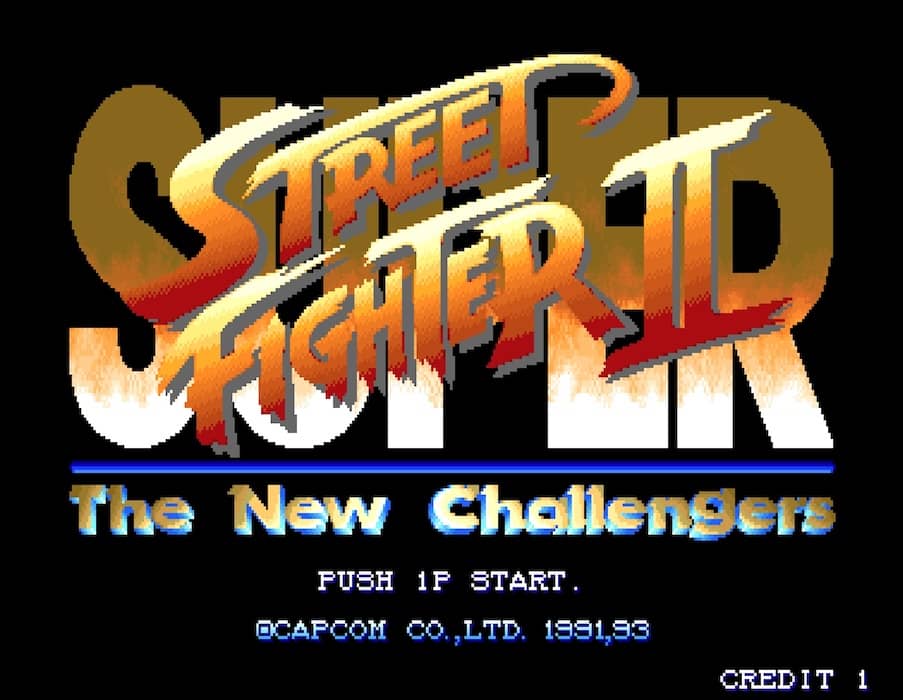
Gameplay and design
Super Street Fighter II continues the classic fighting framework of the series, but brings freshness through new characters and system tweaks. Four new fighters join the roster: Cammy, T. Hawk, Dee Jay, and Fei Long, each with unique moves and backstories, giving players more choices. The original twelve World Warriors are not left untouched; Capcom fine-tuned their normal and special moves to bring each character's strength closer together, avoiding clear imbalances.
To encourage more spectacular battles, the game introduces a new scoring system. It tracks combos, first hits, counters, and reversals, awarding bonus points for these actions. This means players not only need to win, but win stylishly to rank higher on the leaderboards. This design adds strategic depth to matches and increases the mind games between skilled players.
In terms of character appearance, players can choose from eight color palettes, including classic ones from the previous Champion Edition and Turbo versions, plus five new palettes. This seemingly simple change allows for more visual personalization and adds fun to matches. Additionally, the game speed is adjusted to be comparable to Champion Edition, slower than the hyper speed of Turbo, giving players more time to think and react.
The most notable new mode in the arcade version is Tournament Battle, an eight-player elimination tournament that requires four linked arcade cabinets. Eight players each operate a machine, competing in a bracket to determine the ultimate winner. This multiplayer feature was extremely rare at the time, breaking the traditional one-on-one arcade format and allowing more players to participate simultaneously, creating a tense atmosphere similar to offline competitions.
These system changes, while not introducing super moves like the later Super Turbo, already pointed the direction for the series' evolution. The refined scoring system, character balance adjustments, and multiplayer mode attempts all reflect Capcom's deep understanding of competitive fighting games. These designs not only felt fresh to veterans but also attracted new players, laying a solid foundation for future installments.
Background and release
Super Street Fighter II was first released in arcades in 1993, as the fourth game in the Street Fighter II series. Prior to this, the series had seen the original Street Fighter II, Champion Edition, and Turbo, each with adjustments to characters and systems. This installment was not a coincidence but a significant push by Capcom during the intense arcade market competition, aiming to solidify its leading position in fighting games through technical upgrades and content expansion.
This game was the first to use Capcom's CP System II arcade board, which offered a qualitative leap in graphics and audio compared to the previous CP System board. Character and stage details became richer, colors more vibrant, and sound effects and music more layered. This technical advancement made Super Street Fighter II stand out in arcades at the time and set a new visual benchmark for subsequent games.
After the arcade version's success, Capcom ported the game to multiple home consoles in 1994. The Super Nintendo version was released in Japan on June 25, 1994, with North American and European releases around the same time. The cartridge had a 32Mb capacity and supported the XBAND online battle feature. The Mega Drive/Genesis version launched almost simultaneously, with a larger 40Mb cartridge and additional announcer voice, such as calling out character names. These ports optimized the core arcade gameplay for home systems.
Beyond the SNES and Genesis, the game also came to Japanese home computers like the X68000 and FM Towns. The X68000 version, released on September 30, 1994, faithfully reproduced the arcade graphics but omitted some effects; the FM Towns version, released on October 28, 1994, lacked parallax scrolling in backgrounds but supported Q-Sound audio and color editing features. Though these versions had limited audiences, they catered to different hardware users.
Following Super Street Fighter II, Capcom released the fifth installment, Super Street Fighter II Turbo, in 1994, commonly known as Super Turbo. That game added super moves and further adjusted character balance. Thus, this installment plays a bridging role in the series, summarizing the previous games and paving the way for future evolution.
Development
The development of Super Street Fighter II was a bold attempt at technological innovation for Capcom. The team decided to adopt the new CP System II board, which was not just a hardware upgrade but allowed unprecedented detail in graphics and audio. Developers completely remade the game's HUD, stages, character portraits, music, and sound effects, even replacing the opening animation and announcer to deliver a fresh experience.
The four new characters each have distinct origins, with Fei Long's design particularly notable. Fei Long is based on martial arts legend Bruce Lee, fitting the then-popular Bruceploitation style, a cultural phenomenon imitating Lee's image and kung fu style. This design not only pays tribute to Lee but also catered to players' love for kung fu films. The other three characters—Cammy, T. Hawk, and Dee Jay—also have distinct cultural backgrounds, enriching the game's world.
In terms of character balance, the development team made detailed adjustments to the moves of the original twelve World Warriors. Some characters gained new special moves, such as Ryu's Shakunetsu Hadoken, Ken's flaming Shoryuken, Zangief's Atomic Suplex, and Vega's Devil's Reverse. These changes were not arbitrary but based on extensive playtesting and player feedback, aiming to give each character unique tactical value and avoid overly strong or weak characters.
The scoring system was a highlight of development. The team wanted to encourage more aggressive play, so they designed a reward mechanism for tracking combos, first hits, counters, and reversals. This system not only added depth but also naturally improved players' skills as they chased high scores. This design approach was uncommon in fighting games at the time, reflecting Capcom's emphasis on competitiveness.
The eight-player elimination mode in the arcade version was a technical challenge. To enable synchronized play across four linked cabinets, data transmission and synchronization issues had to be solved. Although this mode might have been rarely used in actual operation due to space constraints, its existence proved Capcom's foresight in multiplayer gameplay. Additionally, home ports were optimized for different platforms; for example, the SNES version removed blood due to Nintendo's censorship policy, while the Genesis version added extra voice.
Reception and legacy
Super Street Fighter II achieved commercial success upon release. In Japan, Game Machine magazine listed it as the most popular table arcade game in October 1993; in North America, Capcom distributed up to 1,000 arcade cabinets on a revenue-sharing basis, and RePlay reported it as the most popular arcade game in November 1993. Capcom expected global arcade sales to reach 100,000 units, a considerable number at the time.
Home console sales were equally impressive. The SNES version sold 941,000 copies in Japan in 1994, becoming the third best-selling game of the year, with global sales eventually reaching 2 million copies. This performance proved that Super Street Fighter II was not just a hit in arcades but also attracted a large home console audience. For a fighting game, such sales figures clearly demonstrate its popularity.
In terms of media reception, the game received much praise. Gamest magazine nominated it for Best Game of 1993 in February 1994, ultimately ranking third; Mega magazine listed it as the second-best game ever in 1994. These accolades reflect the recognition of the game's graphics, sound, and gameplay by the media at the time, solidifying its place in fighting game history.
The game's influence is also seen in its subsequent ports and compilations. It was included in Street Fighter Collection (PlayStation and Sega Saturn) in 1997, and in the Street Fighter 30th Anniversary Collection in 2018, which was released on Switch, Xbox One, Windows, and PlayStation 4. These collections allow new generations of players to experience this classic, ensuring its long-term vitality.
As the fourth installment in the Street Fighter II series, Super Street Fighter II reached new heights in both technology and content. It not only laid the foundation for Super Turbo but also influenced the direction of future fighting games. Whether in graphics, character design, or system innovation, this game showcases Capcom's deep expertise in the fighting game genre, making it an indispensable part of the series.





